August 7th, 2026
5 last-minute destinations to escape Milan For when summer in the city is driving you crazy
Milan in summer is a mystical experience: the asphalt giving back the heat it has stored up as if it were a personal vendetta, the Navigli smelling of spritz and disinfectant, the tram feeling like a sauna on rails, and that surreal silence in the half-empty neighbourhoods, interrupted only by the desperate hum of air conditioners. Anyone who has stayed in the city in August knows the drill: you go from the bar around the corner (closed for the holidays) to the supermarket around the corner (also closed for the holidays), only to discover that the newsstand is on holiday too. And yet there is something beautiful about it all. Deserted Milan has a rather appealing post-apocalyptic charm, if only it were not so hot that the soles of your shoes melted onto the pavement.
But let's be honest: even the most stoic Milanese person, the one who swears they love "the empty city", eventually gives in and desperately looks for a reason to get away, even if only for an afternoon. And that's where the noble art of the last-minute escape comes in: all it takes is a tank of petrol, a couple of hours and the desire to see something other than the traffic lights on Corso Buenos Aires to put a smile back on your face.
Here are five destinations within easy reach, perfect for anyone who decided at the last minute that the city can wait today.
Villa Arconati, Castellazzo (Milan)
Calling it a "villa" is almost an understatement: this is what everyone, including the tourist guides, never tires of nicknaming the little Versailles of Milan. Villa Arconati, also known as Castellazzo, is one of the historic villas in Parco delle Groane, located in Bollate, and has been declared a national monument. It covers 10,000 square metres, divided into 70 rooms. Local legend has it that there are exactly 365 windows, one for every day of the year, but what really matters is the garden: twelve hectares of Italian- and French-style parkland, among the very few surviving examples in Lombardy, with seven theatres, forty classical statues and fountains, fully restored water features, and even a maze.
Inside, the mythological frescoes by the Galliari brothers, set designers for La Scala, leave anyone who looks up open-mouthed. And if you think the "delights" part is just a figure of speech, know that the park is home to Argo, a rather accident-prone peacock who wanders among the statues as if the place belonged to him (in a way, it does). There is also a bar, a self-service restaurant and a bookshop, so even those who are not great fans of Lombard baroque can still enjoy a day in the shade, with an ice cream and a souvenir photo in front of the fountains.
Mirasole Abbey, Opera (Milan)
If Villa Arconati is all grandeur and mirrors, Mirasole Abbey is its perfect opposite: stone, silence and a sense of peace that feels like centuries spent cultivating fields and working wool. Established between the 12th and 13th centuries on the initiative of the Humiliati, a lay community recognised as an order in 1201 by Pope Innocent III, the abbey began as a fortified farmstead devoted to productive activities, arranged around a cloister that still serves as the centrepiece of its largely 14th-century structures. Walking among the walls, you can still find the stables, the old farmers' dwellings and the spaces once used for working wool, while the Church of Santa Maria Assunta preserves 15th-century apse frescoes and a 16th-century chapel.
In 1797, Napoleon Bonaparte handed the abbey over to Milan's Ospedale Maggiore as a reward for the medical care provided to his soldiers, and the complex has belonged to that institution ever since. Today, Mirasole is open to everyone, with a small solidarity shop and a refreshment point where you can enjoy an aperitivo featuring monastic cheeses before getting back in the car towards the city. Perfect for anyone looking for a contemplative escape, without too many crowds and with just the right dose of medieval atmosphere.
Villa Litta, Lainate (Milan)
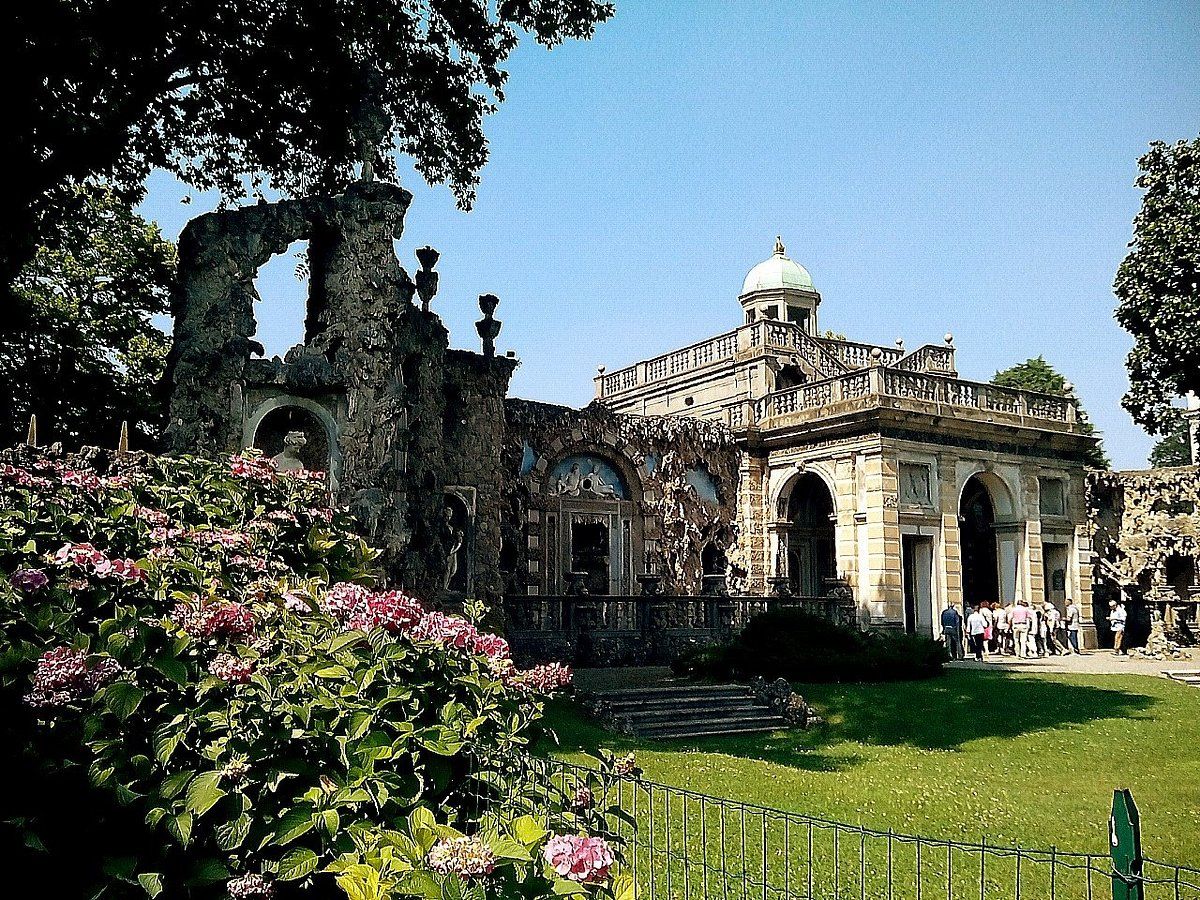
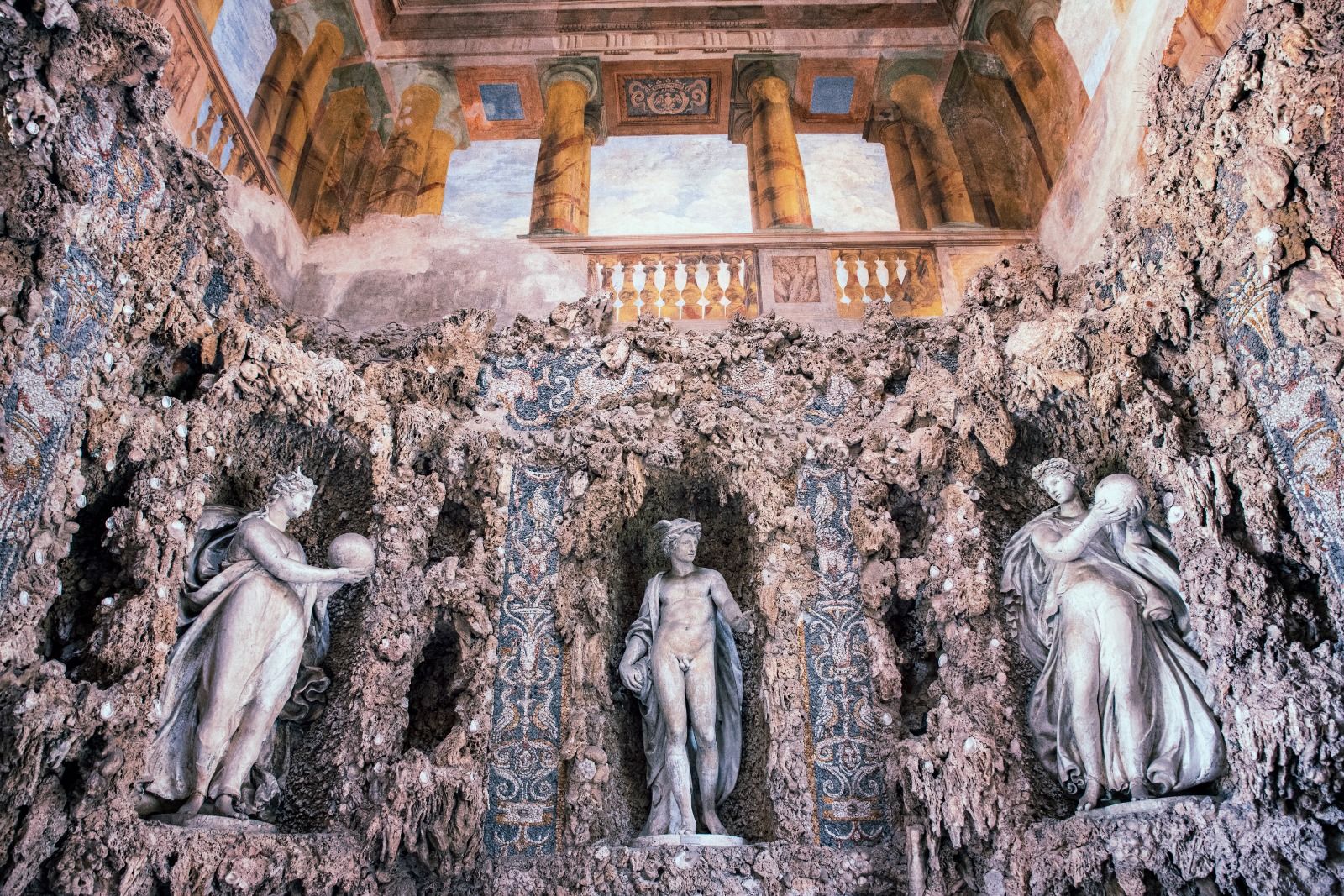
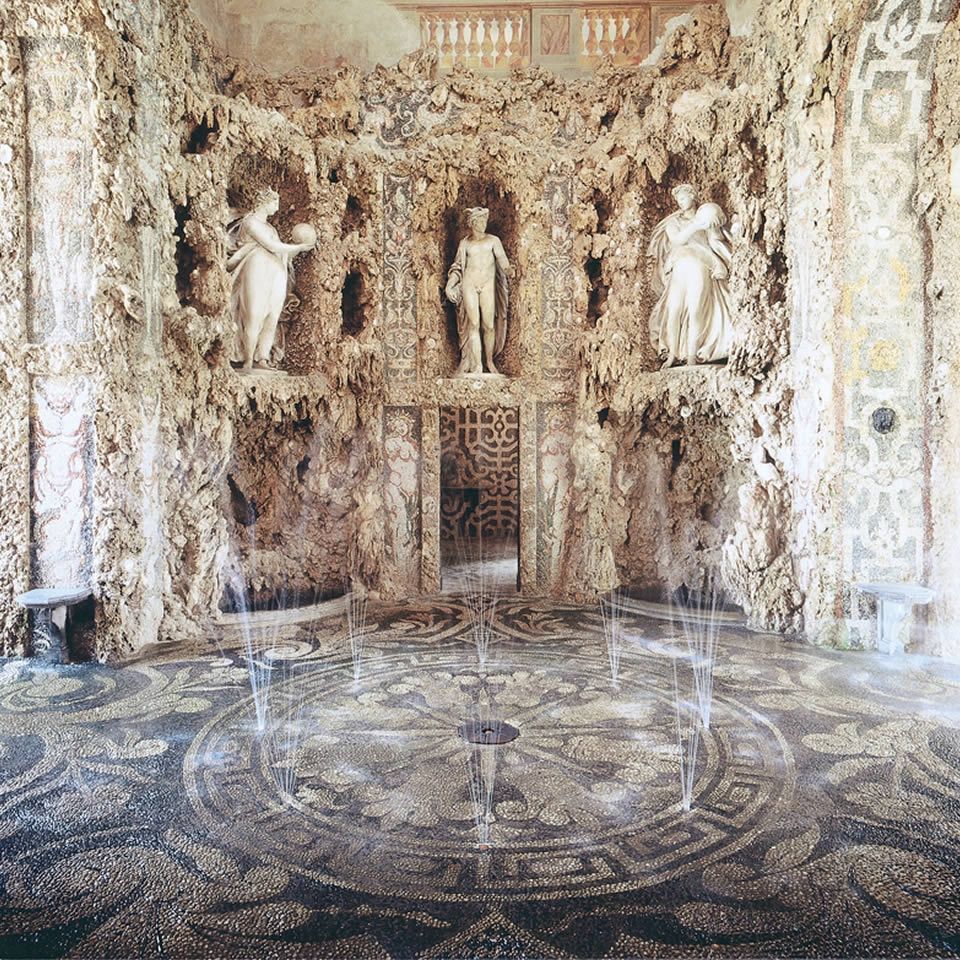
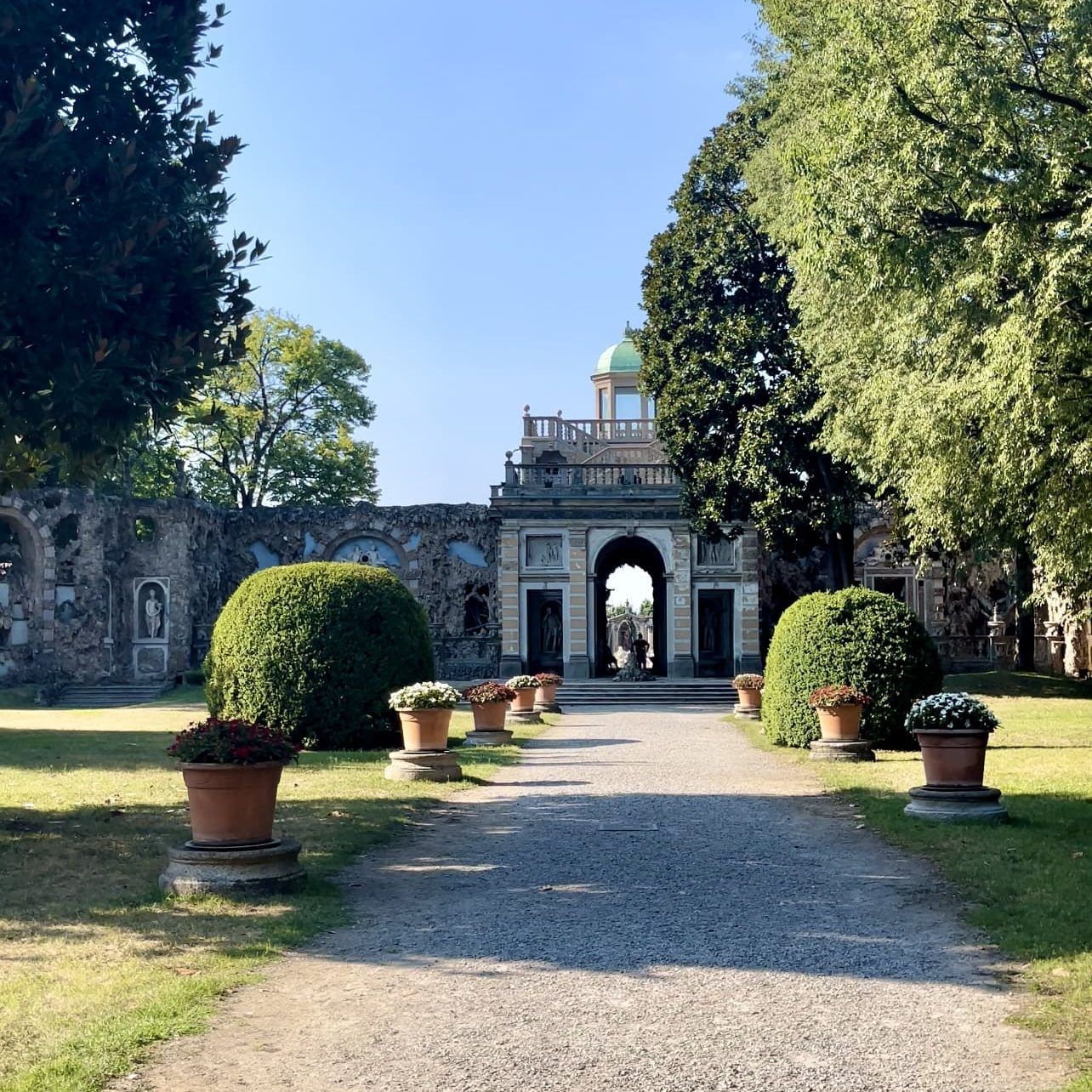
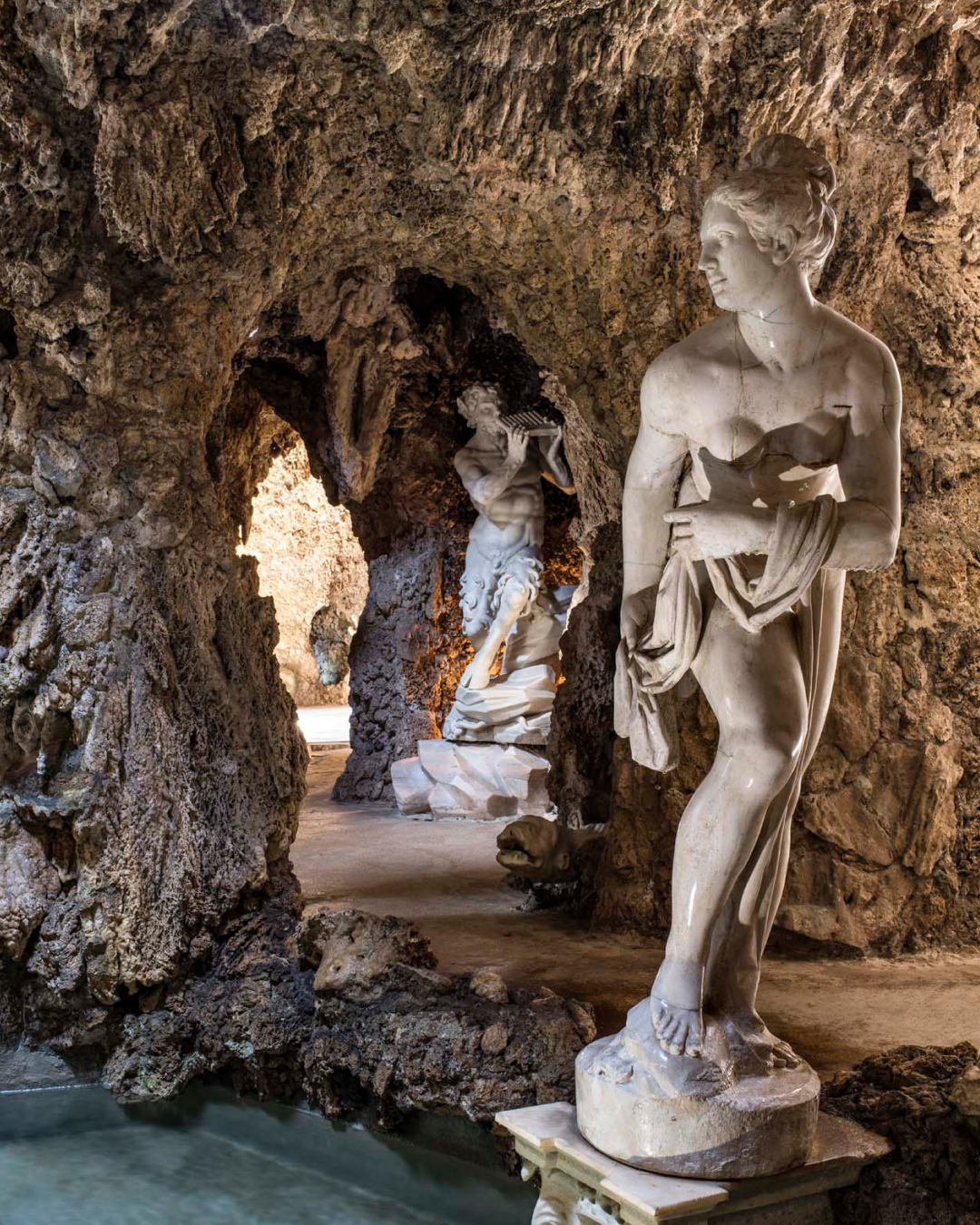
Here, the watchword is wonder, and not in a figurative sense: Villa Litta in Lainate conceals one of Italy's most incredible nymphaea, designed specifically to surprise guests with water tricks worthy of a Renaissance amusement park. The complex's Nymphaeum architecture, built between 1585 and 1589 to a design by Martino Bassi, once housed the art collections of the Borromeo Visconti Litta family: paintings, fossils, minerals, coins, sacred relics, automata and archaeological artefacts, arranged in a succession of symmetrical rooms. The interior rooms are decorated with mosaics of black and white pebbles, unique of their kind, and conceal automata that still work, including a mechanical hen that lays an egg amid miniature waterfalls.
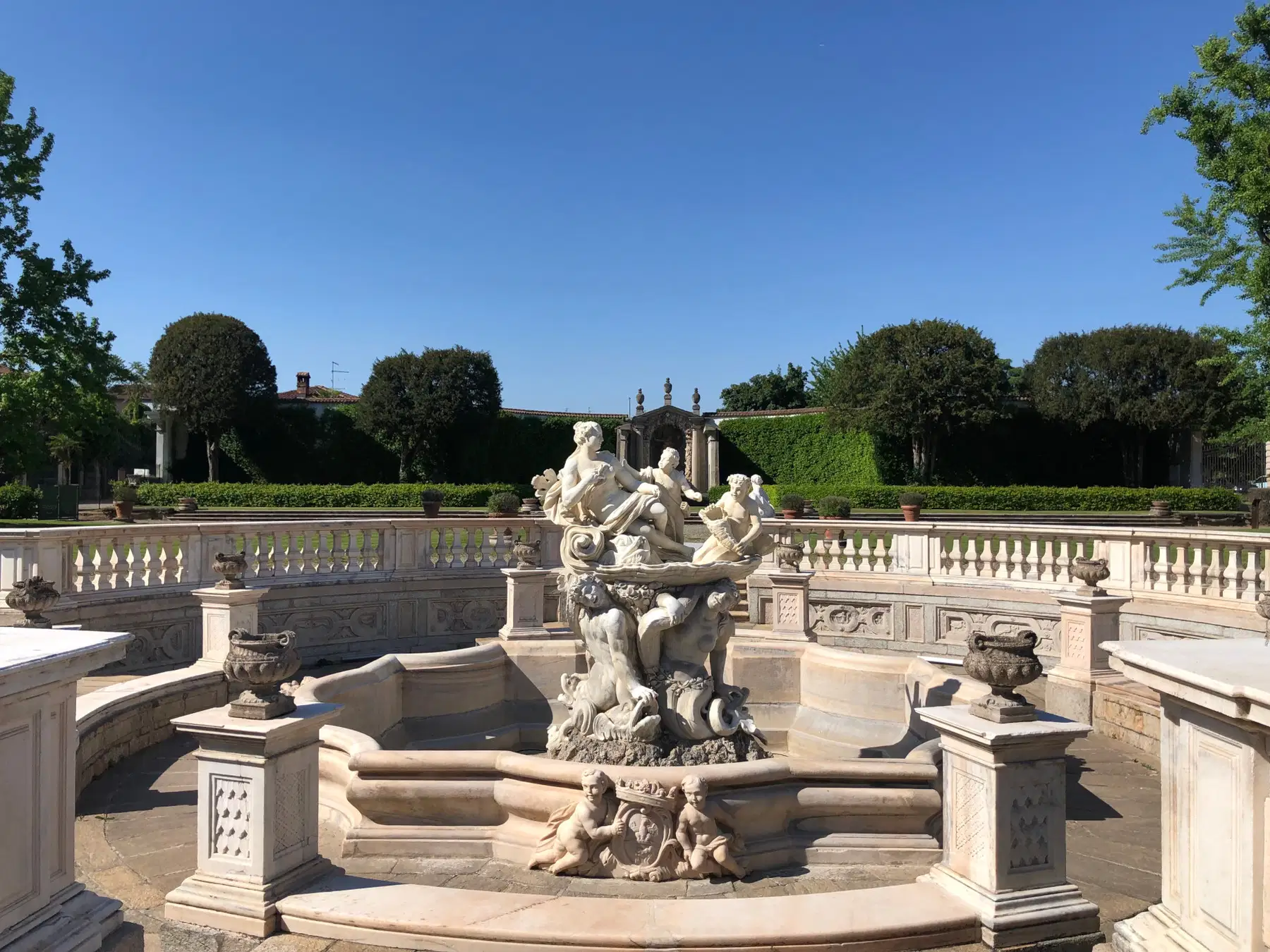
The most theatrical moment comes in the grottoes, where all it takes is stepping on the famous “Stendhal step”—so called because it was mentioned by the French writer after a stay at the villa—to trigger a sudden jet of water among the statues of fauns and naiads. A short distance away, the Galatea fountain, made almost entirely of Carrara marble, brings the route to a beautiful close. Guided tours, often led by enthusiastic volunteers who activate the surprise water features, turn the outing into a little treasure hunt for adults and children.
Cesano Maderno LIPU Nature Reserve (Monza)
For anyone who can no longer stand even the thought of another concrete courtyard during the Milanese summer, the Cesano Maderno LIPU Nature Reserve is the perfect remedy: one hundred hectares of woodland, heathland and wetlands just a stone's throw from the city, where the loudest sound is a heron taking flight. Created in 1997 from an old clay quarry restored through a joint initiative by the municipality, LIPU and Parco delle Groane, the reserve is home to numerous migratory bird species such as the European bee-eater and the great egret, as well as mallards, kingfishers, coots and even four species of nocturnal birds of prey: barn owls, tawny owls, little owls and Eurasian eagle-owls.
Around four kilometres of trails, winding through oak woods, birch groves and hawthorn bushes, also lead through the famous Gnome Woods, said by local legend to be inhabited by Spino the gnome, the reserve's symbol. Along the way there are observation hides for birdwatching, a butterfly garden and a zero-impact wooden visitor centre, an ideal starting point for anyone who wants information about the trails before venturing among the woods and reeds. A perfect destination for families with children, nature lovers or simply anyone in need of an afternoon without car horns.
Trezzo sull'Adda (Milan)
We end with a destination that offers two outings in one: medieval history and river views, all seasoned with a touch of macabre legend that never hurts. The Castle of Trezzo sull'Adda stands on a promontory protected on two sides by the Adda River, with a 42-metre-high square tower on the third side, and was built to defend a ford in a strategic position, probably as early as the Lombard or Carolingian period. It was in this very castle that Bernabò Visconti died, imprisoned and killed by his nephew Gian Galeazzo Visconti, in one of the murkiest episodes in Milanese history.
Today, the original splendour is represented above all by the tower, which you can climb for a view stretching from the Po Valley to the Orobic Pre-Alps, as well as by a 15th-century well and the atmospheric underground passages. At the foot of the castle stands the Taccani Hydroelectric Power Station, a gem of Art Nouveau industrial archaeology, while a cycle path follows the Adda along the river, between high, wooded banks—ideal for anyone who wants to extend the outing with a bike ride. For the curious, Leonardo da Vinci also passed through these parts: some of his drawings of the castle are still preserved in the Codex Windsor.