October 26th, 2026
Every single Italian location in Dario Argento's filmography A guide to all the most iconic locations of the master of Italian horror
Dario Argento is, without beating around the bush, the most celebrated director of Italian horror. Not so much for his ability to write great dialogue, tackle social themes, or direct memorable performances, but for his incredible talent for endowing his stories with a dreamlike artificiality that manages to be entirely visionary. Argento's best films take the classic Italian horror template and transform it into something hallucinatory and feverish.
Argento's skill lies precisely in this: manipulating and sometimes even assaulting the viewer's perception by immersing them in a non-reality that follows the same logic (and the same inconsistencies) as fairy tales and nightmares. It is pure style beyond any limit of plausibility. And within this style, Italian art and architecture frequently feature. Although many of the director's films are set in Rome, the locations Argento chooses for his sets are scattered throughout northern Italy and are often selected with a connoisseur's eye. His favourite city is Turin, "the place where my nightmares feel most at home," as Argento himself wrote in his autobiography Paura. But often several cities coexist within the same film, helping to create a sense of subtle disorientation that further enhances the films' overall effect. And it is with Turin that we will begin our survey of the Italian locations featured in Argento's films.
Turin
As we were saying, Turin is the city most closely associated with Dario Argento's imagination. He has spoken of being fascinated by the city since childhood, both for the many esoteric legends surrounding it and because it is "multifaceted and eclectic," as he put it in an interview. Indeed, seven of his films were shot here. The Cat o' Nine Tails (filmed in 1970 and released in 1971) is the first of the director's films to feature many Turin locations, including the Cimitero Monumentale, where the protagonists search for a grave at night; Porta Nuova station, where a character is pushed under a train; the Galleria d'Arte Moderna (GAM), used as the exterior of the Istituto Terzi; Piazza Solferino; and at Piazza Crimea 2, the Casa dell'Obelisco — with its oyster-shaped entrance and curved façades — which in the film serves as the home of Bianca Merusi.
Just a year later, Argento returned to the city for Four Flies on Grey Velvet (1971), using as sets the RAI Auditorium in Piazza Rossaro, the Galleria Umberto I, the Conservatorio Verdi in Piazza Bodoni (exterior of the theatre where Roberto accidentally stabs his stalker; the interiors were shot in Spoleto), the Galleria Subalpina (the office of the detective Arrosio), the Caffè Mulassano at Piazza Castello 15 with the square's arcades, the Giardino Lamarmora, Piazza XVIII Dicembre at Porta Susa, and a building on the corner of Via Duchessa Jolanda and Via Collegno, with the entrance hall at Via Collegno 45.
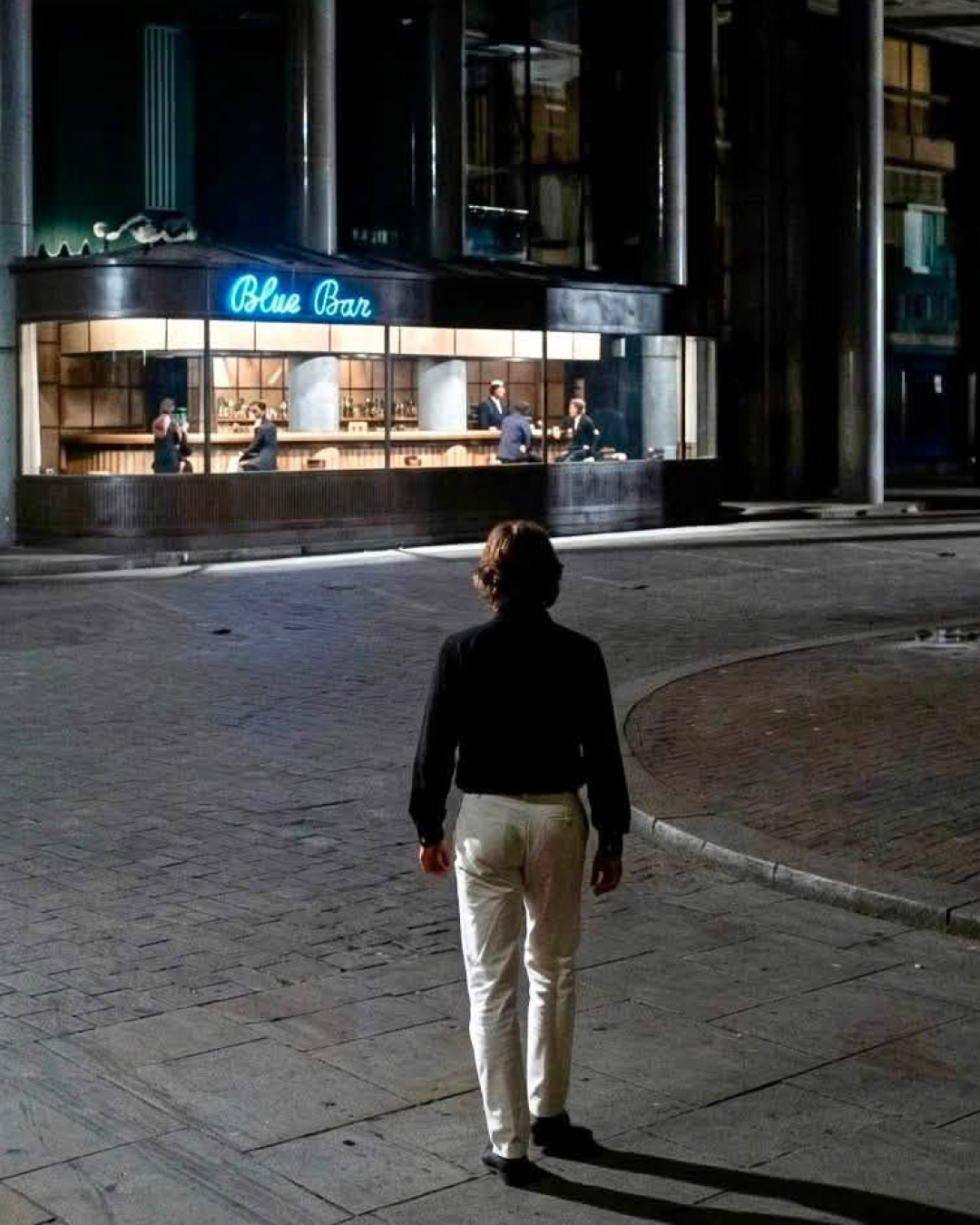
The iconic Deep Red (1975) was also shot in Turin, though its story is set in Rome, where additional filming took place. The Teatro Carignano hosts the opening parapsychology conference. In Piazza C.L.N., with the fountains of the Po and the Dora, stand the Blue Bar — purpose-built and inspired by Hopper's Nighthawks — and the building where Marc and the medium Helga Ulmann live, the scene of her murder. Marc and Carlo stroll through the Galleria San Federico. Villa Scott in Borgo Po, designed by Pietro Fenoglio in 1902 and at the time a girls' boarding school run by nuns, is the "villa of the screaming child."
Argento then returned to the Teatro Carignano and the Cimitero Monumentale for Sleepless (2001), along with Villa San Quirico — called Villa De Fabritiis in the film — and the locomotive depot at Ponte Mosca. The television film Do You Like Hitchcock? (2005) features the Fontana dei Dodici Mesi, while The Mother of Tears (2007) includes the Galleria Subalpina (in a flashback), Villa Imperiali Becker, and many interiors shot at the Accademia Albertina delle Belle Arti, while Andezeno stands in for the cemetery in Viterbo, alongside a church in Buttigliera Alta where Sarah meets Father Johannes. Finally, Giallo (2009) is set entirely in Turin, with key locations including the Teatro Regio at Piazza Vittorio Veneto 24 (where the model's apartment is located), Piazza Bodoni, Palazzo dei Cavalieri, and a square with a fountain in Bra, in the province of Cuneo. Many interiors were reconstructed in the former Enel headquarters in Turin. Outside the city but still in Piedmont, Dracula 3D (2012) makes use of the Castello di Montalto Dora.
Rome
In Rome, the director's hometown, Argento often shoots in modern or hard-to-recognise neighbourhoods. It is worth noting that almost all of the director's films are set in the capital, but not always filmed there. In The Bird with the Crystal Plumage (1970), filming was concentrated mainly in the Flaminio district: the Bioparco and the Museo Civico di Zoologia are recognisable, as are the building at Via di Santa Melania 18 on the Aventine, the Cinema Fiamma, the Grand Hotel Palace (where the former boxers' convention takes place), the Hotel Astrid — which becomes the building of the fifth victim — and the Coppedè quarter. In The Cat o' Nine Tails, the interiors of the Istituto Terzi appear, along with the Hotel Hilton Rome Cavalieri, villas such as the one at L'Olgiata and the one at the end of Via dell'Antartide; while the rooftops of the final chase sequence are in Pomezia.
Four Flies on Grey Velvet was shot mainly in the EUR district, on Largo Apollinaire and Largo dell'Artide. Ponte Marconi, Piazza dei Quiriti with its fountain, and Villino Crespi on Via Nomentana — standing in for Villa Rapidi — also appear. The park where the maid is murdered is that of Villa d'Este in Tivoli. In Deep Red, Rome contributes the Mausoleum of Santa Costanza as the rehearsal room for the jazz group at the opening; the Museo delle Arti e Tradizioni Popolari at EUR, which becomes a library; the Liceo Mamiani; the Mercato Trionfale; Amanda Righetti's villa at Via della Giustiniana 773; and the home of Olga and Mr Rodi at Via della Camilluccia 364. The final hospital is the former Clinica Madonna delle Rose in Fonte Nuova.
Although set in New York, Inferno (1980) famously featured the Coppedè quarter, with the Palazzo Coppedè itself transformed into the entrance of a library, for whose interiors the Biblioteca Angelica was used, while the celebrated Mater Tenebrarum scene was filmed in the lecture hall of the George Eastman dental hospital.
Tenebrae (1982) is the film that makes the most radical use of the city, which appears hyper-modern and almost deserted. Here too the set is in EUR and Casal Palocco: the Le Terrazze shopping centre is the setting for the ambush on John Saxon, and the Ronconi villa by architect Busiri Vici is the house featured in the celebrated sequence shot that circles the building from the rooftop. La Rinascente in Piazza Fiume hosts the theft of the book; the Hotel Jolly Villa Carpegna serves as the exterior of Franciosa's home, with the Hilton Cavalieri as its interior; the villa with swimming pool belonging to the critic Steiner is in Formello, on Viale Perù, while the villa in the finale is at Via Groenlandia 19. Other celebrated interiors were shot in the villa of architect Sandro Petti, a modernist masterpiece on Viale Perù.
In Opera (1987), the Salone dei Mappamondi at Palazzo Sacchetti on Via Giulia 66 is visible, and Via Nazionale also appears. The Stendhal Syndrome (1996) has several scenes shot at the Fontana del Putto in Villa Doria Pamphilj, inside the British Academy, in the Galleria Nazionale d'Arte Moderna, the Accademia di Belle Arti, and in villa interiors. Finally, The Card Player (2004) is entirely set in Rome, though rather unremarkably. It features the Orto Botanico del Gianicolo, the Complesso del Buon Pastore on Via di Bravetta, the Albergo del Senato in Piazza della Rotonda, the Vicolo dei Costaguti, and Piazza Mattei. The Mother of Tears also sets its story in Rome, with the opening scene filmed at Palazzo Braschi.
Other Italian Cities
As mentioned, Argento has filmed sporadically all across Italy: Milan, for example, and the red metro line stations appear in Four Flies on Grey Velvet, including the mezzanine bathrooms at the Duomo stop. Florence is the partial setting for The Stendhal Syndrome: Argento remains to this day the only director in history to have filmed inside the Uffizi, as well as in several streets in the city centre. The same film includes many scenes shot in Viterbo: the Palazzo dei Papi, the Palazzo dei Priori, and Piazza Cappella are the most notable locations.
Parma is the setting for Opera, shot almost entirely inside the Teatro Regio. The Bird with the Crystal Plumage includes the Agnano racecourse in Naples, while the monumental cemetery in Perugia provides Deep Red with the cemetery for Helga Ulmann's funeral. In Spoleto, finally, the abandoned theatre scene from Four Flies on Grey Velvet was filmed, though Davinotti refers to the Teatro Sperimentale while Wikipedia cites the Teatro Nuovo Gian Carlo Menotti.