September 5th, 2026
How did the Venice Film Festival come to be? Now in its 83rd edition, we trace its history
The very first Venice International Film Exhibition wasn't even called that, but rather the International Exhibition of Cinematographic Art. It began on August 6, 1932 and ran until the 21st. It was held exclusively on the terrace of the Hotel Excelsior, thanks to the support of Count Giuseppe Volpi di Misurata, president of the Biennale, sculptor Antonio Maraini, secretary general, and Luciano De Feo, secretary general of the International Institute for Educational Cinema. De Feo was also the first director-selector of the Festival. There was no official competition yet, but the Festival nonetheless managed to attract international titles and talent. The first film ever screened in the Festival's history was Rouben Mamoulian's Dr. Jekyll and Mr. Hyde.
The second edition of the Festival was held two years later, in 1934, with the establishment of the Mussolini Cup to award the best foreign film and the best Italian film. There was no jury. The Festival only became annual in 1935, when the prize dedicated to the best actors was renamed the Volpi Cup. In 1936, the International Jury was appointed for the first time, while in 1937 the new Palazzo del Cinema was inaugurated. Nearly ninety years have passed since then. The Festival has grown, becoming one of the most important events in the world, and has gone through various phases — phases in which it succeeded, more or less, in attracting international talent, phases in which it was in open conflict with industry associations, and phases in which it struggled to find direction and appeal.
Venice is the world's oldest film festival
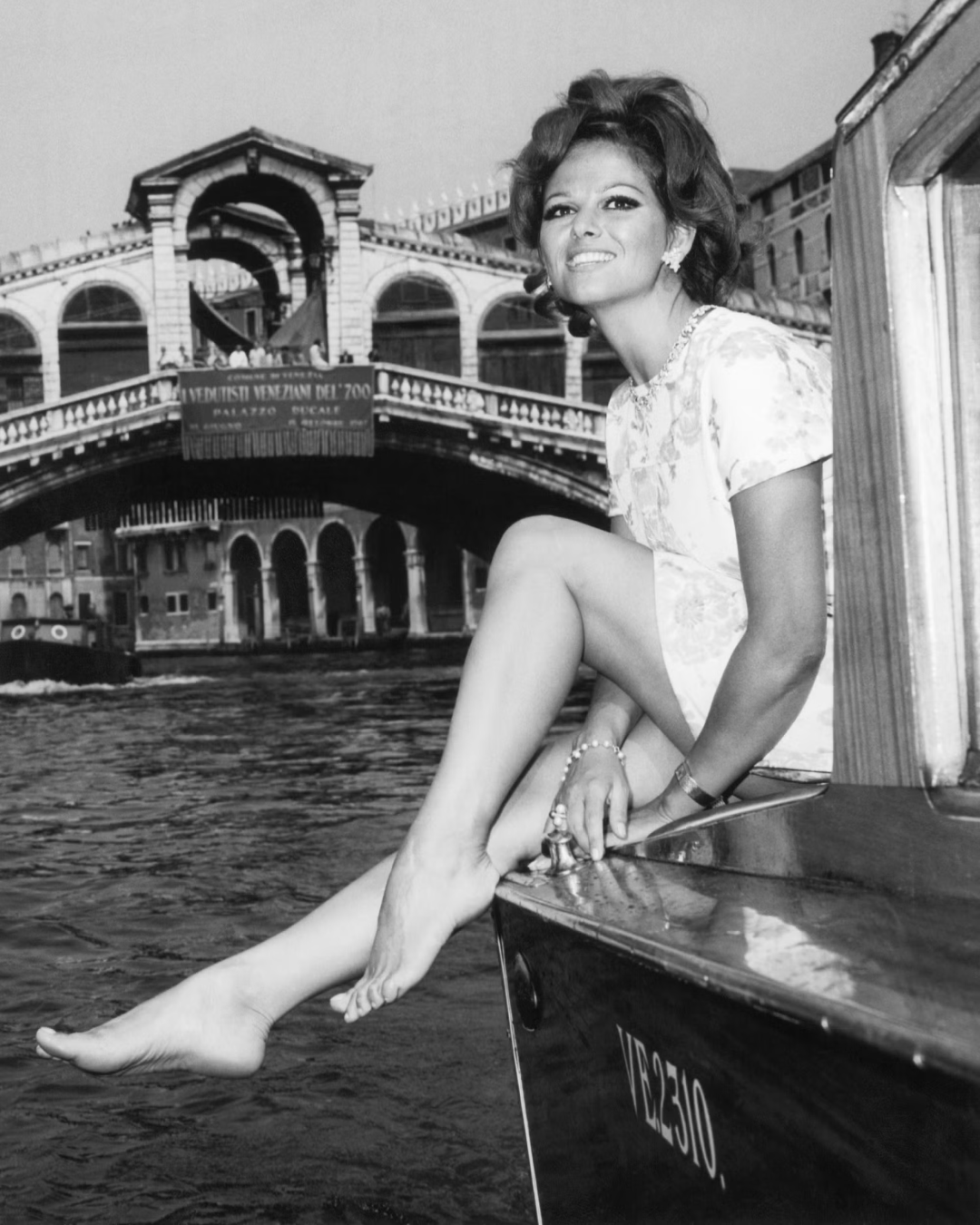
@cinecitta_official La Mostra del Cinema nel 1956. Mentre il Lido si prepara ad accogliere il meglio del cinema d’autore contemporaneo e i suoi protagonisti, torniamo indietro di settant’anni. Quali erano i volti della Mostra, allora? Questo cinegiornale racconta l’arrivo in Laguna di alcune delle grandi personalità dell’epoca: le star del cinema Gina Lollobrigida, Pierre Cressoy, Hélène Rémy, Elsa Martinelli, Alberto Sordi, Sylva Koscina e James Mason; le leggende della musica Igor Stravinskij, Arthur Rubinstein e Maria Callas; la grande attrice teatrale Emma Gramatica. E ancora, i duchi di Windsor e la socialite Barbara Hutton. : #ArchivioLuce #FestivalDiVenezia #VeniceFilmFestival #Venezia83 #storia suono originale - Cinecittà
The editions held during World War II are not counted in the official numbering. And yet, despite this, the Festival remains the oldest film festival in the world. This is a significant fact — not so much for the record itself, but precisely because it reaffirms the intention to create a space dedicated to artists. Beyond the political choices that have always ended up influencing the Festival and the Venice Biennale, there has always been a notable interest in exploring different cinematographies from around the world (between the 1950s and 1960s, for example, it was the turn of Japanese cinema).
The history of the Venice International Film Festival runs parallel to the history of the Biennale: it began thanks to the passion of a handful of people and pressed on, with difficulty, even through the Fascist era. After the war, in the early 1950s, the Festival immediately tried to take a new direction, once again bringing together talents from around the world. The award ceremonies were both celebrations of cinematic talent and fierce clashes over the jury's choices. The Festival has weathered crises, effectively navigated the emergence of new artistic movements, and managed, in its own way, to capture certain phases of the seventh art. It has not always done brilliantly — and that must be said. Even in more recent years, it has been forced to bend to political choices, more intent on asserting the idea of the moment than on reaffirming Italy's and Venice's centrality in cinema.
The rebirth of the Film Festival under Alberto Barbera
alberto barbera è l'amadeus delle persone ossessionate dalla mostra di venezia (io)
— yorgos (@ziogregorin_) May 11, 2024
With the return of Alberto Barbera as director in 2012, the Festival entered a period of consolidation and international affirmation. Consider, simply, the many films that over these years have passed through the Venice Lido and gone on to receive Oscar nominations and awards; consider also the ability that Barbera and the other selectors have shown in turning their gaze toward other markets and other filmmakers. The Hollywood majors, which until this 83rd edition have always populated the Festival, ended up overshadowing the other selected films, especially when it came to smaller works, perhaps by debut directors. And yet the selectors have never stopped trying to look around and explore the new voices of world cinema.
How did we get to Venice83?
Of course, it is undeniable that politics and agreements with producers and distributors have often carried more weight in various decisions. This is, inevitably, particularly evident with Italian films. The presence of several sections, in addition to the main competition, has however made it possible to pursue different paths simultaneously. From 2012 to the present, other initiatives have been launched, such as Biennale College, which aims to research and nurture new talent. Additional screening rooms have been added, and existing ones have been renovated. The Festival experienced a new golden age in the 2010s, and that is a fact. Also a fact is the more or less tense competition with the Cannes Film Festival, which has itself gone through periods of extraordinary success and of constraint.
It is a balancing act, this world of film festivals — a game in which decisions and connections matter. Over the years, controversies have come and gone (and there have been some during this edition too), and big names have come and gone as well. The jury itself has changed its character many times: at first, film theorists such as journalists and critics also had a place; then actors and directors came to carry ever greater weight. There are Italian quotas, so to speak, and there are also new juries dealing with relatively new forms of expression, such as virtual reality. But what always endures — and this is important to say — is the desire to seek out talent, to support it, and to make room for new voices. Consider the Orizzonti section, the Luigi De Laurentiis Award for best debut film, or the Marcello Mastroianni Award, presented to actors who have distinguished themselves through their performances.