November 4th, 2026
There are works by Gio Ponti that haven't been seen for over twenty years A prototype of the Superleggera, furniture made with Fornasetti, and three years of research to rediscover the lesser-known side of the Italian designer
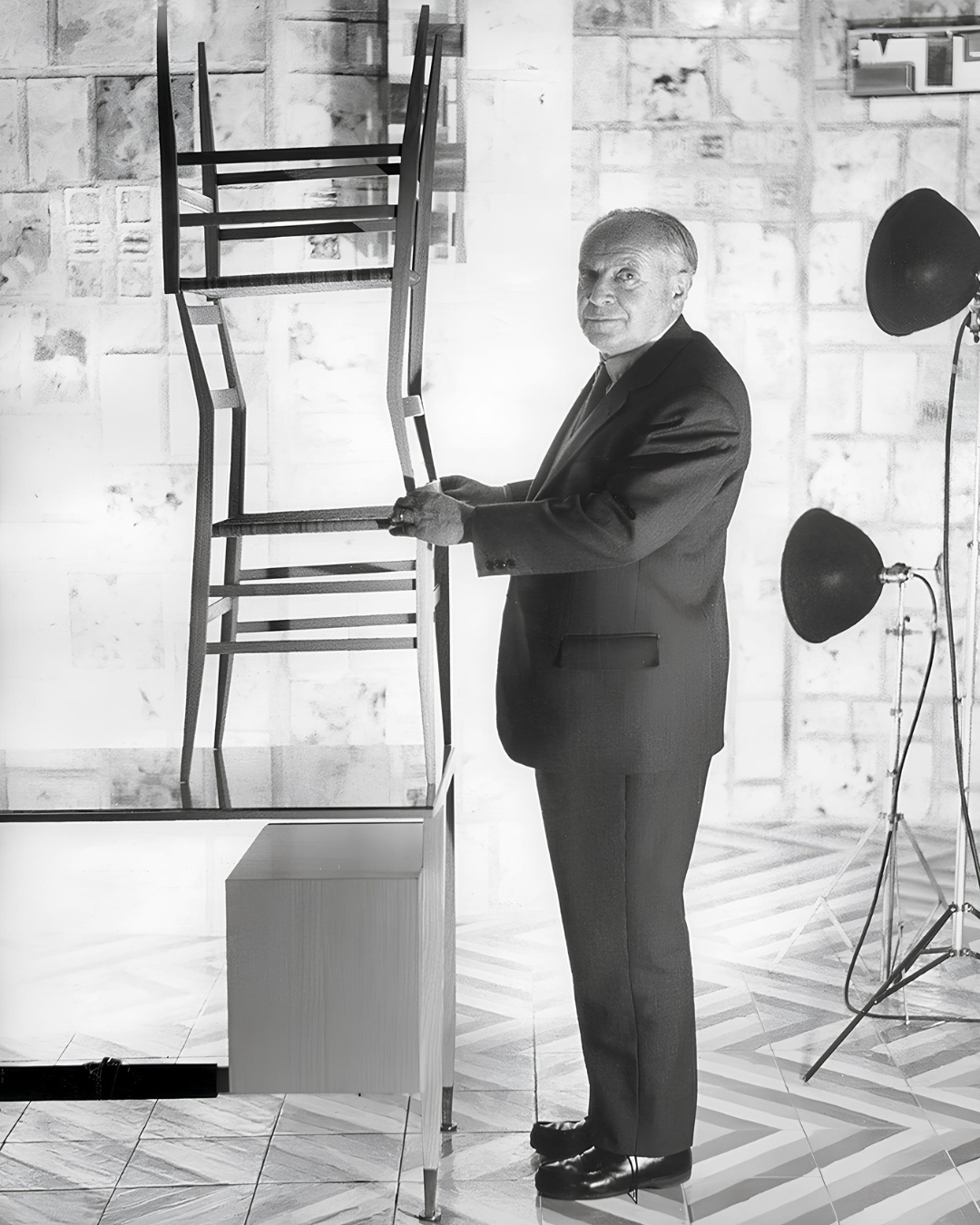
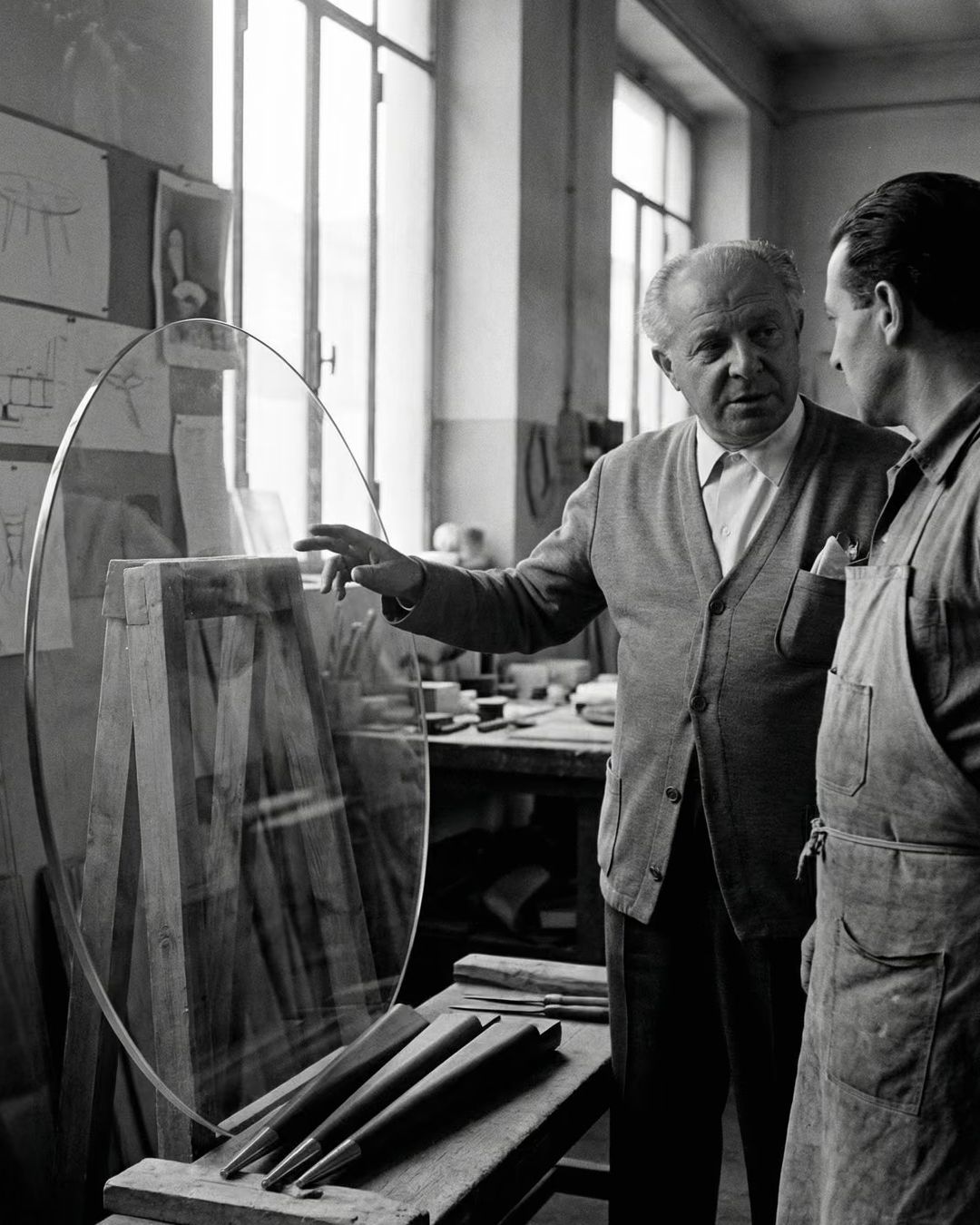
There are works by Gio Ponti that the public had not seen for over twenty years. They had not been lost, but had remained in private collections across Europe and the United States, some for generations. Now they have resurfaced in New York with Gio Ponti: Designing Optimism, an exhibition bringing together over 80 works created between the late 1920s and the mid-1970s. Among the furniture, lamps, ceramics, and drawings, there is also a prototype of the celebrated Superleggera dating from 1950, with a worked wooden frame and brass details too intricate for mass production. The version we know today would arrive in 1957, through Cassina.
Gio Ponti did not stop at the Superleggera
The exhibition also features a 1946 cabinet decorated with zigzag motifs and a trumeau created with Piero Fornasetti in 1950, with decorations reproducing views of Venice. To track down these works, gallerist Paul Donzella and design historian Brian Kish spent over three years combing through auctions, collectors, and private contacts. And this is no traditional retrospective: Designing Optimism is also a selling exhibition, where the works on display can be purchased.
From furniture to skyscrapers
Ponti moved between affordable furniture designed for the homes of postwar Italians and experimental pieces for luxury hotels. He mixed inexpensive materials with fine woods, pairing Formica with walnut burl or bamboo weaves with African timbers. Throughout his career he kept shifting his visual language, moving from everyday objects to major architectural projects, never abandoning color and decoration. All the while, he was also editing Domus, the magazine he had founded in 1928. Today his name is associated above all with a handful of projects that have become icons, from the Superleggera to the Pirelli Tower.
But in between lie decades of experiments, prototypes that never went into production, and collaborations that have remained on the margins of the best-known accounts of Italian design. Some objects had not been exhibited for so long that they had almost vanished from collective memory. Now a portion of this body of work has been brought together at the Donzella Project Space in New York, where the exhibition will remain open until December 22, 2026.