October 29th, 2026
The true story of Italian witches, region by region The women who shaped Italian witchcraft and the trials that tried to erase them
In almost every Italian village, there was a woman whom other women would seek out when they no longer knew where to turn. She lived a little on the outskirts, where the houses thin out and the countryside begins; she was often a widow, and she kept bundles of herbs hanging from the kitchen beams to dry, filling the whole room with their scent. She knew what to do when a child wouldn't sleep, when a girl was waiting for a letter that never came, when a cow stopped giving milk.
During the day, people brought her eggs in exchange for a decoction and lingered on her doorstep longer than necessary. At night, if a horse was found sweating in its stall or a newborn woke up pale, her name was the first to come to mind, whispered by the same lips that had thanked her the day before. Every region called her something different — janara, masca, stria, magara — and attributed different powers and flaws to her. The story, from Benevento to the Langhe, was always that of a solitary woman who knew too many things: we trace her history and her legends, to understand how feared she was and how, in the end, there was little to fear.
The Walnut Tree of Benevento and Inherited Powers
In Benevento, it all begins with a tree. Along the Sabato river there grew an enormous walnut tree beneath which, it was said, witches would gather at night, and the mistresses of this craft were called janare. The name is rooted in the name of a goddess: it likely derives from Dianara, a follower of Diana. Another interpretation traces it to ianua, meaning door, because the janara entered houses at night by slipping under the threshold, with no need for a key. In the seventh century, Bishop San Barbato had the walnut tree cut down, convinced that this would settle the matter. A matter that, however, remained open for another thirteen centuries.
The janara of tradition tied knots in horses' manes, sat on the chests of sleeping people, and tangled children's hair while their mothers weren't looking. She was also — and this is always forgotten — the woman people went to for an ointment or to have a curse lifted, feared and sought out with equal intensity. To keep her out, all you needed was a broom leaned against the door: the janara couldn't resist the urge to count the bristles one by one, and by the time she finished, daylight had come.
In the valleys of Piedmont and Valle d'Aosta, the word masca appears for the first time in the Edict of Rothari of 643, in which the Lombards forbade the killing of a servant woman accused of being a "striga, quam dicunt mascam." The fact that such a law exists, unfortunately, proves that someone was doing it. The masca's roots run deep into the Celtic world of the Alps, and her power is passed on at the moment of death, from mother to daughter or to the first person willing to accept it — and once accepted, it cannot be returned. Anyone who refuses condemns the dying woman to an endless agony, for the masca cannot close her eyes until she has entrusted her secret to someone.
Madonna Oriente and Rituals Against the Evil Eye
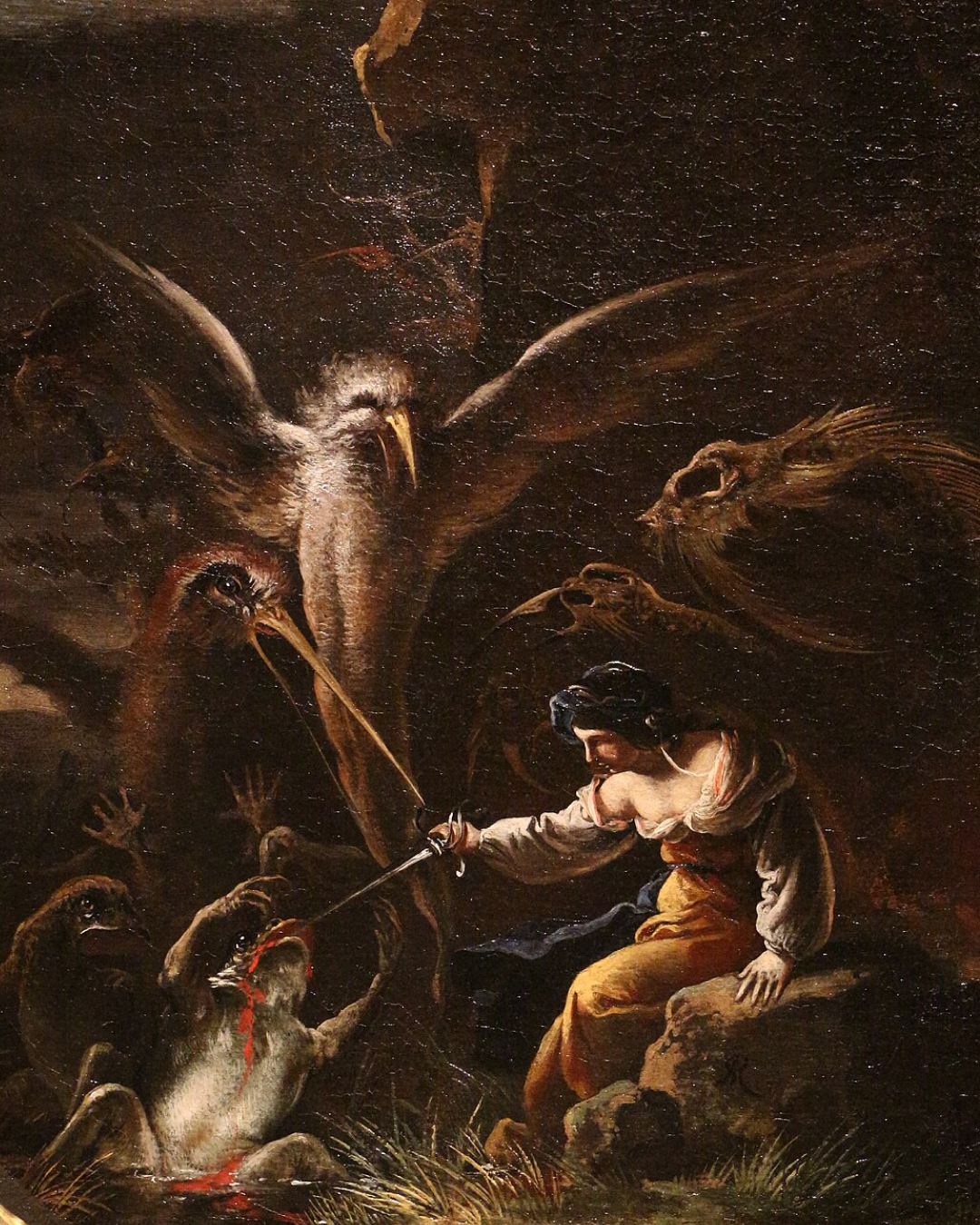
In Lombardy, they were called strie, from the Latin striga, and they are the witches we know most about for a reason we certainly shouldn't be proud of: they were the first to appear before a tribunal, and records of their testimonies have survived. The stria of the plains and the Brescian and Bergamasque valleys went out at night to specific places — a wood or a clearing — where they danced, ate together, and learned the properties of herbs.
In the oldest versions of the story, these nights were presided over by a gentle lady, a noblewoman who with a wave of her wand brought back to life the animals that had just been eaten and went from house to house blessing those that were kept in order. She was a Diana of the countryside, with the practical sense of a housewife. It was the Inquisition, between the fourteenth and sixteenth centuries, that transformed the lady into a devil and the dance into a sabbath, and from that point on the stria became the witch we all know.
In Calabria, the witch is called magàra, and she knows how to identify and remove the evil eye — that concentrated envy which for centuries has explained sudden headaches, cows that stop giving milk, and loves that grow cold for no reason. People went to her with a plate of water and a few drops of oil, to see whether the drops spread out or stayed still, and returned home with a formula to repeat three times and a small bag of salt in their pocket. Many magare were midwives, many were widows, and almost all were women who lived a little apart from others, in somewhat more isolated houses, with a little more freedom than their neighbors were willing to tolerate.
The Witch Trials in Italy
Behind every witch there is always someone who believed she was one — whether she was in reality a simple healer or a woman trying to assert her own rights. In Italy, this role was played by Dominican inquisitors, village vicars, and lay commissioners, backed by entire communities that needed to explain a failed harvest or a love affair gone wrong. The most famous case remains that of Triora, in the Ligurian hinterland — the Salem of Italy: in 1587, two years of famine drove the local parliament to seek a scapegoat, the vicar Girolamo Del Pozzo asked the faithful during Mass to denounce witches, and within a few months some thirty women had been accused.
Among them was Franchetta Borelli, who during interrogations was described as the most powerful of all, and who endured hours of torture without adding a single word to what had already been extracted from her by force. The Genoese commissioner Giulio Scribani transferred the women to the prisons of Genoa and intensified the torture. It was the Holy Office in Rome that called a halt in October 1588: Franchetta returned home in 1589. A few years later, in 1594, Gostanza da Libbiano appeared before a young Franciscan vicar in San Miniato — a sixty-year-old widow who worked as a weaver, midwife, and healer, and whom the village had called upon for years whenever a child was born or an animal fell ill.
After imprisonment and torture, Gostanza confessed to everything, and it was the Inquisitor of Florence — older and more skeptical — who believed not a word of it and had her released, on the condition that she leave San Miniato forever. In truth, Italian witches were almost always like this: women who lived a little apart and knew a little too much, with a little more freedom than suited the tastes of those who lived nearby. They knew how to count grains of wheat, identify a herb in the dark, and lull a child to sleep. The magic, in most cases, was just an excuse.