October 19th, 2026
Today there are two Italys on strike and the media don't want to tell their stories In the North, protest coverage revolves around smashed shop windows; in the South, the struggle is just getting noticed in the first place
Italy has always been divided in two: the North on one side, the South on the other. Two entities that, despite 165 years of unification, we still struggle to regard as a single country. And even when people take to the streets on the same days, this distance seems to resurface in the way the protests are reported. The weekend of 16, 17 and 18 October revealed two problems that end up converging: being covered through the lens of clashes, or struggling to be covered at all.
Protests and clashes in Milan: where do the students' grievances end up?
@giuliamoramarcoo Milano, 17 ottobre 2026. Dietro tutto ciò che oggi è stato distrutto, bruciato e danneggiato, c’è una realtà che spesso le immagini non raccontano. Milano ha subito danni gravi, anzi gravissimi, sicuramente da condannare; ma ridurre l’intera manifestazione alla violenza significa non vedere la differenza tra chi era lì per far sentire la propria voce e chi, invece, ha scelto di usare la piazza come pretesto per distruggere. Vi dirò quello che ho visto io nel resto del corteo: ho visto ragazzi stanchi di non essere ascoltati, di vedere i propri diritti sfuggire e il proprio futuro diventare sempre più incerto. Ragazzi che per una volta si sono uniti per chiedere un cambiamento, non la distruzione, ma la costruzione di qualcosa di diverso. Si può condannare la violenza senza screditare un'intera manifestazione. Si può essere contro chi distrugge senza ignorare chi protesta pacificamente. Oggi, per la prima volta, ho scelto di esserci. Di non restare a guardare, di non limitarmi a lamentarmi tra le mura di casa, di provare a far sentire la mia voce. E lo rifarei. Perché magari la mia voce, da sola, sarà piccola. Ma oggi, in mezzo a tutte quelle persone, ho capito che non era sola. #corteo #protesta #italia Quelli che benpensano (feat. Riccardo Sinigallia) - Frankie hi-nrg mc
As Sky TG24 reports, the reasons behind the student mobilisations include the cost of living, the state of school buildings, and the cap on foreign students in classrooms. Yet the coverage of the Milan weekend also produced headlines like the one from ANSA, which spoke of "guerrilla warfare" between Piazza Duomo and the Galleria. Images of clashes thus risk becoming the explanation for the entire protest. A smashed shop window is instantly recognisable, fits into a few-second video, and can be shared without any explanation. Explaining why a student took to the streets, on the other hand, requires time, questions, and context. When the narrative stops at the first image, the result is that we learn about the damage caused by the demonstration before we even hear the protesters' demands.
According to Corriere della Sera, those responsible for the violence appear to have organised themselves through Telegram channels in order to provoke law enforcement, and were disconnected from the issues being protested. This does not prove that all those detained belonged to the same network, but it makes it even less reasonable to automatically conflate those who were there to protest with those who were there to cause disorder. Why should the students' demands be overshadowed by the actions of those looting a shop?
In its article on the clash between Sala and Piantedosi, Linkiesta points out that holding authorities accountable for the management of public order is not the same as justifying the destruction. The same logic should apply to the reasons behind the protests: continuing to discuss them after the clashes does not mean absolving those who provoked them. Otherwise, all it takes is for someone to smash a window for the debate on the cost of living to become exclusively a debate about security.
Fuel costs: protests in Southern Italy
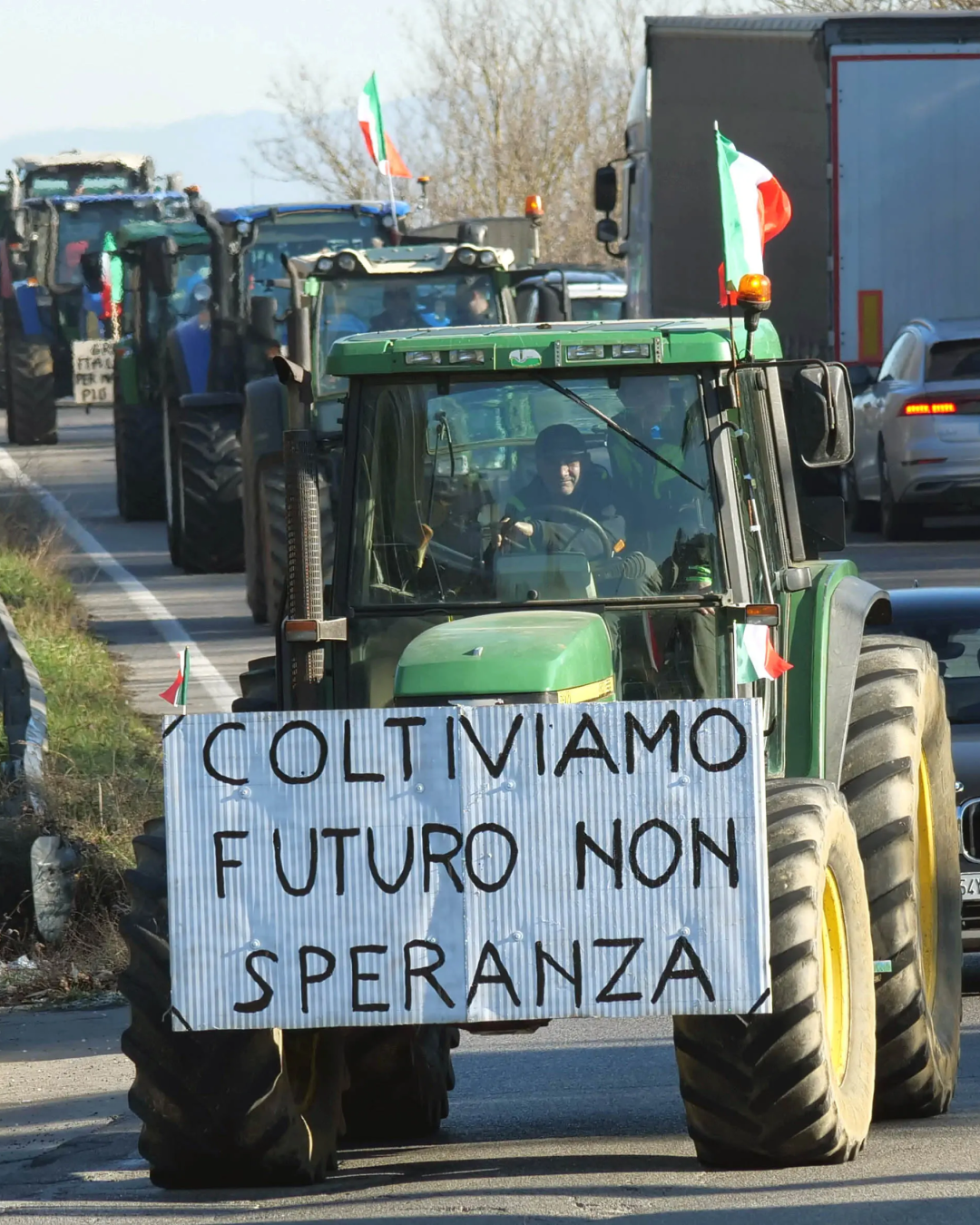
In the South, meanwhile, the problem starts even earlier. According to Scomodo's reconstruction, protests by farmers and hauliers against rising fuel costs began on 28 September across Calabria, Sicily, Puglia and Basilicata, while the first TG1 report came eighteen days later. Behind the blockades are businesses for which fuel is an unavoidable cost of staying operational. As Il Foglio reconstructs, hauliers are denouncing the cost of diesel and delays in promised aid, while farmers also have to contend with selling prices for oil and olives that they consider insufficient to cover the cost of the harvest. To understand the protest, you have to start here: how much it costs to produce and transport something, and how much is left for those who do it.
The dry fuel pumps also have a more complex story than the image of a South left without petrol might suggest. Again according to Il Foglio, the protests against price hikes were compounded by the shutdown of the Taranto refinery linked to the former Ilva dispute, which disrupted supplies. Different protests, whose consequences end up piling on top of one another in everyday life.
Why the media's coverage of the South is a national problem
lo stato, le istituzioni italiane e i media italiani sono antimeridionalisti. Nothing new under the sun
— the rise and fall of a patient 0 (@itsatrustfallts) October 16, 2026
The disparity in coverage may also have a cultural explanation. Milan and Bologna offer elements that readily lend themselves to becoming an immediate debate about young people, security and inequality — all hot-button topics, especially ahead of the upcoming national elections — whereas a protest by a haulage company is less viral, less clickbait. Covering it requires talking about margins, fuel, and energy policy.
Eighteen days means allowing all of this to be known mainly by those living through it. For people elsewhere, the risk is that the protest only becomes visible when it disrupts a delivery or complicates a journey. At that point, farmers and hauliers enter the narrative as the people blocking the roads, before they are ever seen as workers asking to be able to cover the costs of running their businesses. This is where the lack of media attention stops being merely a question of visibility. If what reaches us from the South is primarily the consequences of the protests, it becomes easier to ask when they will end than why they began.
How long must a Southern protest last before it is considered a national issue? If a struggle remains confined to the territory where it originates, the problems it raises can also come to seem like someone else's business. In the North, the grievances risk disappearing behind a smashed shop window; in the South, they have yet to cross the border.