August 15th, 2026
What is Ferragosto? Italy's most important holiday, dating back to Ancient Rome
Ferragosto, much like New Year’s Eve, is both the bane and the delight of Italian life: a mandatory celebration that requires everyone to do something and that, without fail, ends up falling short of expectations. Some choose to face this summer obligation by getting spectacularly drunk, others try to escape the maddening crowds and traffic, while some simply flee the country altogether. One way or another, every Italian feels the weight of something inevitable during these days. Ferragosto is, after all, one of the symbolic turning points of the year: perhaps somewhat fatalistically, it marks the moment when summer begins its descent toward September, reaches its boiling point and then slowly starts to cool down. It is no coincidence that Italians experience it with such intensity, since this celebration, at least in the form we know today, exists almost exclusively in Italy. But why?
The Feriæ in the Early Years of the Roman Empire
@gucci.spice Ferragosto: part ancient Rome, part Catholic tradition, part national excuse to vanish to the beach. I’ll be participating from afar this year… but next August 15, you’ll find me in Sicily #ferragosto #eurosummer #lifeinitaly #italy #greenscreen original sound - Kiki in Sicily
Ferragosto has its roots in ancient Rome, specifically in 18 BC, when Emperor Augustus established the Feriæ Augusti, or “the holidays of Augustus.” The Feriæ took place in August because, on August 1, Octavian Augustus had successfully captured Alexandria in Egypt, a date that subsequently became a holiday. A few days later, between August 13 and 16, the emperor celebrated a triple military triumph for his victories in Dalmatia, at the Battle of Actium and for the conquest of Alexandria. These military successes also helped turn August into the month of Augustus: before then, it had been known as Sextilis.
The same month already included a number of agricultural festivals marking the end of the harvest, such as the Nemoralia in honor of the goddess Diana, the Vinalia Rustica and the Consualia, dedicated to Consus, the god who protected crops. This also explains why the original term is feriæ, in the plural: Augustus’s celebration fell on the first day of the month, but effectively opened the series of festivities that followed, turning the entire period into a season of rest. The name of the holiday itself comes directly from this Latin expression: “Ferragosto” is simply a linguistic contraction of Feriæ Augusti.
During the Feriæ Augusti, celebrations, competitions and horse and donkey races were organized throughout the Empire. Some Italian traditions that remain deeply cherished today, such as Siena’s Palio dell’Assunta, held on August 16, can be traced directly back to these festivities. It was also customary for agricultural workers to visit their landowners and offer them their best wishes, receiving a tip in return: a tradition that, over the centuries, evolved into the customary summer bonus.
From the feriæ to the Assumption of Mary
With the spread of Christianity, the Catholic Church decided to superimpose a religious observance onto the existing pagan celebrations, following a practice common to many feasts in the liturgical calendar. In the 7th century, Pope Sergius I established August 15 as the Feast of the Assumption of Mary, celebrating the belief that the Virgin Mary was taken into heaven, body and soul, at the end of her earthly life. The dogma would only be officially proclaimed much later, in 1950, by Pope Pius XII, but the liturgical feast had already been firmly established for centuries.
This overlapping of pagan and Christian celebrations is a recurring feature of European religious history. One only has to think of Christmas, placed close to the winter solstice and the festivities of Sol Invictus. In the case of Ferragosto, August 15 gradually absorbed the entire period of Roman celebrations, concentrating them into a single day. Despite this transformation, Ferragosto remained, for centuries, a celebration that was at once religious, popular and rural.
The Assumption of Mary continued to be celebrated, but its religious dimension never became completely detached from the ancient idea of the feriæ, unlike what happened with holidays such as Christmas, Easter or All Saints’ Day. Processions, games, races, competitions, sacred performances and popular celebrations increasingly came to define this period of the year. Over time, local traditions began to diverge, while August 15 remained their shared point of reference.
How Ferragosto Celebrations Changed in the 20th Century
The true modernization of Ferragosto came during the Fascist era, when the regime attempted to appropriate many of the traditions in the Italian calendar and incorporate them into its cultural policies. Fascism was deeply embedded in the world of work through a vast network of associations devoted in part to leisure activities, all brought together under the Opera Nazionale Dopolavoro.
Founded in 1925, the Opera Nazionale Dopolavoro became a fully fledged institution of the regime, organizing a large share of Italian workers’ leisure activities on a national scale. Alongside its cultural and educational goals, including efforts to combat illiteracy and the isolation of rural communities, its most enduring impact was probably its contribution to the creation of a nationwide network of popular tourism.
It was within this context that the famous Ferragosto popular trains were introduced, operating between August 13 and 15 and offering discounted rail tickets so that even less affluent families could travel to the seaside, the mountains or other Italian cities. It was undoubtedly a propaganda initiative, but one that would have an enormous social impact: it helped transform Ferragosto from a religious and rural celebration into a genuine occasion for summer holidays, laying the foundations for the modern seasonal exodus.
What Do Italians Do on Ferragosto in 2026?
Italian culture is partire per
— italianculturis (@italianculturis) July 27, 2026
una gita fuori porta a Ferragosto
e finire bloccati in tangenziale con
la macchina carica di cibo per un reggimento.
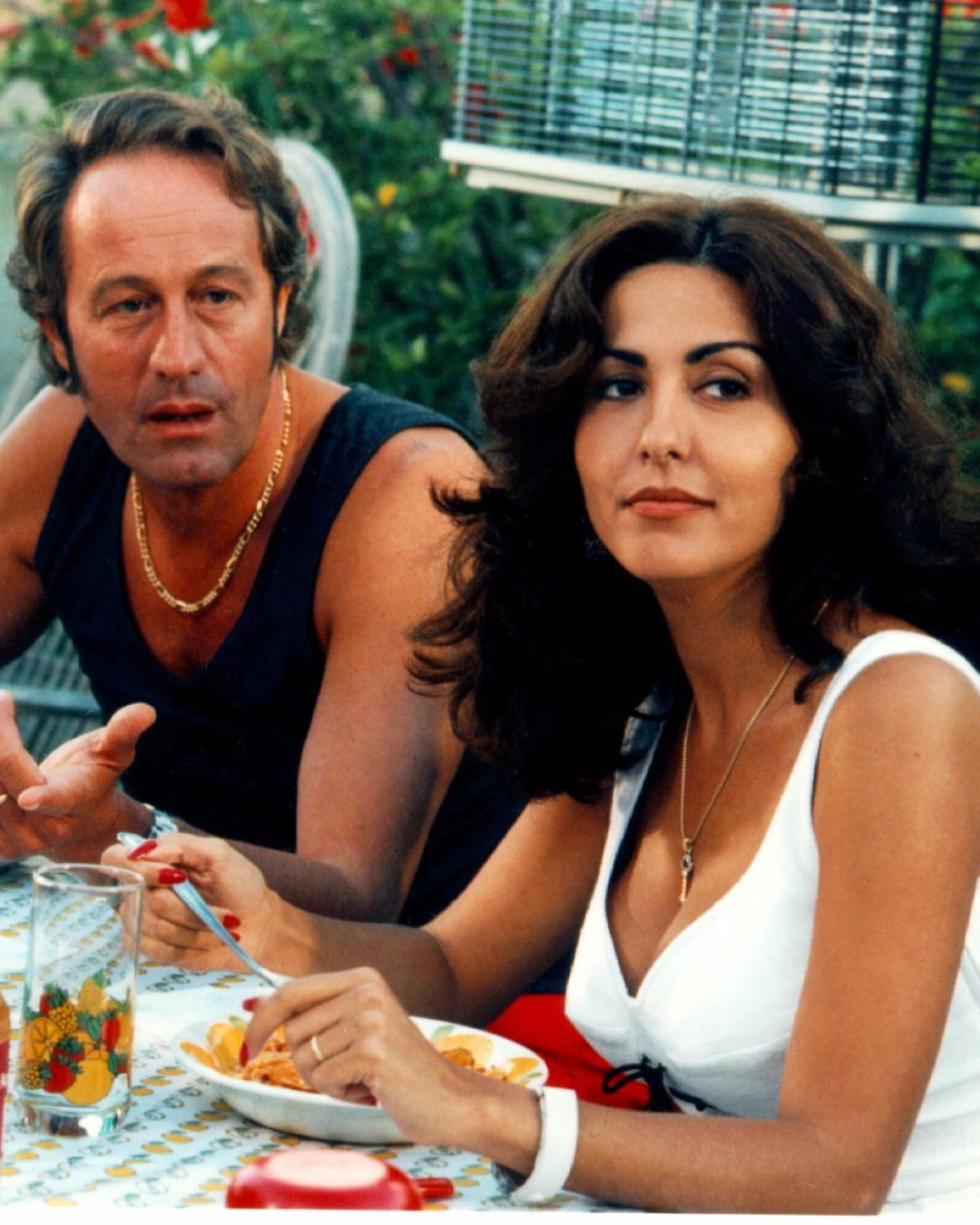
After the fall of Fascism, Italian culture retained many of the social mechanisms that had developed during the regime. Once the most difficult years of the postwar period had passed, the economic boom finally arrived. What had once been three days granted to workers and their families under Fascism became the symbol of a new Italy: more prosperous, increasingly motorized and eager to travel. Ferragosto, together with summer holidays, summer camps and seaside resorts, also became part of the country’s cinematic imagination. With 1950’s Domenica d'agosto, the genre of the so-called beach comedy was born.
Cities empty out, families head for the seaside, the mountains or the lakes, and August 15 becomes the high point of a collective summer break. From that moment onward, it is almost possible to trace the evolution of Italian Ferragosto traditions through cinema: from Il sorpasso to I nuovi mostri, through In nome del popolo italiano, all the way to the legendary Sapore di mare in 1983, which definitively revived the genre and paved the way for films such as Abbronzatissimi and Ferie d'agosto.
Curiously, the cultural shift in Italian holiday habits arrived with 2004’s Che ne sarà di noi, in which three 18-year-olds decide to travel to Greece. The film marked a break with the tradition of spending holidays exclusively in Italy, a habit that had, in some ways, persisted since the Fascist era. Today, more than 20 years later, Ferragosto is above all a symbolic date, whose most recognizable ritual remains the bonfire on the beach. Although perhaps what makes it truly Italian is the endless stream of complaints that inevitably comes with it.