September 14th, 2026
The Italian libraries are the true data centers Five Italian libraries remind us how much space we were once willing to dedicate to knowledge
There is nothing remotely romantic about a data center. Today they are undoubtedly the place where we store an ever-growing portion of human knowledge, yet they remain sterile warehouses, built in the middle of nowhere in most cases, filled with cables and computers. They are water-cooled and capable of consuming the electricity of a mid-sized city to answer questions that, almost always, would have found their answer in a book.
Humanity had, in fact, already solved the problem of storing information quite effectively: it had built libraries. These are the places where data is not something invisible, but takes on a concrete form through the oldest and most reliable medium we have for informing ourselves: reading. And even though it requires time and attention, reading leaves us in return something that endures, because what one has absorbed through books is rarely lost. For centuries, everything we know about those who came before us passed through there, and Italian libraries are precisely the places where a community decided that this act deserved a roof, a custodian, and a set of rules.
Girolamo Casanate's obsession with books
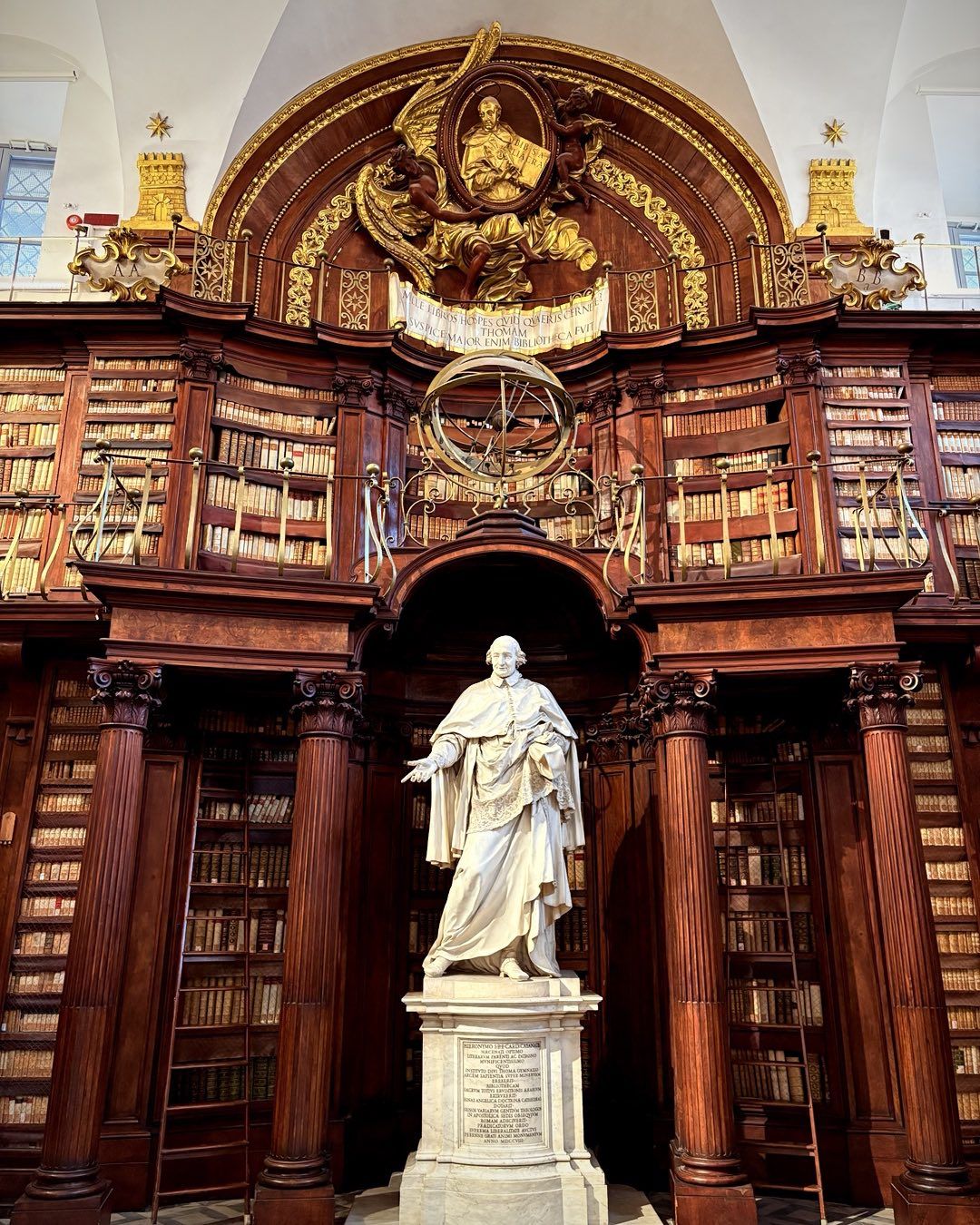
When Girolamo Casanate died in 1700, he left behind more than 25,000 books. A quantity large enough that the Dominicans of Santa Maria sopra Minerva, in addition to inheriting the cardinal's volumes and money, also had to find a suitable place to put them. A year later, a stone's throw from the Pantheon in Rome, the Biblioteca Casanatense opened. In its Monumental Hall, the books still rise along the walls on two tiers of shelves connected by a balcony, under the watchful gaze of the cardinal's statue.
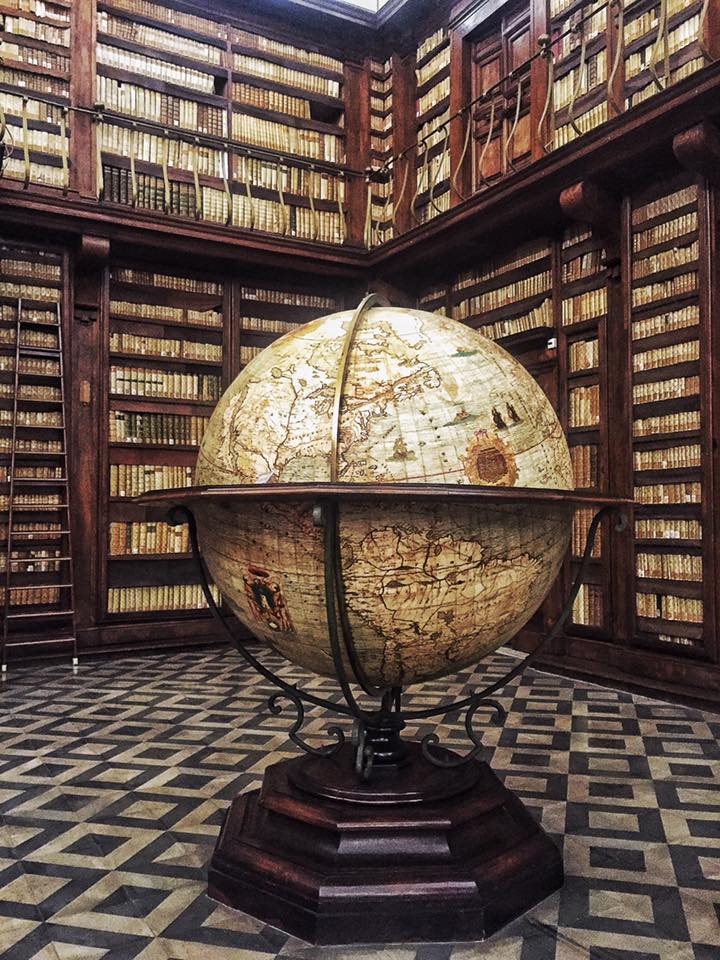
A contemporary of Casanate described the collection as a "compendium of all the sciences," and indeed everything seems to be here: theology, law, medicine, literature, history, and science, plus two large globes — one terrestrial and one celestial — for anyone who might also need to consult the heavens. In that single room there are still 60,000 books, while the total holdings have grown to approximately 400,000 volumes, with more than six thousand manuscripts and over 120,000 early printed volumes.
The Library also preserves a treasure that did not belong to the cardinal's collection: the autograph scores of Niccolò Paganini, which arrived here after a long journey. In 1903, the violinist's heirs offered them to the Italian State, which delayed long enough to let them slip away. The scores passed from an antiquarian in Florence to a collector in Cologne, then to Mannheim, then to Bavaria, until in 1972 the State bought them back and deposited them at the Casanatense.
The burdensome legacy of Gambalunga
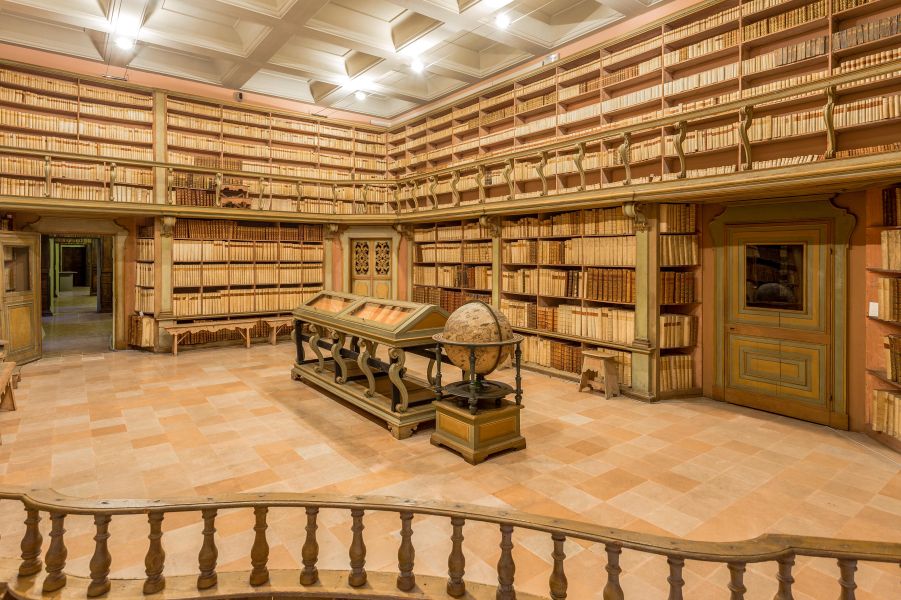
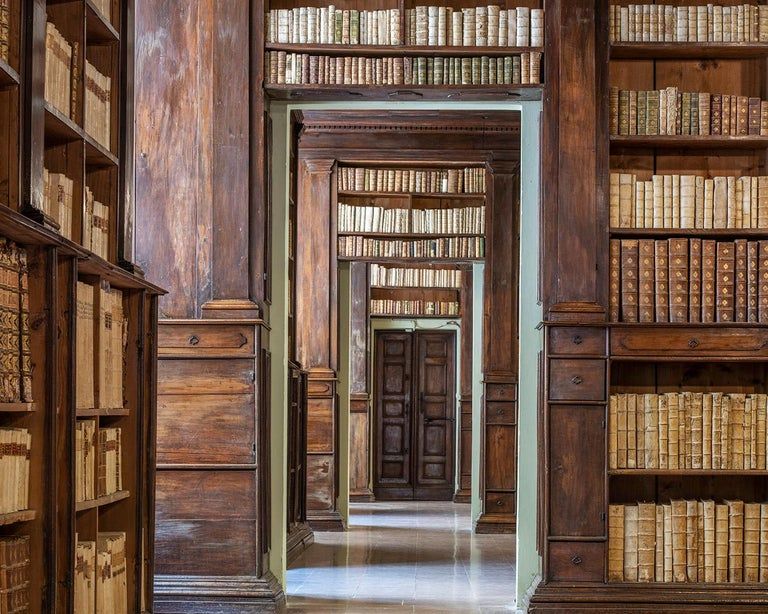
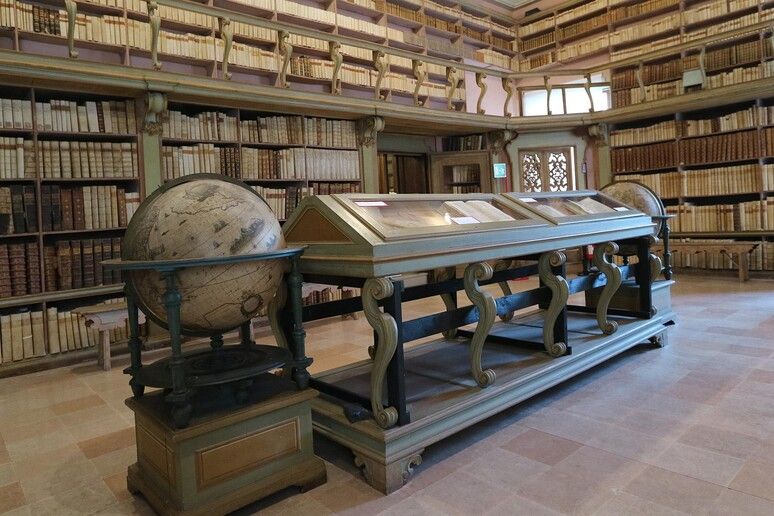
A personal library always contains something deeply intimate. It has the ability to tell us what a person is interested in and how much money they are willing to spend on reading and knowledge, and in some cases it can even tell us how much space in their home they are willing to sacrifice. At the beginning of the seventeenth century, Alessandro Gambalunga, a jurist from Rimini who never actually practiced law, devoted several rooms of his home to a collection that kept growing, and upon his death he left both the building and the books to the city. What had been a private passion became the Biblioteca Gambalunga, one of the first civic libraries in Italy.
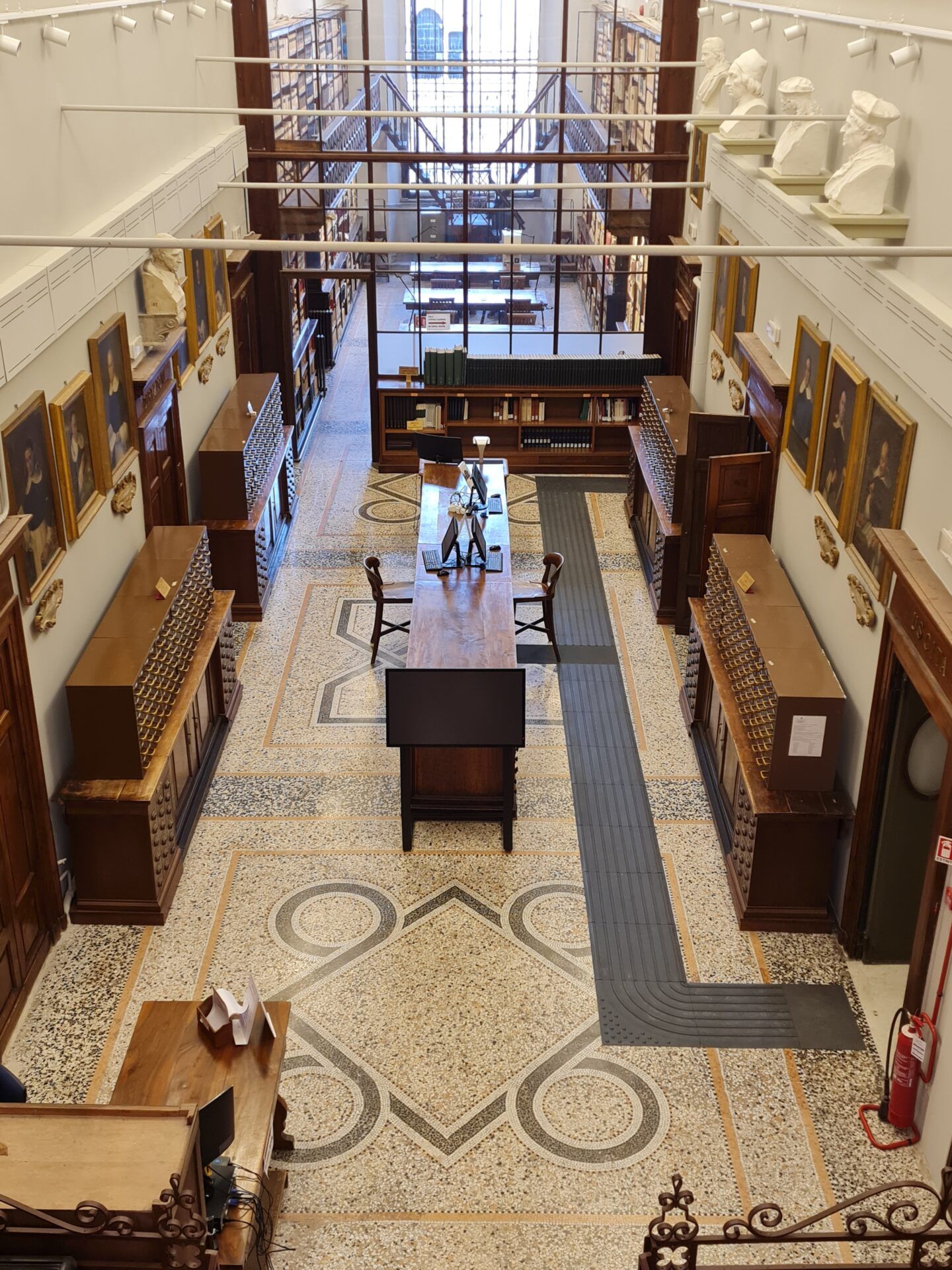
Four centuries later, the holdings have grown to approximately 300,000 volumes, including more than a thousand codices, hundreds of incunabula, and thousands of sixteenth-century printed works. The Sale Antiche (Historic Rooms) remain the most fascinating part, as here the books coexist with globes, tables, decorations, and wooden shelving from the seventeenth and eighteenth centuries. Today they can be visited by appointment and in small groups.
Gambalunga, moreover, had not simply left a room full of volumes hoping someone would take care of them. In his will he set aside 300 scudi per year for the purchase, binding, and restoration of books, and another 50 for the salary of a librarian who would live in the palazzo and assist readers, and he had a secret door built with a spiral staircase leading to the bookbinding workshop.
A library open to all
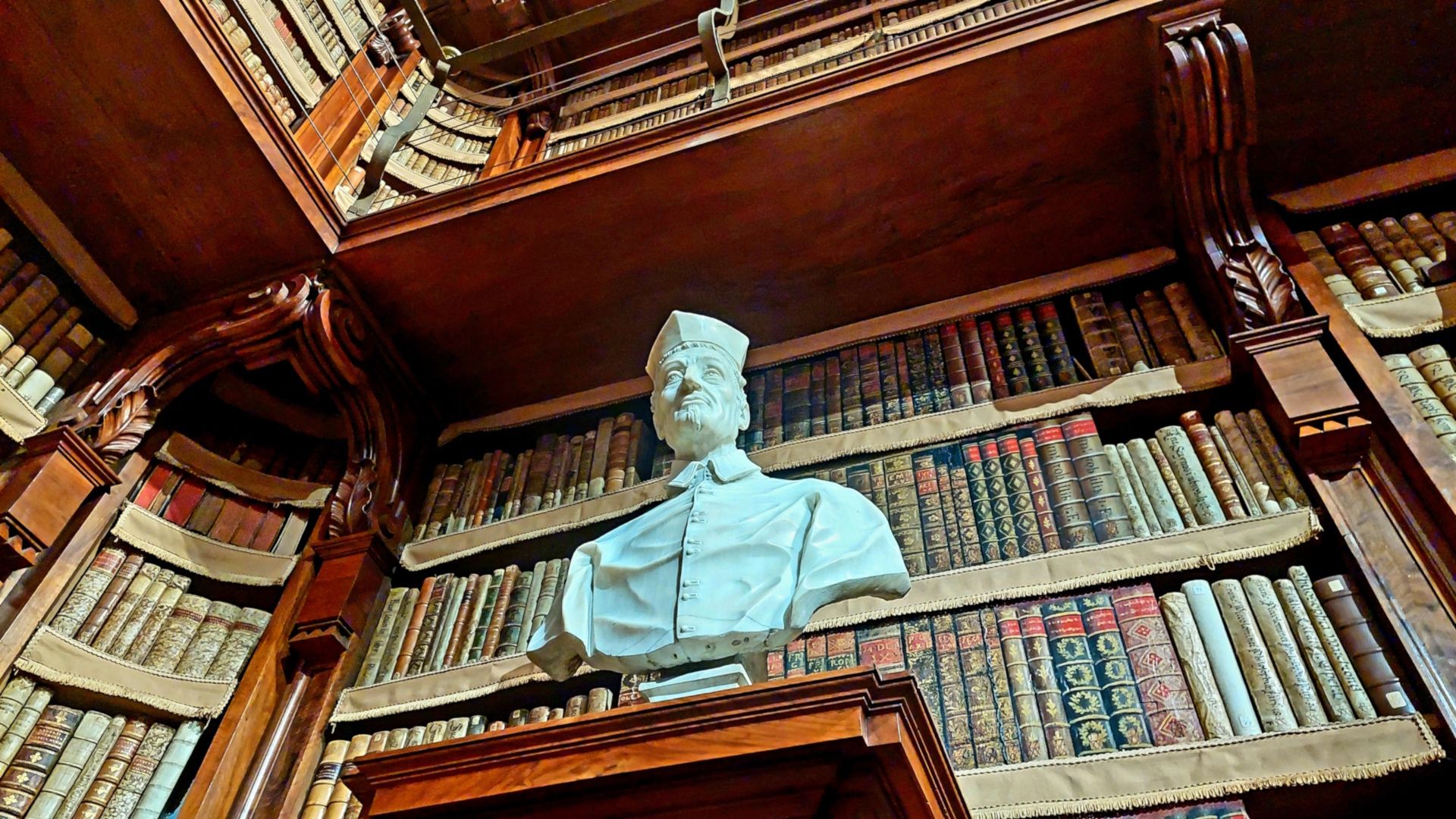
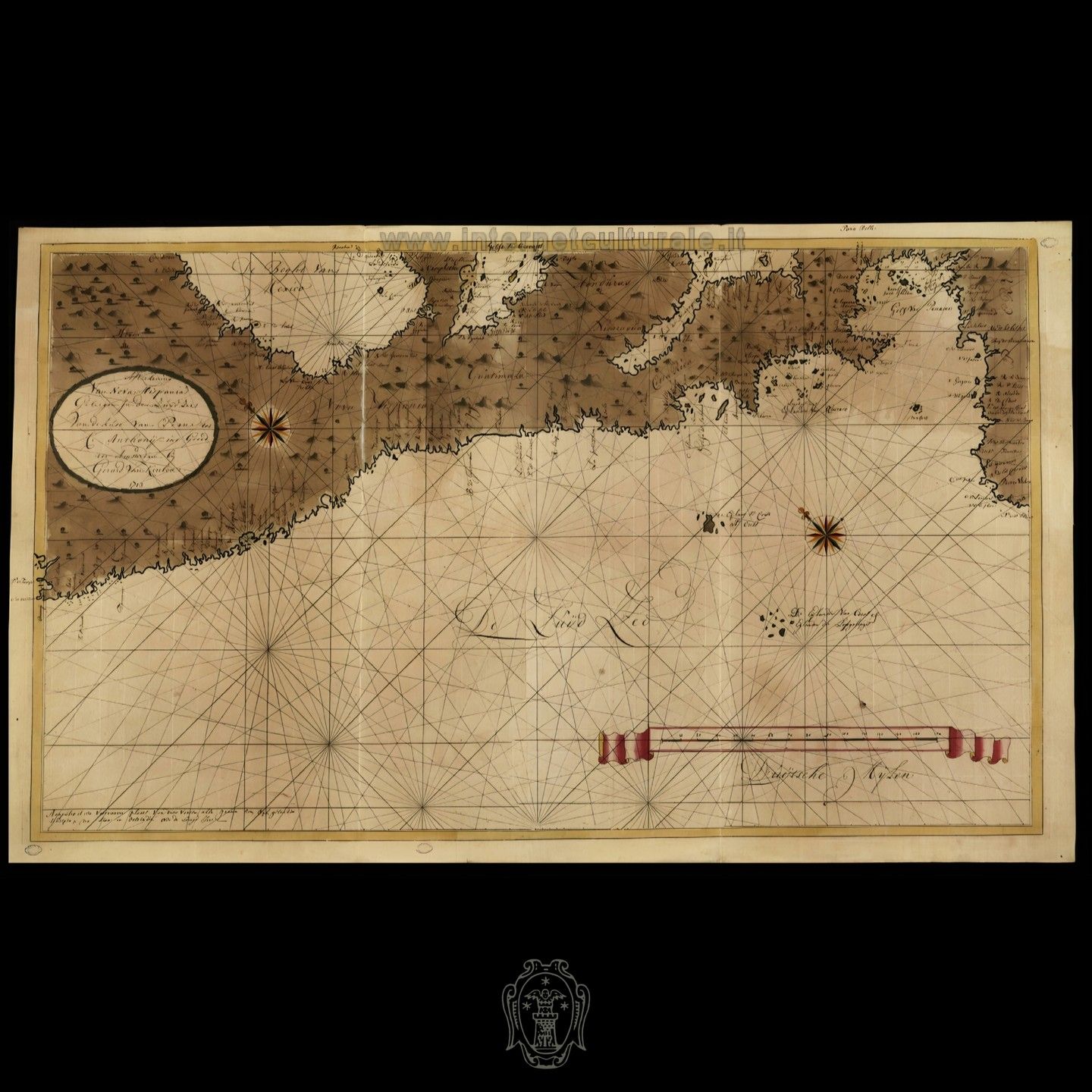
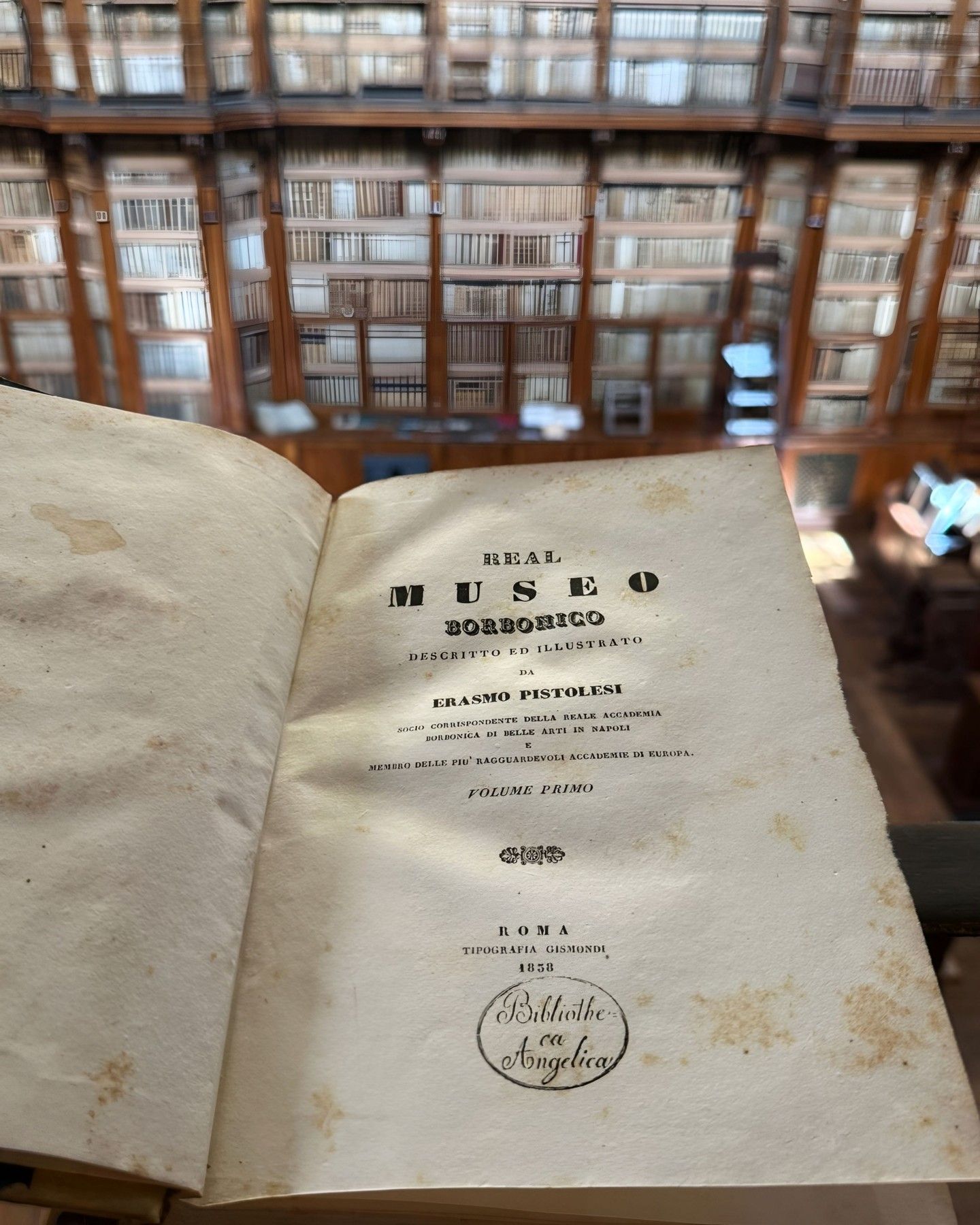
We return to Rome, in 1604, the year in which the Augustinian bishop Angelo Rocca left his own library to the friars of his order with a condition that was rather modern for the time: he wanted it to be open to everyone "without restriction of any kind," because a book locked away in a convent seemed to him a wasted book. He thus gave life to the Biblioteca Angelica, considered one of the first public libraries in Europe.
More than a century later, Luigi Vanvitelli gave shape to the grand hall we see today. The shelves hold over 200,000 printed volumes, to which manuscripts and incunabula are added. The subjects one would expect to find in a room of this kind coexist with a remarkable collection of texts on esotericism, and among the collections is one dedicated to Giambattista Bodoni, whose name continues to appear every day on the screens of millions of computers in the form of a typeface.
The Angelica also holds the De oratore by Cicero, printed at Subiaco in 1465 — the first book to come out of a printing press in Italy — and a copy of the Foligno edition of 1472 of the Divine Comedy. Since 1940 it has also been home to the Accademia dell'Arcadia, the eighteenth-century literary circle in which poets enrolled under a pastoral pseudonym.
The Vanvitellian Hall can be viewed during the library's opening hours, from the area accessible to the public.
Vico's second home
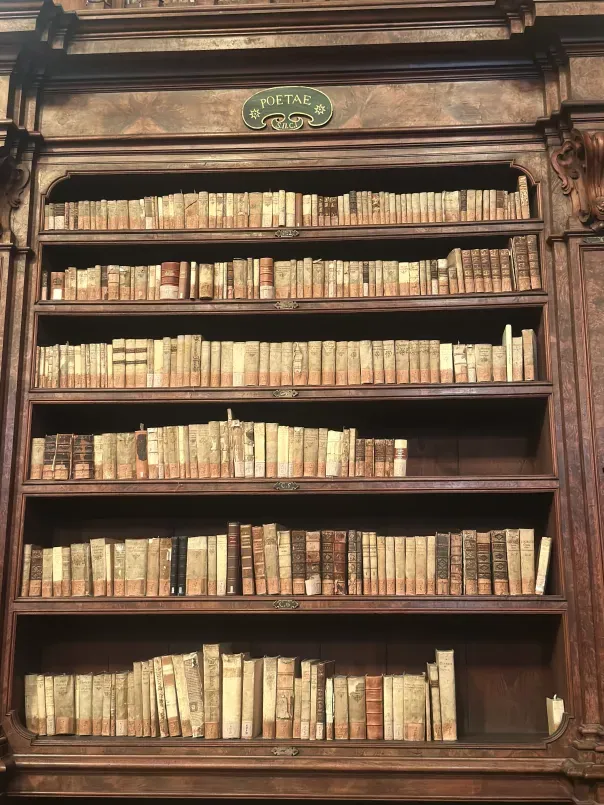
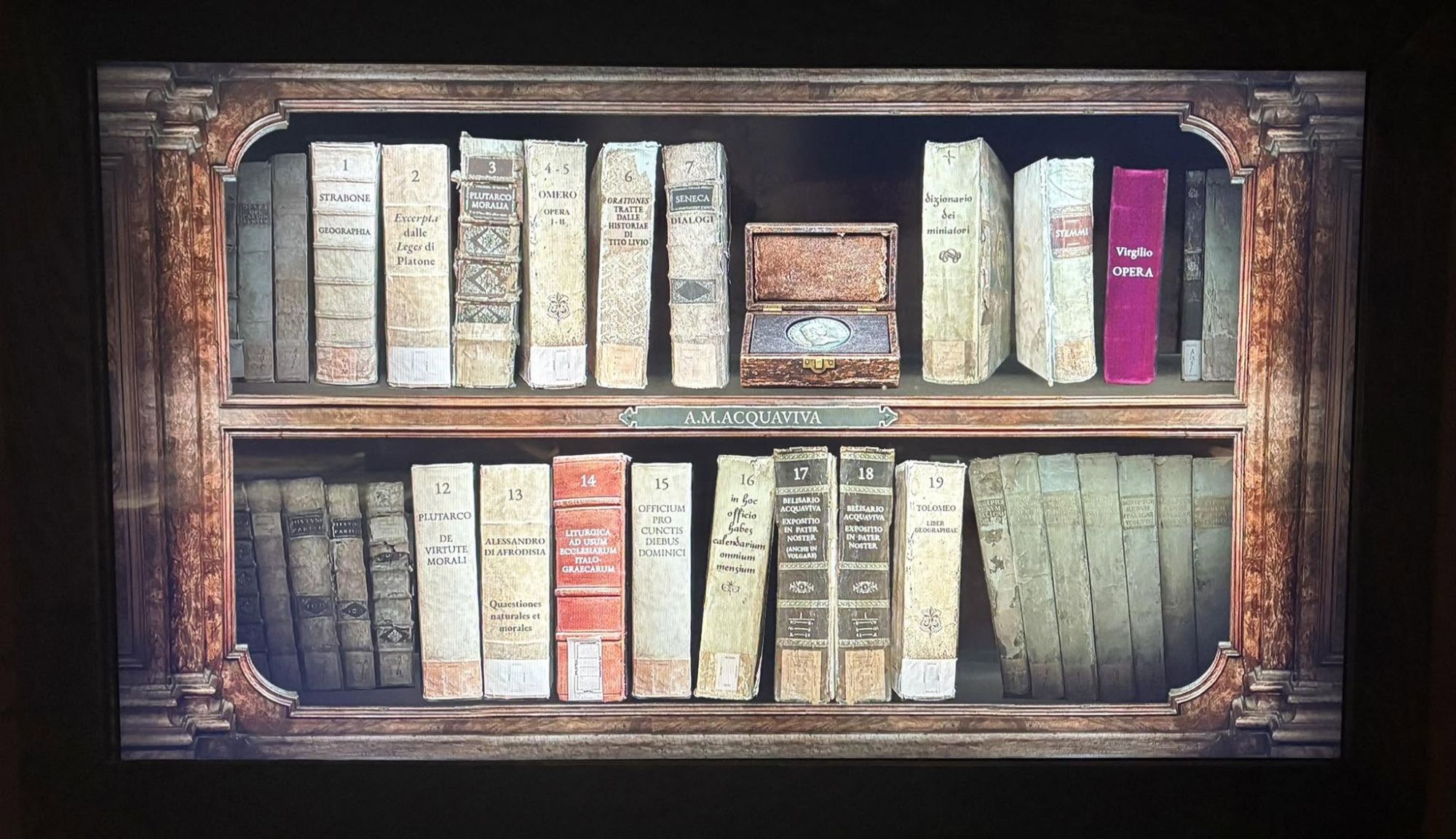
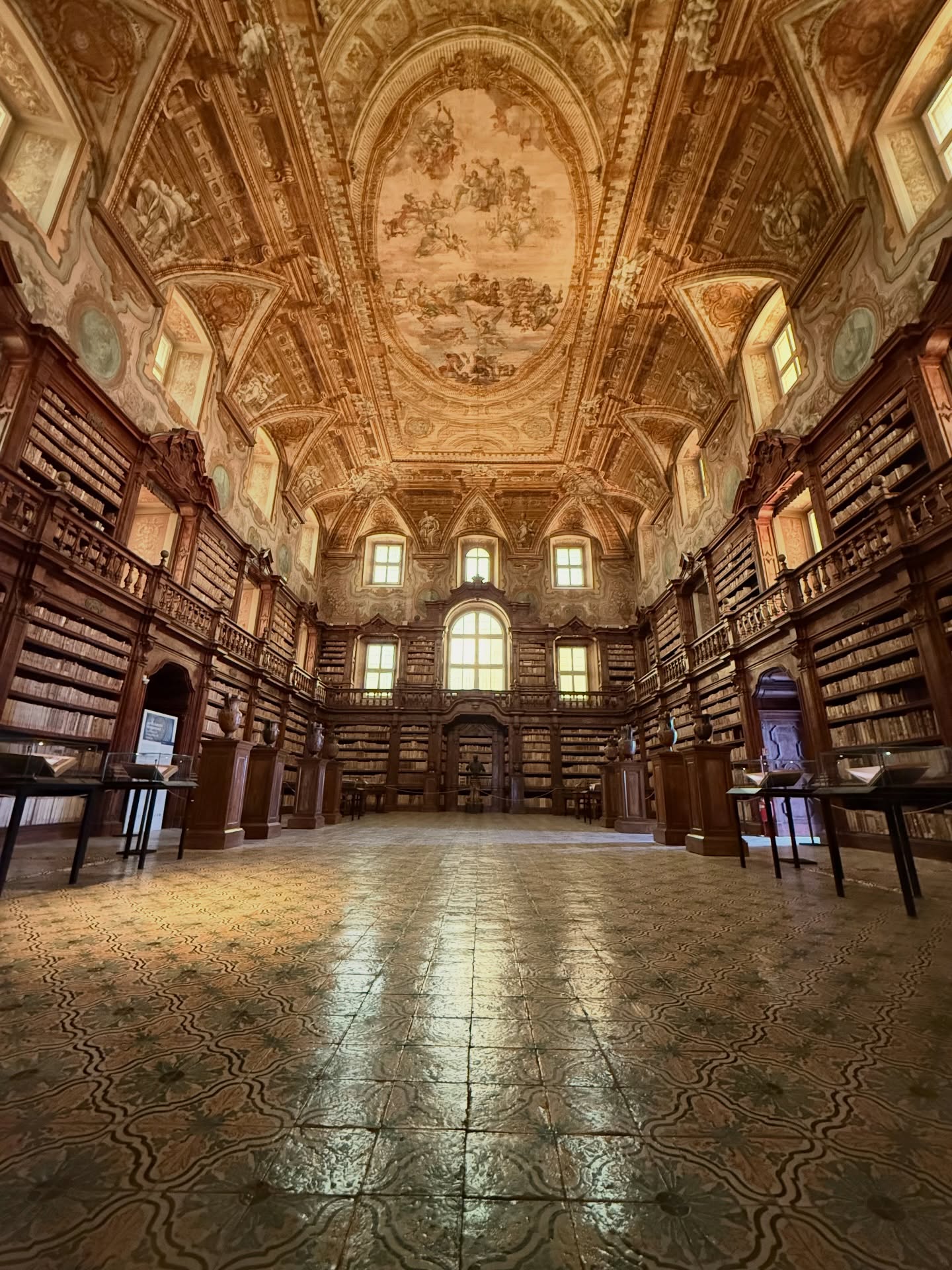
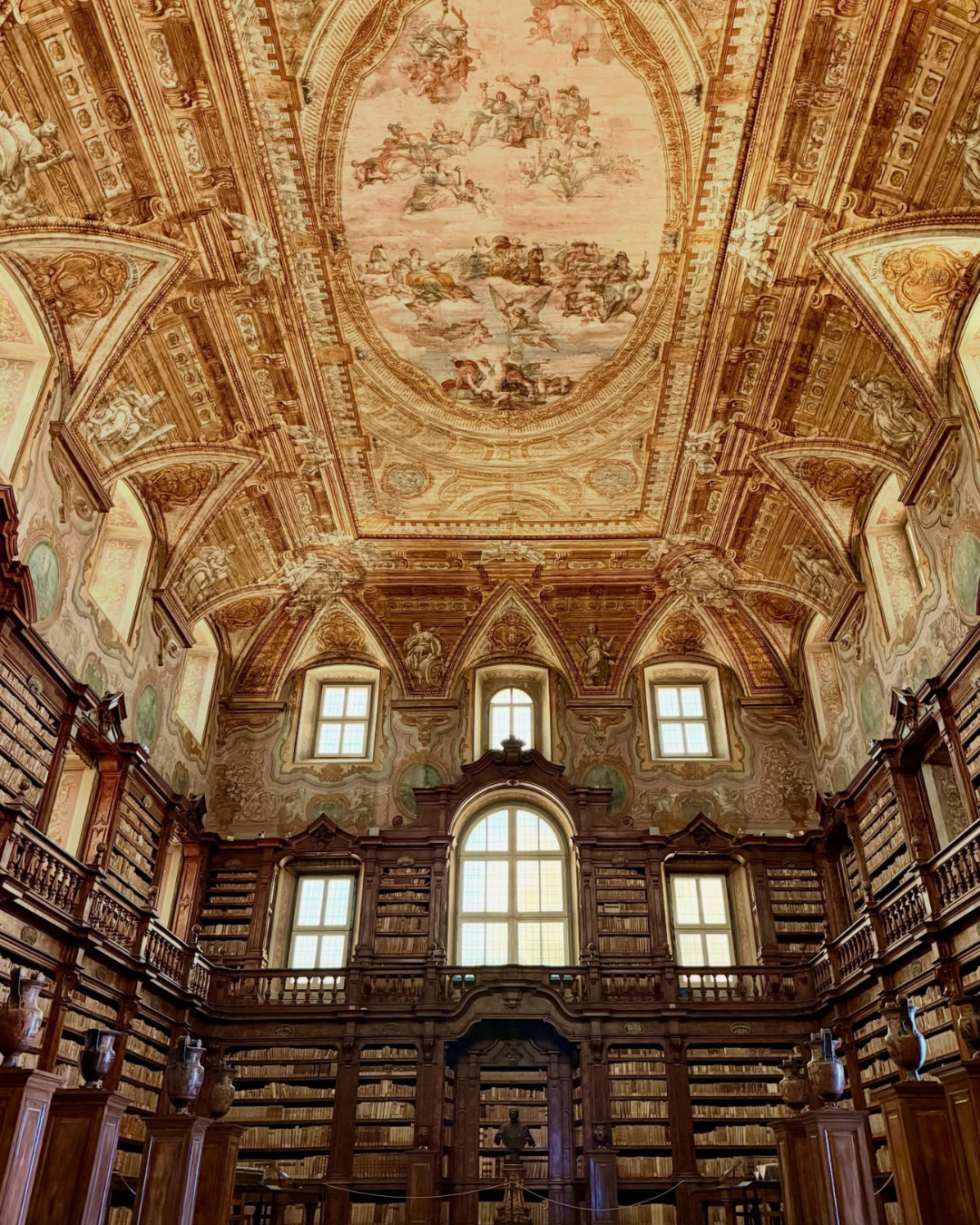
In 1727 Giambattista Vico, a regular visitor to the Biblioteca dei Girolamini in Naples, suggested to the Oratorians who managed it that they purchase the library of the jurist Giuseppe Valletta, so that the collection would not end up scattered among his heirs. The proposal was accepted, and Vico had probably made it more out of affection than duty: he must have felt very much at home here, given that today one of the rooms bears his name.
The Biblioteca dei Girolamini is the oldest Neapolitan library open to the public, and in its historic rooms the bookcases rise along the walls beneath paintings, portraits, and allegories of the arts and sciences. In the Sala Vico in particular, the books are still divided by format and subject, and above the shelves the cartouches indicating where to find the Bible, history, geography, poetry, mathematics, philosophy, medicine, law, and theology remain in place — almost like a small catalogue written directly on the wall. Today the library holds approximately 159,700 items including volumes and pamphlets, among them 120 incunabula, around 5,000 sixteenth-century printed works, and thousands of rare editions.
After a period of closure for reorganization works, from September 2026 the Historic Rooms have reopened to visitors with limited admission from Tuesday to Sunday. And thankfully so, because it would be a shame to have nearly 160,000 books and keep them all to oneself.
Venice as a second Byzantium
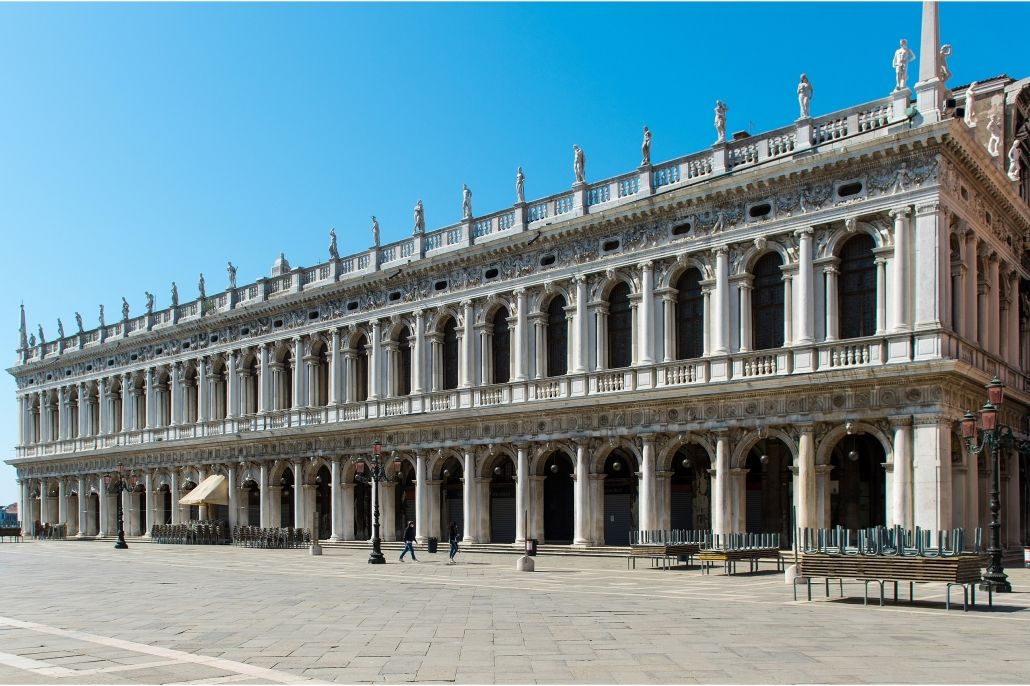
The greatest gift Venice ever received arrived by sea. In 1468, Cardinal Bessarion donated his collection of Greek and Latin codices to the Republic, so that it might remain in a city he considered the second Byzantium. There were hundreds of manuscripts, many gathered after the fall of Constantinople, and together they formed one of the most important collections of Greek culture to reach the West.
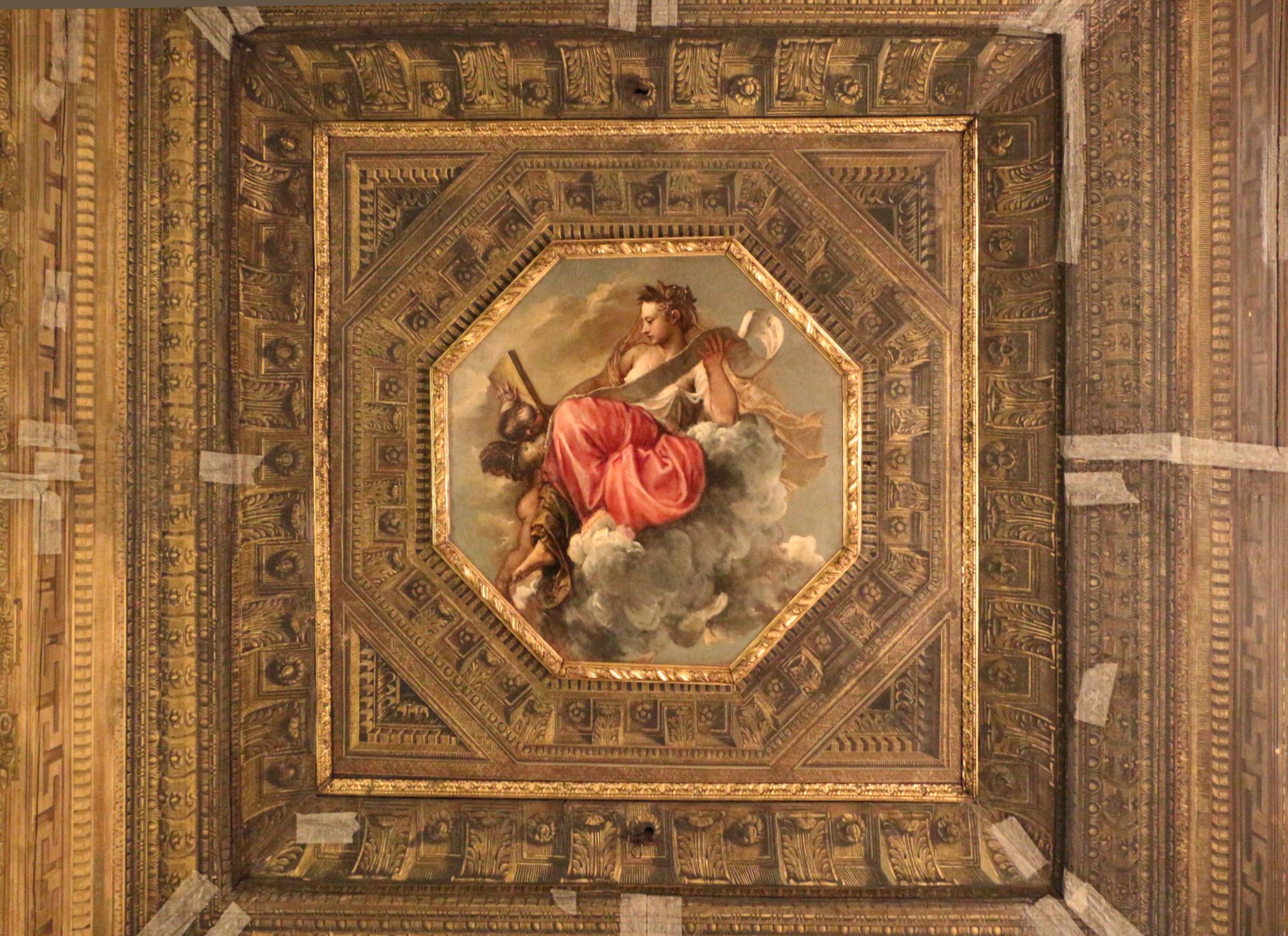
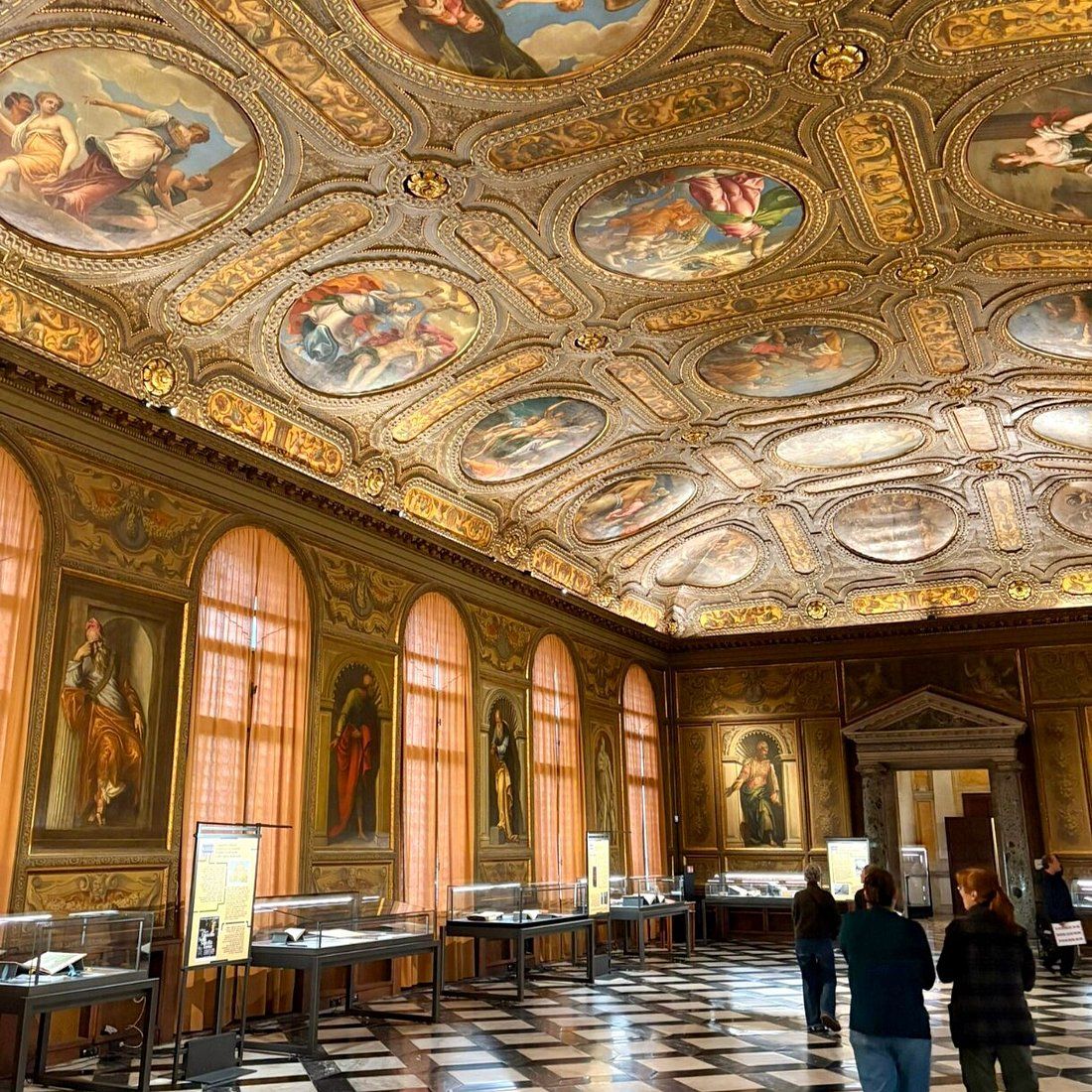
The future Biblioteca Marciana found its home in the building designed by Jacopo Sansovino in Piazza San Marco, opposite the Doge's Palace. Andrea Palladio went so far as to call it "the richest and most ornate building" constructed since ancient times, and looking at the ceilings decorated by artists such as Veronese and Tintoretto, it is easy to understand why. The holdings of the Marciana have grown to approximately one million volumes, along with more than 13,000 bound manuscripts, thousands of codices, and nearly three thousand incunabula. Among these are the Venetus A and the Venetus B, two of the most important manuscripts of the Iliad in the world.
Today the Monumental Rooms are part of the museum circuit of Piazza San Marco and can be visited with a standard ticket.