September 19th, 2026
Explaining the cult of San Gennaro to those who are not from Naples A centuries-old tradition that shapes the mood of the Neapolitan people
There is only one thing that can dampen and darken the mood of Neapolitans more than a defeat of their beloved team in a league match: the failure of San Gennaro's blood to liquefy. On this subject, in his book L'Italia dei miracoli, anthropologist Marino Niola recalls a famous remark by Alexandre Dumas: "San Gennaro is the true god of Naples." This is no exaggeration: for Neapolitans, the martyr of Pozzuoli is the saint of the impossible made possible.
In Naples, the relationship with the sacred is not consumed in solemn detachment from the divine, but is reflected in a daily rapport in which saints are treated with a deep and visceral familiarity, regarded as members of one's own family — presences to be addressed with affection, intimacy, and sometimes even a touch of resentment. In Naples, then, not even the saints have an easy life: grace, rather than a simple concession from heaven, is the fruit of ongoing negotiation. The devotion of the people, passionate and theatrical, is offered in exchange for a precise commitment: protection and the performance of miracles. And it is within this web of "contracts" with the divine that San Gennaro holds a place of honour in the hearts of Neapolitans.
The History of the Cult of San Gennaro
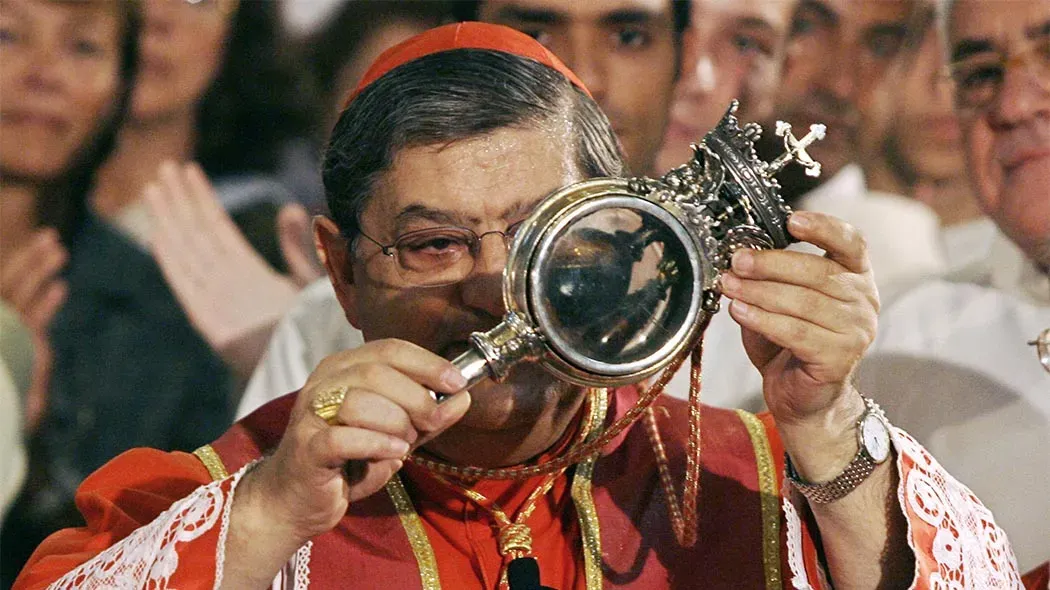
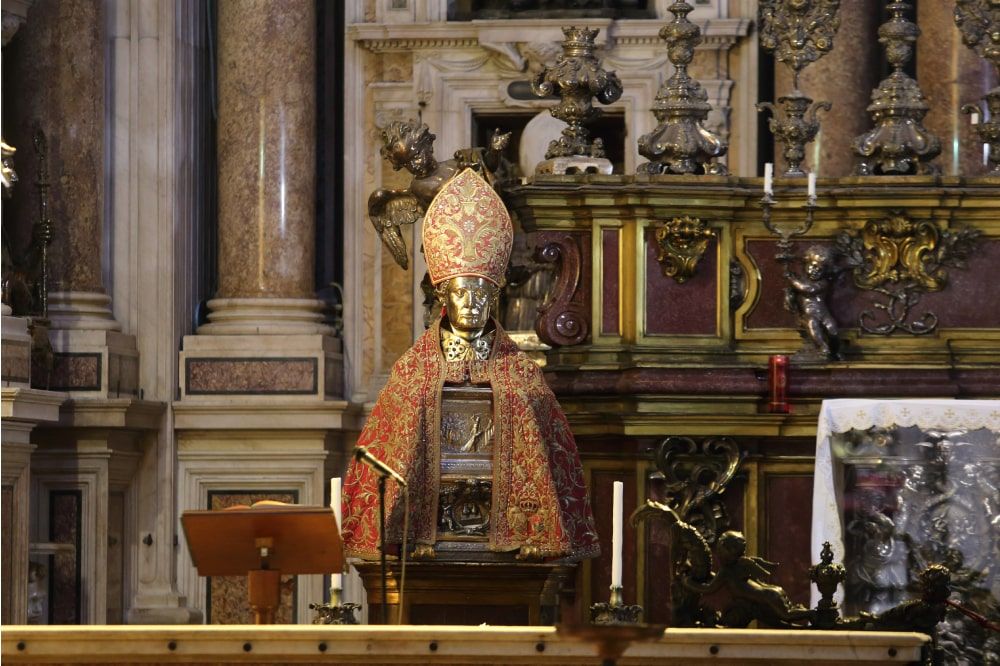
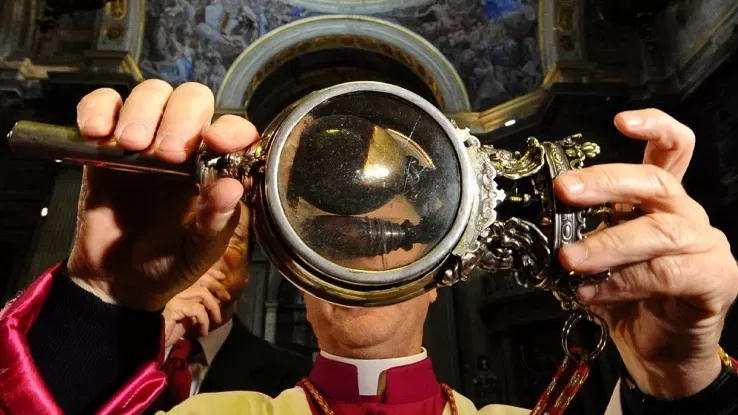
The life of San Gennaro is surrounded by countless theories, still the subject of heated historiographical and theological debate to this day. It is said that he was born somewhere between Naples and Benevento around 272 AD and that, having become bishop of the Beneventan community, he met his martyrdom in 305 AD during the fierce anti-Christian persecution promoted by Emperor Diocletian. Arrested for expressing solidarity with his imprisoned brethren, he was condemned to beheading near the Solfatara of Pozzuoli, after the wild beasts of the Flavian Amphitheatre had miraculously refused to tear him apart. According to tradition, it was a pious woman named Eusebia who collected the blood shed by the martyr in two glass ampoules, preserving the relic that would forever bind the figure of the Saint to the fate of the city of Naples.
The relics of San Gennaro underwent a true odyssey lasting centuries, contested between the catacombs of Naples, Benevento, and the sanctuary of Montevergine, until their solemn return to the city in 1497. It was precisely through these troubled events that San Gennaro was consecrated patron saint of Naples, becoming the spiritual and identity touchstone of the Neapolitan and Campanian community. It was in the seventeenth century — a period marked by the grandeur of the Baroque, but also by tragic epidemics and natural catastrophes — that the cult of the liquefaction of San Gennaro's blood became definitively established in its periodic, public, and spectacular form, earning Naples the title of "city of blood."
The Symbols of San Gennaro Between the Sacred and the Profane
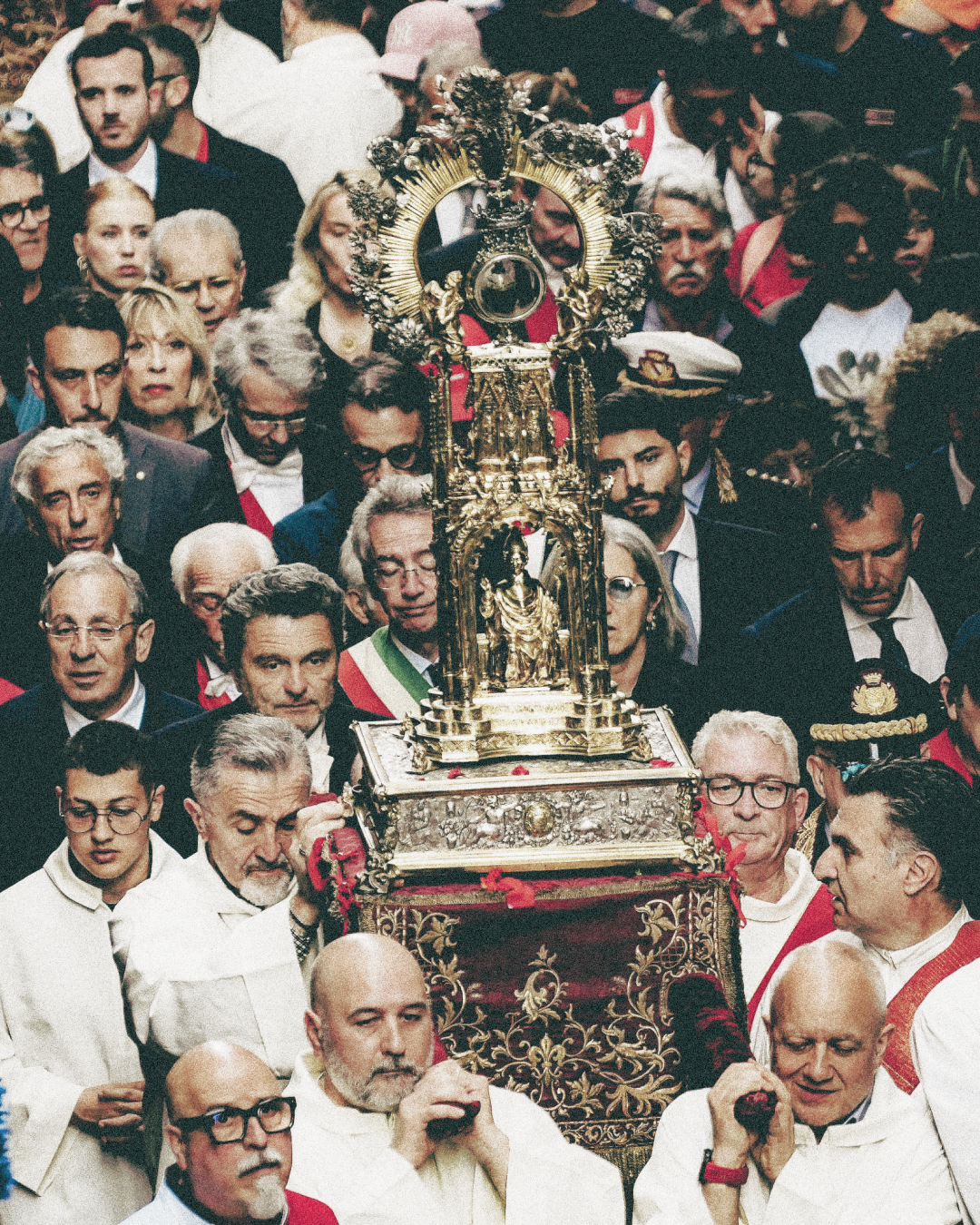
The bond of identity between the patron saint and his faithful also takes shape in a symbolic apparatus that interweaves art and faith: the two ampoules kept in the reliquary remain the beating heart of the cult, flanked by the palm, emblem of the martyrdom suffered at Pozzuoli, and by the episcopal insignia such as the crozier and the mitre. The magnificent gem-encrusted mitre, together with the legendary Treasure necklace, encapsulate the dual soul of Neapolitan devotion: on one hand, the humble prayer for the city's protection; on the other, the magnificence of an artistic heritage unique in the world. This magnetic intertwining of devotion and artistic splendour has also found expression in Paolo Sorrentino's cinema: in the film Parthenope, the director could not avoid telling the story of his city's greatest treasure.
In the celebrated scene centred on the dressing of the protagonist with San Gennaro's jewels, the mitre and the centuries-old gems are transfigured to become at once earthly beauty and divine gift, flesh and sacred soul of Naples. The profane dimension of the cult is also clearly evident in the meanings that San Gennaro has taken on within the superstitious imagination of Naples. For instance, in the Neapolitan Smorfia and in the game of Lotto, the patron saint and his miracle take shape through a veritable "terno della fede" — a trio of faith: 19 (the day of the September feast), 18 (the blood), and 66 (the miracle). Some also associate the number 48 (the dead man who speaks) with it, as if wishing to speak directly with the martyr in order to interpret the signs of fate and receive daily protection.
The Folklore of San Gennaro
If the miracle is the heart of the cult, the feast of San Gennaro is the grand staging of Neapolitan folklore — a liturgical theatre in which the sacred and the profane blur until they become synonymous. Over the centuries, the ritual has developed its own language made up of gestures, songs, processions, and symbolic figures that come to life during three sacred moments of the year: 19 September for the martyrdom, 16 December for the protection from the 1631 eruption of Vesuvius, and the Saturday before the first Sunday of May. Leading this popular drama is the Parentato, a group of elderly women known as the "relatives of San Gennaro," who claim a supposed direct descent from the martyr.
Positioned in the front rows of the Cathedral, these women intone ancient litanies in Neapolitan dialect — visceral invocations and even reproaches directed at the Saint, urging the blood to dissolve quickly. Their dialogue with the Saint is of a disarming intimacy: they address him affectionately as "faccia 'ngialluta" (yellowed face, referring to the bronze colour of the reliquary bust). In particular, on the sacred day of 19 September, Naples enters a state of anxious anticipation, transforming the historic centre into a site of devotion, festively decorated and thronged with pilgrims and tourists. On the morning of the celebration, the city comes to a standstill: shops close and an enormous crowd fills the cathedral and the surrounding alleyways, all eyes fixed on the Archbishop. Naples and its people interrupt the daily chaos, holding their breath as they await the Saint's response. The moment the liquefaction is announced, many translate the precise hour and minutes at which the miracle occurs into numbers to play in the lottery.
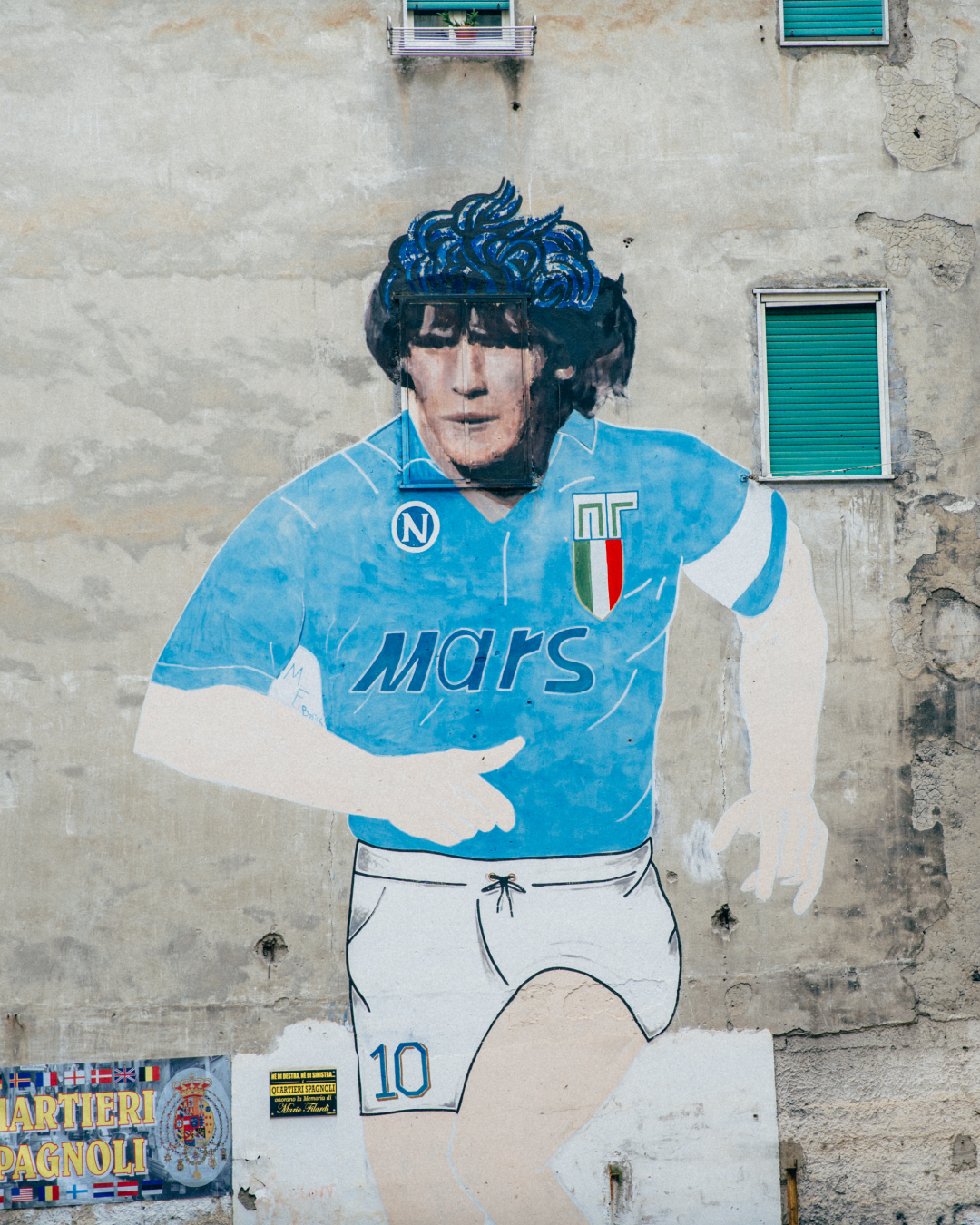
Today the folklore of San Gennaro regenerates itself and blends with contemporary popular culture, demonstrating how the Neapolitan sacred is a dynamic language: the most emblematic example of this syncretism is the bond between the god of Naples and the "Dios" of football, Diego Armando Maradona. During the golden years of the first two Scudetti and even today, the figure of the Pibe de Oro stands alongside and almost merges with that of the patron saint: images, murals, and souvenirs that unite the bust of the Saint with the face of the Argentine champion proliferate throughout the alleyways — a "hybrid" christened by the people as San Gennarmando.