August 17th, 2026
What are the most beautiful autogrills in Italy? Where parking becomes architecture
Autogrills are among the most frequently visited places in Italy, yet also among the least noticed. We stop at them for a coffee, a bathroom break, a sandwich, or a bottle of water before getting back on the road. They are transit spaces, designed to occupy our attention for only a few minutes. And yet, some of them tell the story of Italy’s relationship with cars, the economic boom, consumer culture, architecture and the national imagination better than many official buildings ever could.
Perhaps Autogrills fascinate us precisely because they are common places in the most literal sense. Everyone passes through them: families setting off on holiday, truck drivers, foreign tourists, commuters, students, workers, tired people, people excited to leave, people on their way home. They all have one thing in common: they turn a quick stop into a piece of the Italian landscape.
Villoresi Est, A8 Milano-Laghi, Lainate
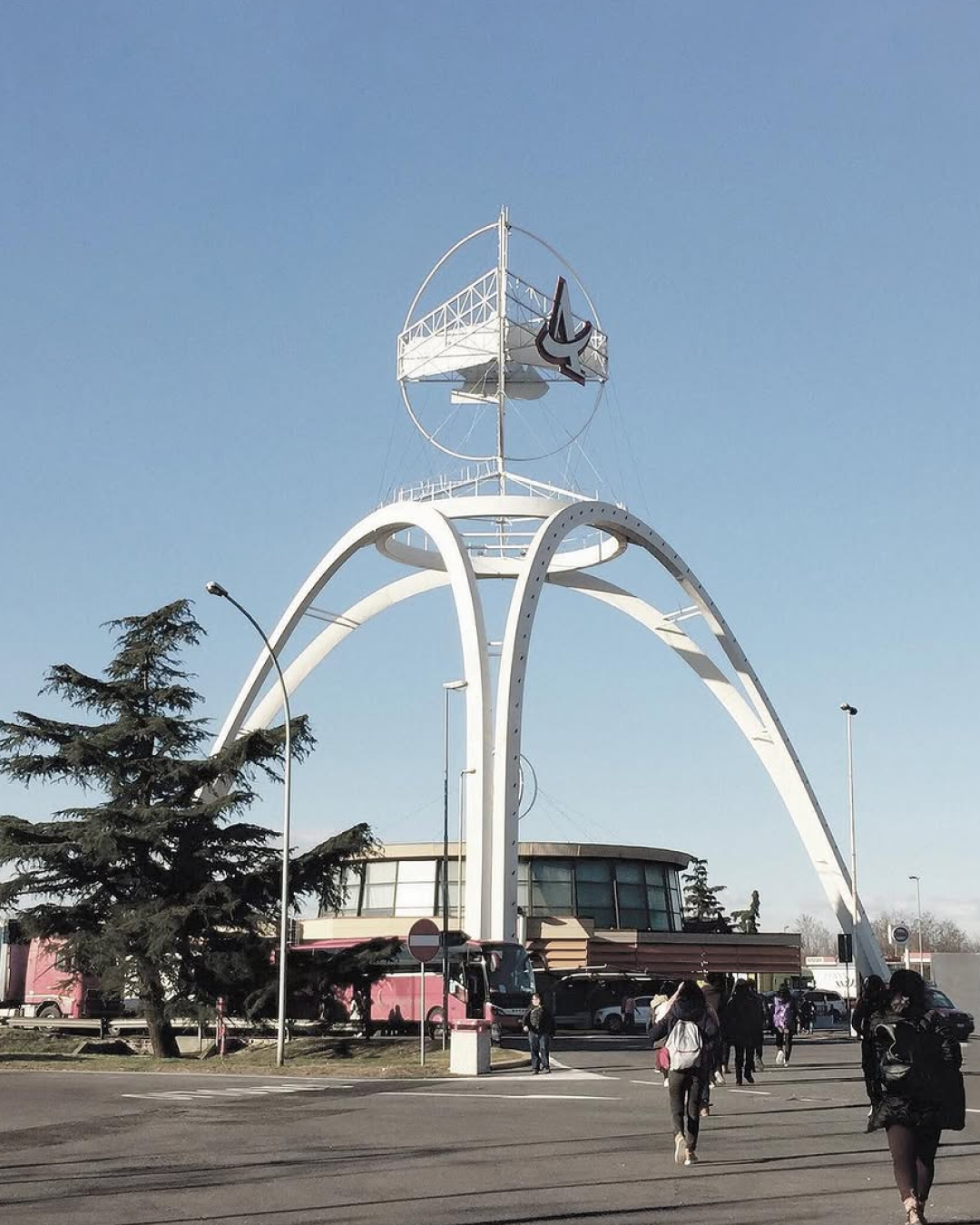
Villoresi Est is the most spectacular and contemporary example. Autogrill itself describes it as «Italy’s most beautiful Autogrill», and seeing it at night makes it easy to understand why. The building has a distinctive shape, almost volcanic, with a roof rising approximately thirty metres that lights up red and becomes a landmark along the motorway. It is a strange, highly visible structure, designed to interrupt the monotony of the road.
Its strength also lies in what is less immediately visible. Villoresi Est was designed as a sustainable building, capable of collecting rainwater and groundwater for climate control, irrigation, toilets and its fire reserve. In this sense, it shows how an Autogrill can still be a distinctive architectural project, an almost pop structure that is simultaneously a technical experiment in resource management. Here, a roadside stop becomes both image and infrastructure.
Villoresi Ovest/Autogrill 1958, A8 Milano-Laghi, Lainate
Opposite Villoresi Est stands its historic counterpart. Villoresi Ovest was built in 1958 to a design by Angelo Bianchetti along the Autostrada dei Laghi and remains one of the most striking examples of Italian motorway modernism. Autogrill describes it as «the most photographed Autogrill in the world» and as an icon of modernist Made in Italy.
In 2020, it was completely renovated and renamed Autogrill 1958, with a project that preserved its original proportions and dimensions. Its importance lies precisely in this relationship between memory and everyday use. The building was created at the height of Italy’s economic boom, when the motorway represented a promise of progress. Stopping here means stepping into a fragment of that promise: travel as a modern experience, roadside dining as a symbol of an Italy learning to move, consume and set off towards new destinations.
Arda/Fiorenzuola d’Arda, A1 Milano-Bologna
@nostalgrill L'Autogrill che ispirò l'Europa intera e diede l'inizio alla costruzione di simboli ancora esistenti del boom economico #autogrill #italy #pavesi #fiorenzuola #arda #emiliaromagna #inaugurazione #boomeconomico #50s #perte #fyp #storia #historytime #luce @Autogrill suono originale - Nostalgrill
The Arda service area in Fiorenzuola d’Arda is impossible to overlook. It opened on December 31, 1959 and is remembered as the first motorway bridge restaurant built in Europe. Angelo Bianchetti’s design transformed a roadside break into something almost cinematic: climbing above the motorway, eating while cars passed underneath and watching the journey unfold from a suspended vantage point.
It is one of Italy’s most important Autogrills because it defined an entire visual language. The bridge spanning the lanes, the huge signs, the view over the traffic, the idea of a restaurant embedded within the road’s constant movement. Everything spoke of the future, America, speed, cars and confidence in modernisation. Today, that language can seem both naive and extraordinarily powerful. Arda tells the story of an Italy that saw the motorway as a collective stage, a place where everyday life encountered the myth of mobility.
Cantagallo, A1 between Bologna and Florence
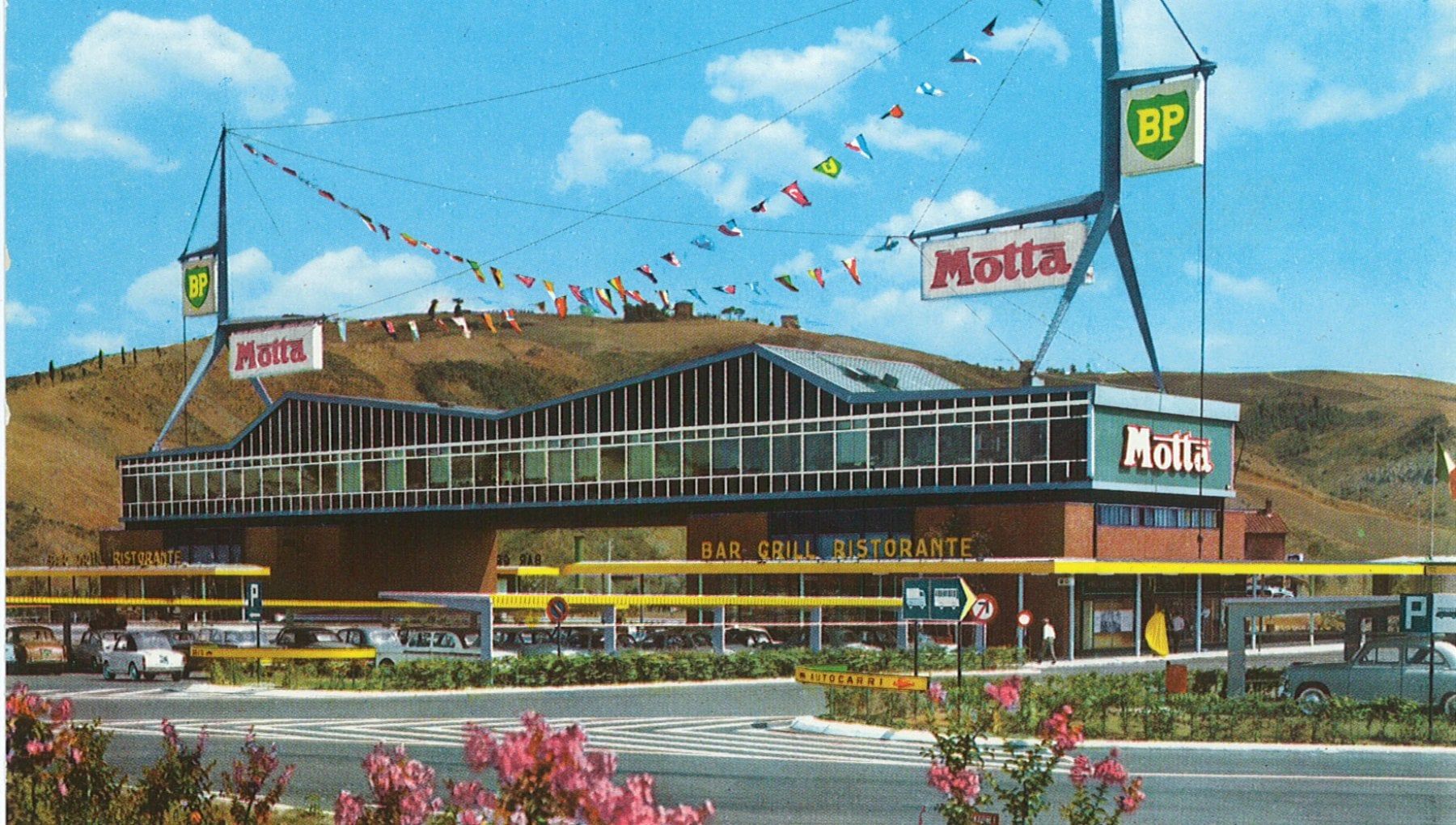
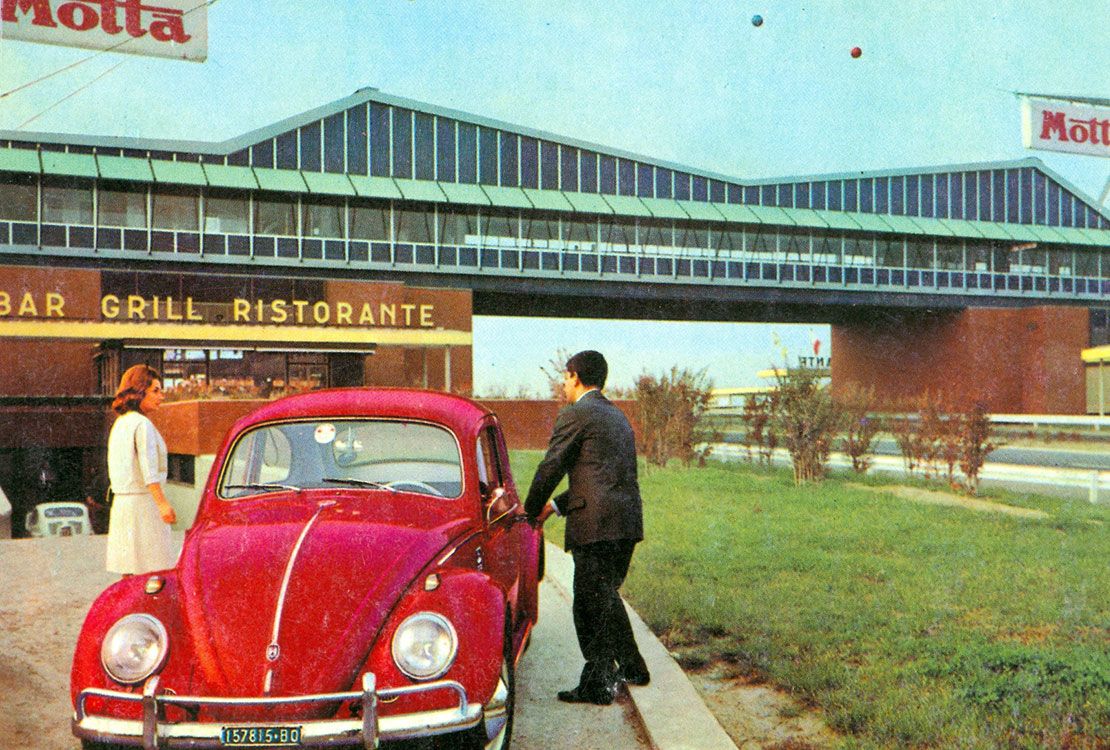
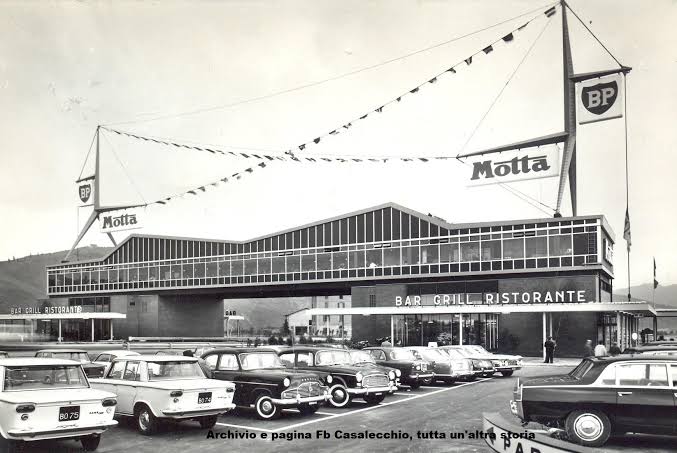
Cantagallo is another essential name in the history of Italian Autogrills. Opened in 1961, it was created as Motta’s response to the Pavesi model and quickly became one of the great icons of Italian motorway culture. Its bridge-like structure, suspended 5.5 metres above the motorway, made it a spectacular building, designed to be seen from afar and crossed by thousands of travellers.
During the years of the economic boom, Cantagallo was much more than a place to stop for coffee. It was almost a small city for travellers, complete with a restaurant, market, pastry shop and services that today seem to belong to a completely different idea of motorway travel. Its appeal lies in this ambition: turning a roadside break into a complete experience, almost a social occasion.
Plessi Museum, A22 Brennero
@vologratis Sei mai passata/o per questa area sosta autostradale? Situato al Brennero, dove un tempo sorgeva la dogana tra Italia e Austria, il Plessi Museum rappresenta una rivoluzione nell'ambito delle aree di sosta autostradali in Italia. Inaugurato nel 2013 da Autostrada del Brennero SpA, questo spazio culturale abbraccia un'area di 13.000 metri quadrati, trasformando una semplice sosta in un viaggio artistico e naturalistico. Qui ci sono le creazioni di Fabrizio Plessi, icona dell'arte contemporanea internazionale. Video, disegni e installazioni danno vita a un'esperienza immersiva che celebra l'incontro tra arte e ambiente. Al centro del museo, "L'anima della natura", una scultura monumentale nata per l'Expo 2000 di Hannover, simbolizza con tre triangoli l'unione dei territori dell'Euregio, accompagnati da schermi che evocano l'elemento vitale dell'acqua, rappresentando i ghiacciai tirolesi, i torrenti altoatesini e i laghi trentini. Oltre alla galleria d'arte, il Plessi Museum offre una sala conferenze per eventi culturali e istituzionali, e un ristorante moderno con una ricca selezione di prodotti enogastronomici dell’Alto Adige, curati con passione da LANZ, un imprenditore locale. Servizi essenziali come bar, vendita di prodotti tipici, servizi igienici di qualità, parcheggi per bus e telecamere di sicurezza sono garantiti. Inoltre, il museo dispone di stazioni di ricarica per auto elettriche, inclusi punti di ricarica per camper. Qui puoi acquistare la vignette per le autostrade austriache. Nel Plessi Museum arte, architettura e paesaggio si fondono in un'esperienza indimenticabile lungo il tuo viaggio. #autostrada #brennero #altoadige #viaggi #viaggiare #travelblogger #tiraccontolitalia 30ºC - ANNA
The Plessi Museum takes the story beyond nostalgia for Italy’s economic boom. Located at the Brenner Pass, in spaces once occupied by the customs facilities between Italy and Austria, it is Italy’s first example of a museum space located directly on a motorway. The complex, opened in 2013 by Autostrada del Brennero, covers approximately 13,000 square metres and was designed to transform a traditional service area into a place dedicated to culture.
It is an important project because it expands the very idea of what an Autogrill can be. Here, a roadside stop encounters art, the border, the Alpine landscape and the memory of travelling between two countries. Motorways usually accelerate everything. The Plessi Museum briefly suspends that speed, inserting a cultural experience into a place originally designed for transit. It is one of the most unusual examples in Italy precisely because it treats travel as an opportunity for encounter and discovery.
Dorno Ponte, A7 Milano-Genova
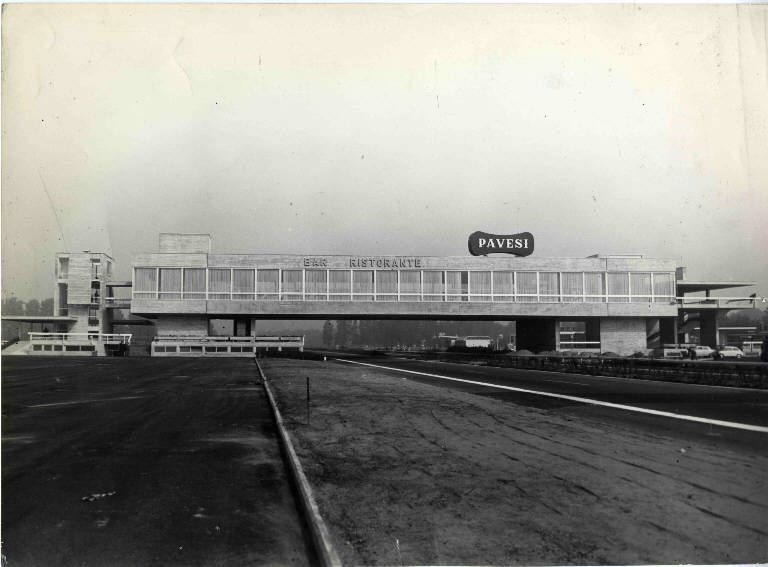
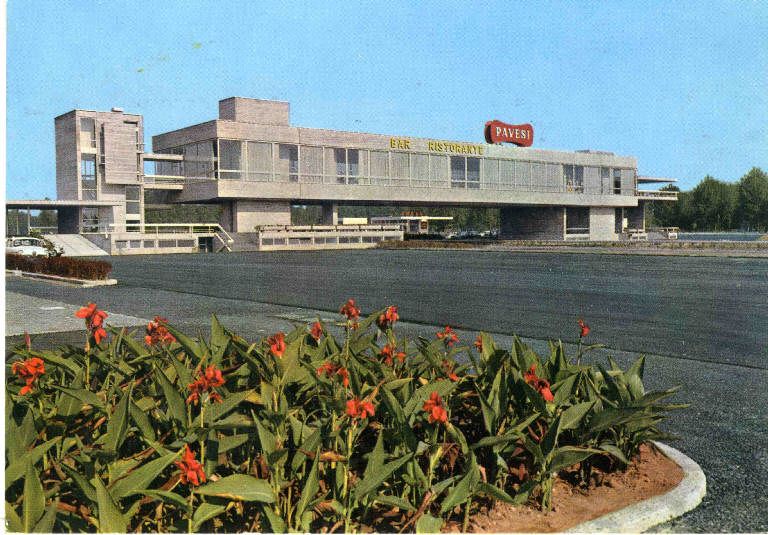
Dorno Ponte is the most niche example and perhaps the one most likely to appeal to architecture enthusiasts. Located along the A7 Milano-Genova motorway, it belongs to the generation of bridge-style Autogrills that shaped the Italian motorway landscape during the 1950s and 1960s. Lombardia Beni Culturali places it within this family of buildings designed for dining, refuelling and modern travel, associated with figures such as Angelo Bianchetti, Melchiorre Bega and Carlo Casati.
Its value lies in the architectural memory it preserves. Dorno tells the story of a way of designing roadside stops as suspended, recognisable structures, connected to an idea of the motorway as something more theatrical than it is today. It is fascinating precisely because it shows how even commercial infrastructure can become visual heritage. A place originally designed to be passed through quickly can, over time, become a fragment of collective history.