August 12th, 2026
The most beautiful beach houses that have shaped the history of Italian design Fewer rooms, more shade, more scenery
Beach houses have always followed different rules. In the city, a home is expected to represent, contain, and organize everyday life. By the sea, it is meant to let life unfold. Doors stay open longer, rooms become less rigid, the living room extends onto the terrace, the kitchen spills outdoors, and the floors must withstand sand, water, salt, bare feet, and unexpected guests. Everything feels simpler, at least on the surface. In reality, designing a holiday home requires remarkable precision, because the sea has a way of stripping away anything unnecessary.
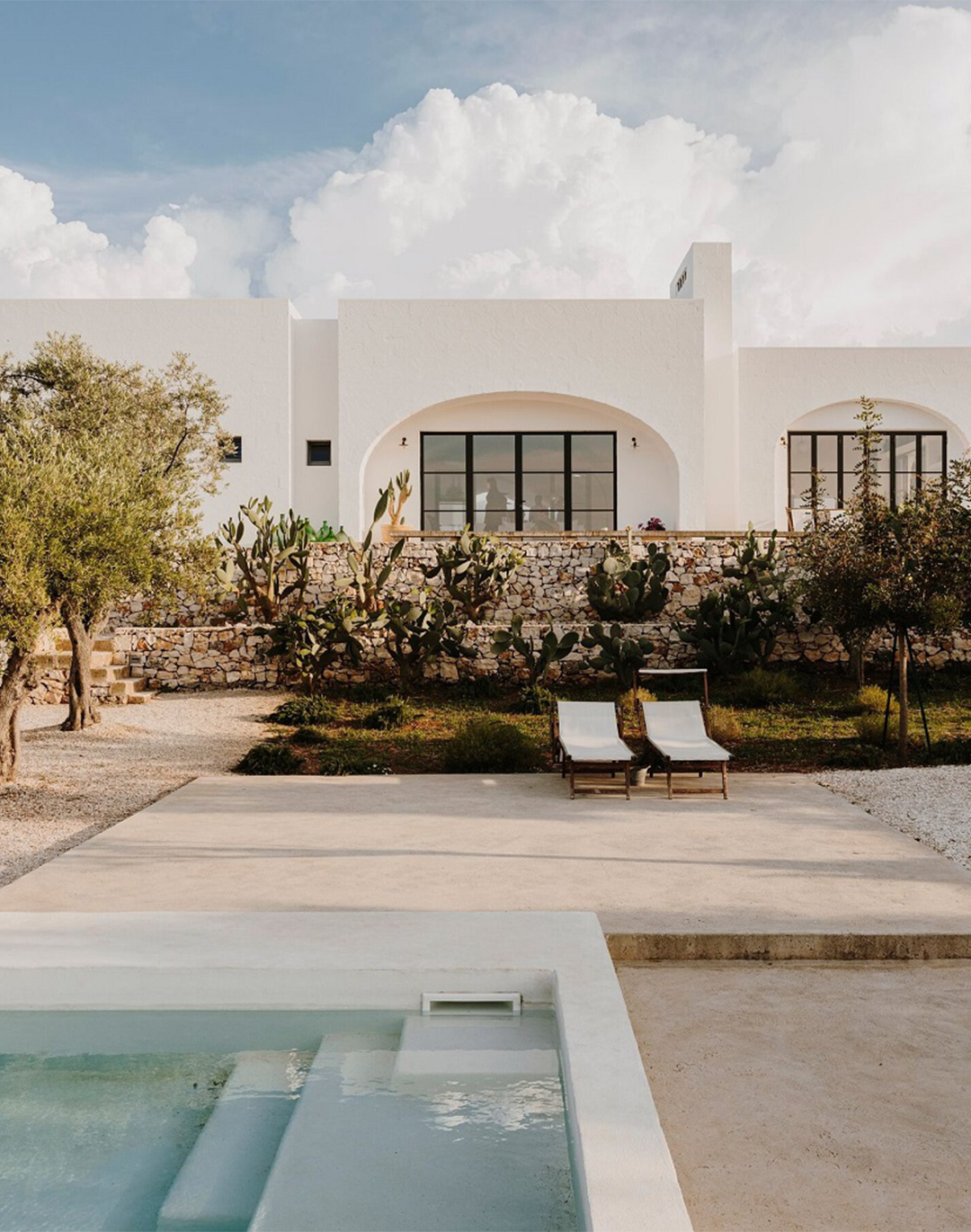
Perhaps that is why some of the most remarkable Italian homes of the twentieth century were built along the coast. The beach house allowed architects to free themselves from many of the conventions of urban living. Fewer corridors, fewer enclosed rooms, less bulky furniture. More terraces, patios, shade, thick walls, durable materials, and seamless transitions between indoors and outdoors. By the sea, a house stops being a container and becomes a way of inhabiting the landscape.
The most iconic Italian seaside homes in design history
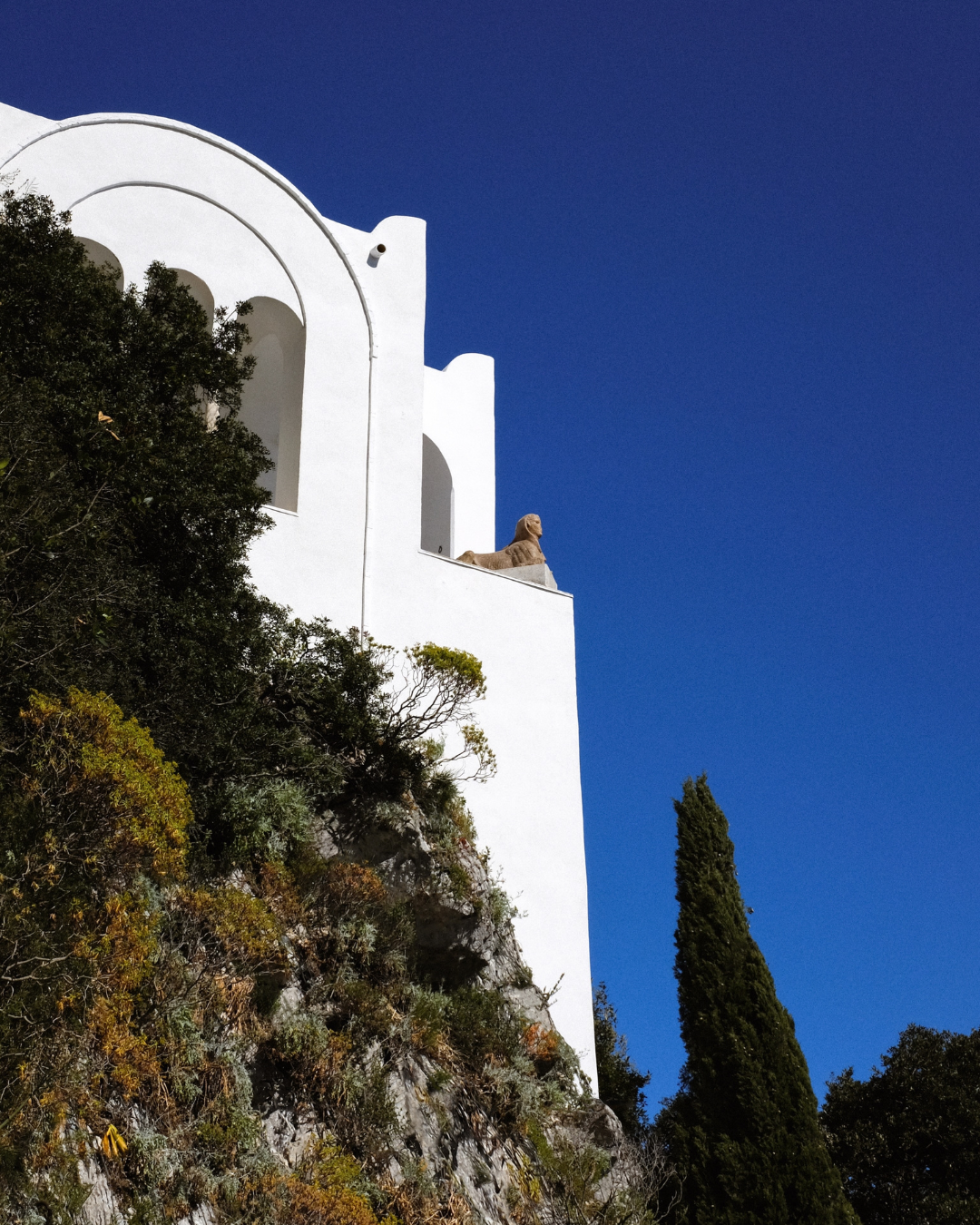
Villa Malaparte, on the island of Capri, is perhaps the most radical and mythical example of all. Perched on Punta Massullo, a rocky promontory overlooking the sea and accessible only on foot or by boat, its striking red volume, monumental staircase, rooftop terrace, and curved white wall have turned it into one of the most powerful images of Italian architecture. Here, the sea enters through the building's position, the wind, the isolation, and its uncompromising relationship with the rock. Villa Malaparte suggests that a beach house can also be a state of mind—a form of constructed solitude.
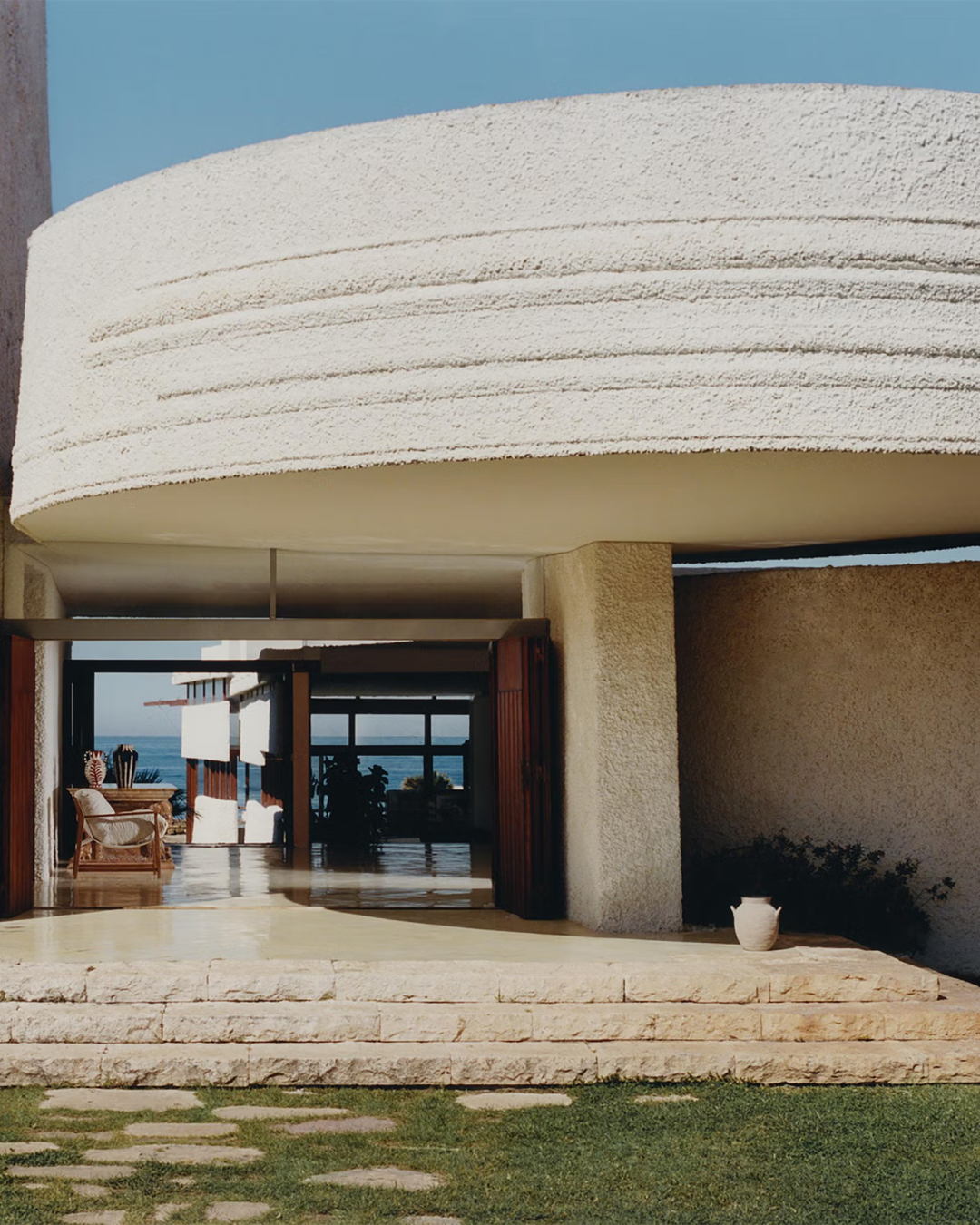
In Sardinia during the 1960s, however, the conversation became more grounded, more physical, and more closely tied to the experience of living with heat, light, and wind. Designed by Marco Zanuso between 1962 and 1964 in Arzachena, Casa Arzale was conceived as a private holiday home within a landscape that tourism had barely transformed. The site is defined by rocky cliffs, Mediterranean scrub, and traditional dry-stone walls. Zanuso worked with low volumes, granite, patios, and pergolas, seeking a restrained dialogue with the coastline. The house approaches the sea while remaining austere, essential, and almost reserved. It searches for an equilibrium between shelter and openness.
The Sardinian seaside villas that shaped architectural history
At La Maddalena, Cini Boeri also approached the holiday house as a question of wind, topography, and outdoor living. Casa Rotonda is embedded into the slope and unfolds around a central patio protected from the prevailing winds. Its circular form creates an intimate space, almost a private world within a dramatic landscape. The house faces the sea while organizing daily life around an internal void, a place where people can gather while remaining sheltered. At the seaside, the view matters—but so do shade, a sense of center, and protection.
Not far away, Casa Bunker, also designed by Boeri in 1967 for herself and her family, pushed that idea even further. Its name already tells part of the story. On an island constantly exposed to the wind, the house becomes mass, protection, and refuge. A holiday home can also be expressed through solid walls, bold geometries, and spaces designed to endure. Boeri understood that summer living is about exposure to the sun, protection from the elements, the search for coolness, and the careful control of light.
How modern architecture reinvented the holiday home
In Liguria, the Pineta di Arenzano tells a different story: that of an entire landscape dedicated to modern holiday living. Between the 1950s and 1960s, architects such as Ignazio Gardella, Marco Zanuso, Vico Magistretti, Gio Ponti, and Luigi Caccia Dominioni designed homes, hotels, and infrastructure for a new way of inhabiting the coast. It became an important architectural laboratory, demonstrating that holidays had become a serious subject for Italian architecture. Magistretti's Casa Arosio, designed between 1956 and 1959, is a particularly clear example, with its stacked volumes, terraces, roof gardens, articulated interiors, and continuous relationship with the sloping terrain. Here, the holiday home becomes a device for moving between levels, views, shade, and air.
The work of Alberto Ponis in Sardinia adds another important chapter. In his homes in Palau and along the coast, every project begins by listening to the landscape: white lime plaster reflects the heat, local stone blends with the surroundings, while accessible terraces, outdoor staircases, and rooftops become living spaces. The house extends across the roof, the steps, the passageways, and the loggias. It is a deeply Mediterranean way of living, yet one that feels strikingly contemporary: the most meaningful spaces are often those in between, suspended between indoors and outdoors.
Villa La Saracena by Luigi Moretti, in Santa Marinella, takes the conversation into a more theatrical dimension. Begun in 1955 and completed in 1957, the villa is composed of cantilevered volumes, panoramic openings, a circular tower, and a linear body facing the Tyrrhenian Sea. It is a house designed for the sea, the light, and the sun, with an almost dramatic presence. Moretti transforms the coastline into a spatial experience of curves, cuts, perspectives, and surfaces that naturally guide the eye toward the horizon. Here, the sea becomes architecture through the movement of space itself.
Why Italian seaside house design still feels contemporary
@elenaajoyce the cutest little summer cottage at the sea in northern italy link is in my bio under “italy cottage” #italiansummer #peacefulplaces #airbnbfinds #uniquestays #travelcreator original sound - bodiek
Taken together, these houses reveal a simple truth: the design of the seaside home always begins with real, tangible conditions. Heat, wind, salt, intense sunlight, rocks, slopes, views, and the constant need for shade. From these elements emerges a precise architectural language: a beach house must accommodate freer bodies, slower days, and objects that move effortlessly between indoors and outdoors.
Many ideas that seem contemporary today were already present decades ago: outdoor living, minimal furnishings, natural materials, homes that open themselves to the landscape, shade instead of air conditioning, and the celebration of hybrid spaces. The Italian holiday home anticipated much of today's desire for a lighter way of living. It encourages us to sit lower, eat outside, own fewer things, let the breeze flow through the rooms, and measure the day by the movement of light. The finest holiday homes give shape to summer itself. And in doing so, Italian design discovered one of its simplest—and most radical—lessons: living better can sometimes mean living with less.