November 16th, 2026
Is pastina the new ramen? The story of how the humblest dish in the pantry became Italy's answer to the obsession with Japanese cuisine
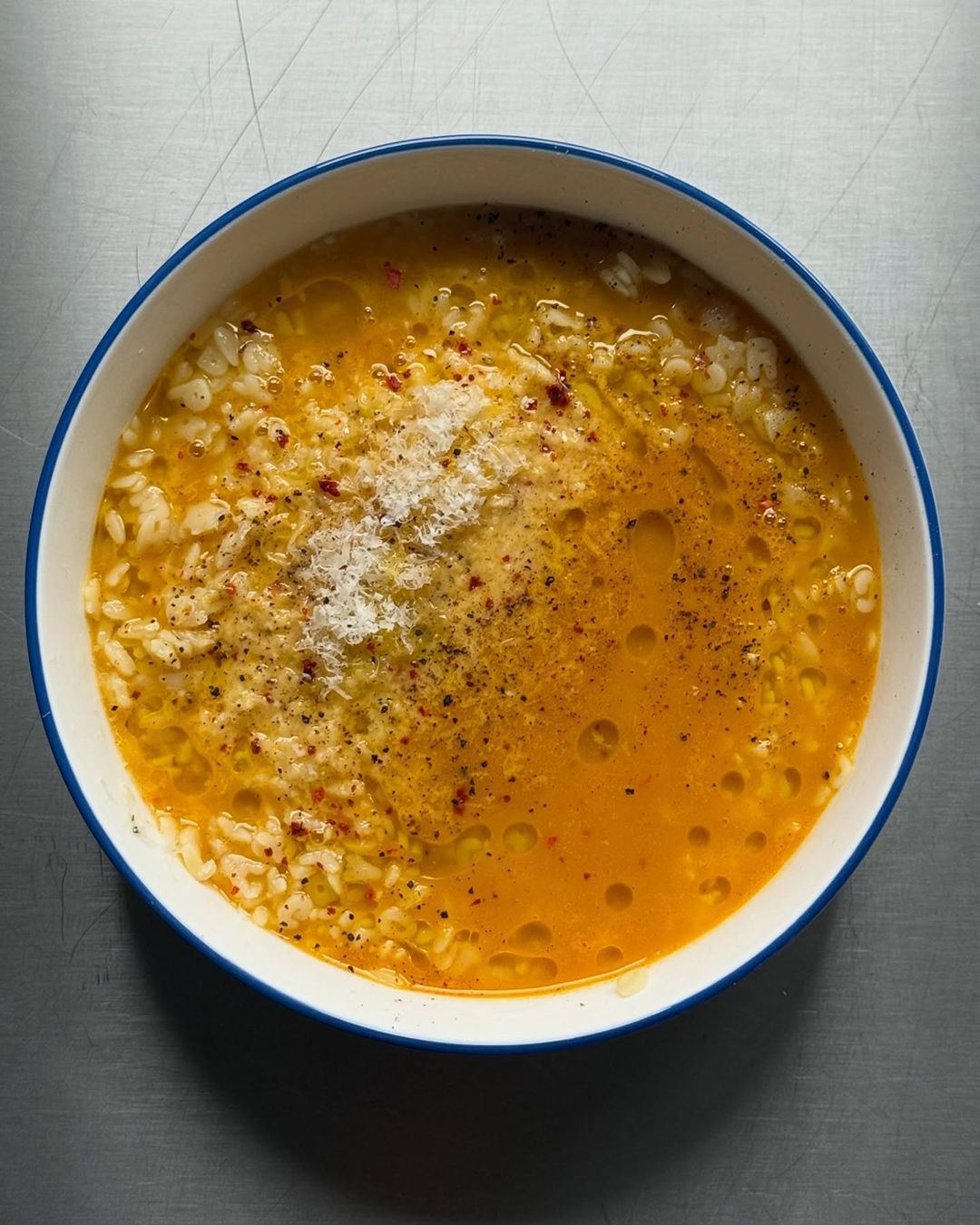
Pastina in broth is reclaiming its throne as the ultimate winter comfort food, even though for years we looked at it with embarrassment, relegating it to a childhood relic to be brought out only when running a fever — convinced that true urban comfort required eighteen hours of simmering and the noise of a packed ramen bar. Then, almost without noticing, the whole perspective flipped. The contrast between ramen and pastina comes down to subtraction. Ramen is theatrical, layered, with a geometric aesthetic designed to pop on screen that's hard to replicate at home. Pastina costs a few cents, cooks in four minutes with whatever you have in the cupboard, and has the audacity to be aesthetically imperfect: monochromatic, flat, cloudy when you melt parmesan or a cheese triangle into it.
And yet it's precisely this absence of artifice that makes it so relevant today. It marks the shift from food as a social event to be put on display to food as private space, where you close the front door and don't have to prove anything to anyone. Ramen remains an urban ritual — nocturnal and ceremonial. Pastina in broth is its intimate counterpart: it needs no neon lights, no filters, no explanation. It's the return to a primitive, economical taste that reminds us that, on certain evenings, the most contemporary thing you can do is simply come home.
The (re)discovery across the ocean
Stasera vado a mangiare il ramen, cioè la pastina in brodo, però siccome sto a Milano mi do un tono.
— Nylo (@Danilo_mgh) April 23, 2016
Even from a strictly gastronomic standpoint, the comparison with ramen holds up far better than we're used to admitting. For years we treated umami as an exotic word, forgetting that Italian home cooking has always harbored an equally powerful version of it — just less theorized. In ramen, depth of flavor is built through accumulation: it starts with a long extraction of bones or seaweed, then comes the savory, fermented punch of tare (based on soy sauce, miso, or mirin), and everything is sealed with a layer of aromatic fat that retains heat and coats the palate.
Our pastina achieves exactly the same result through subtraction. A parmesan rind left to simmer in the broth slowly releases natural glutamate (free glutamic acid, the direct driver of umami flavor), lending the liquid that savory, rounded depth that holds its own against any Eastern broth. Then, when the heat is off and grated cheese is stirred in, the warmth melts the fats to create the creamy, silky coating that binds the pastina, transforming a light broth into something dense and deeply satisfying.
The rise of orzo
None of this would be possible without the shape that, more than any other, has allowed pastina to escape the ghetto of childhood soup: orzo. While quadrucci and anellini remain inextricably tied to memories of grandmothers' kitchens and feverish evenings, orzo has managed to break free, becoming the perfect bridge between domestic memory and contemporary cooking.
Credit goes to its texture: it holds its shape during cooking, has a chewiness that brings it closer to a grain of rice or a proper pasta than to a broth-soup shape, and it absorbs liquid to create the enveloping creaminess that appeals as much to chefs as to home cooks. It's no coincidence that orzo is the star of the new wave of chef-driven experimentation — stirred like a risotto or submerged in concentrated broths with aromatic herbs — transforming a humble staple of the Italian pantry into the emblematic shape of this return to the essential.


