July 20th, 2026
The best cemeteries to visit this summer Five places to discover the liveliest side of memory
A year ago, on Karl Marx's tomb in the London cemetery of Highgate, a Labubu appeared. Hanging from the philosopher's bust, it was photographed, shared and commented on by hundreds of people. Even the memory of the dead, perhaps, has entered the language of pop culture. In recent years necrotourism, travel to cemeteries, ossuaries and places linked to death, has gradually shed its macabre reputation. Those who enter these spaces are not just looking for a celebrity's grave: they come for works of art, for monumental grounds, sometimes to piece together the social stratification of a city. In Italy, where cemeteries are almost parallel cities, all this carries extra weight: they tell how a community wanted to be remembered. From Milan's industrial bourgeoisie to Venice's island of the dead, five cemeteries to visit this summer.
Cimitero Monumentale della Certosa, Bologna
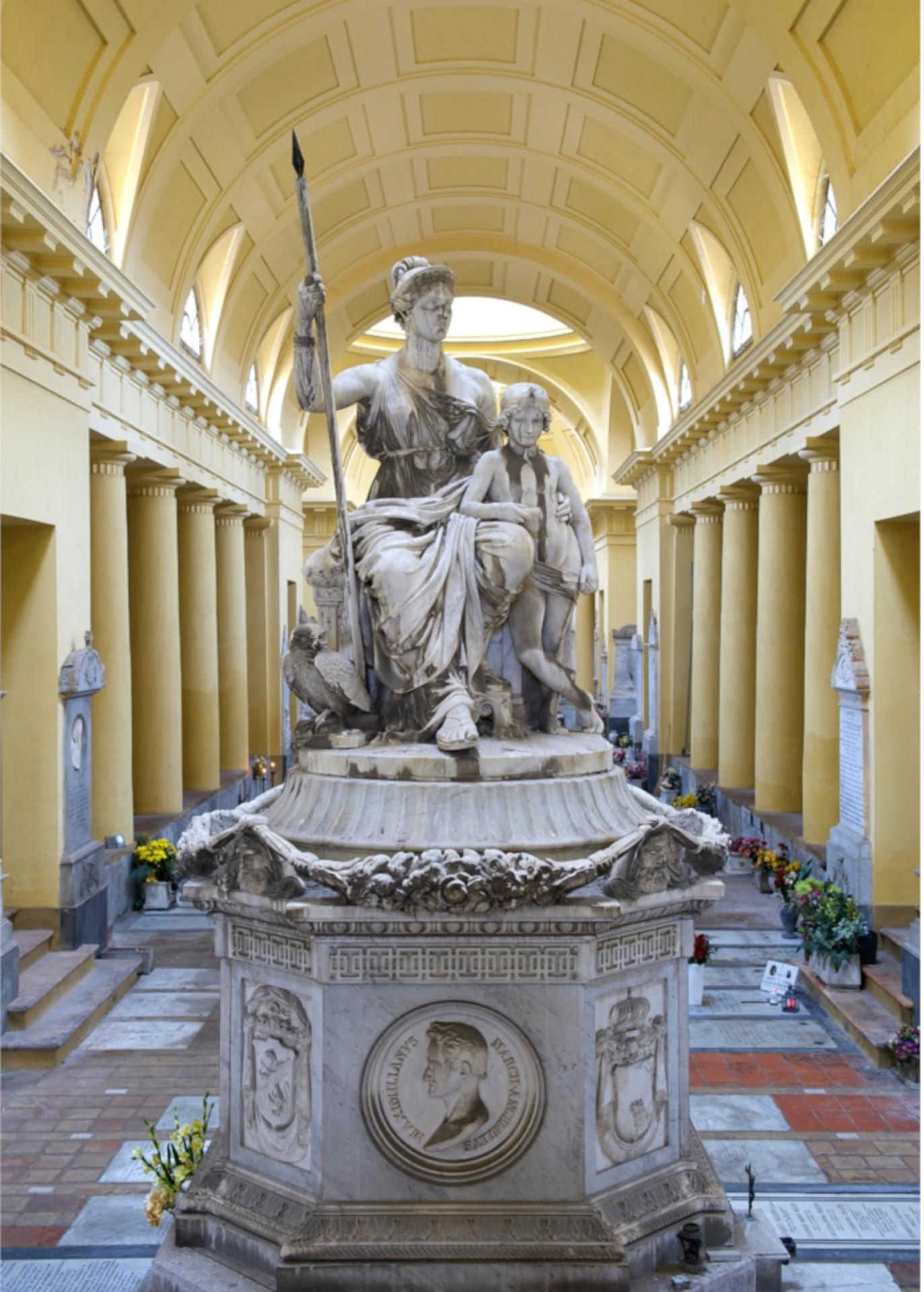
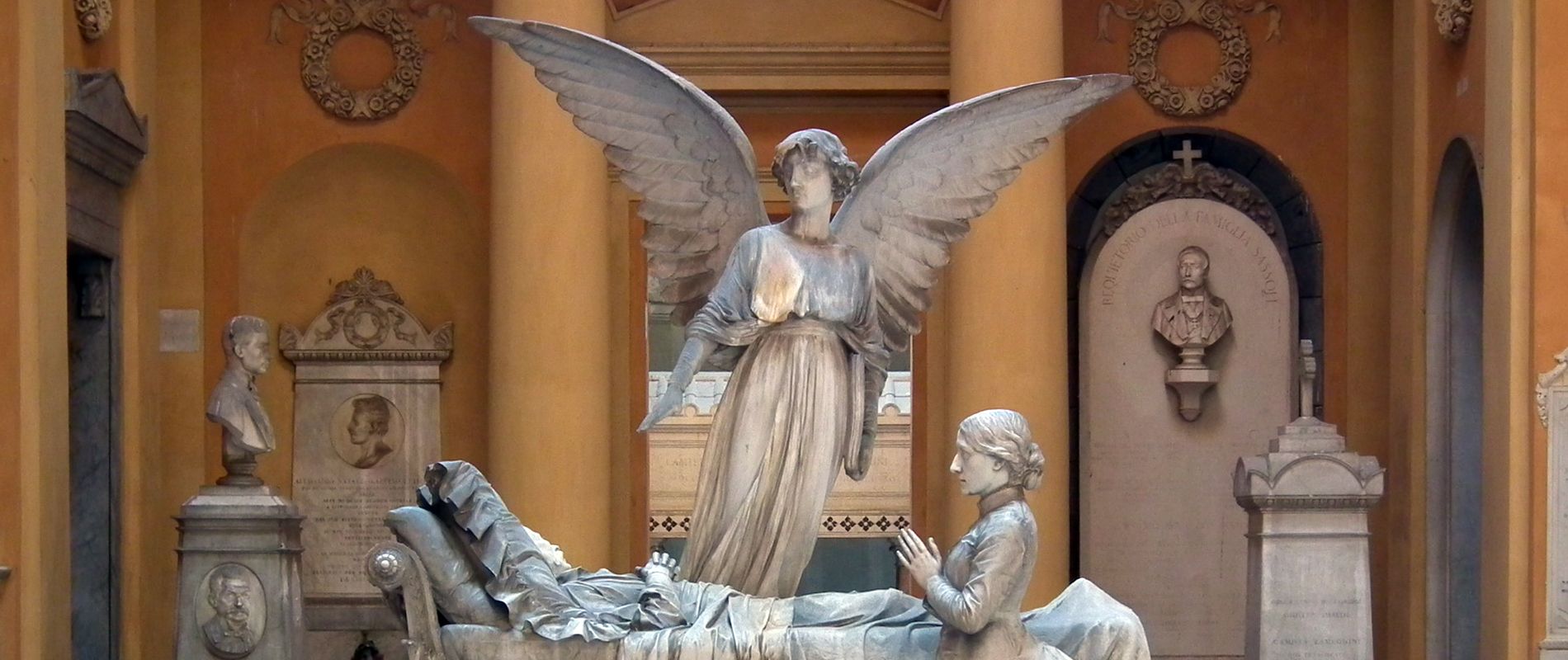
Almost a second city, hidden behind the one of the living: here is the Certosa di Bologna. Founded as a cemetery in 1801 on the grounds of a Carthusian monastery, it unfolds through cloisters and halls, porticoes and galleries. Walking through it feels like moving from one era to another, among neoclassical monuments, Romantic sculptures, Liberty-style decorations and contemporary chapels. This is not the only thing that makes it an evocative place: it is a place that offers the chance to observe the history of the city, with its complex layers and transformations.
Cimitero Monumentale, Milan
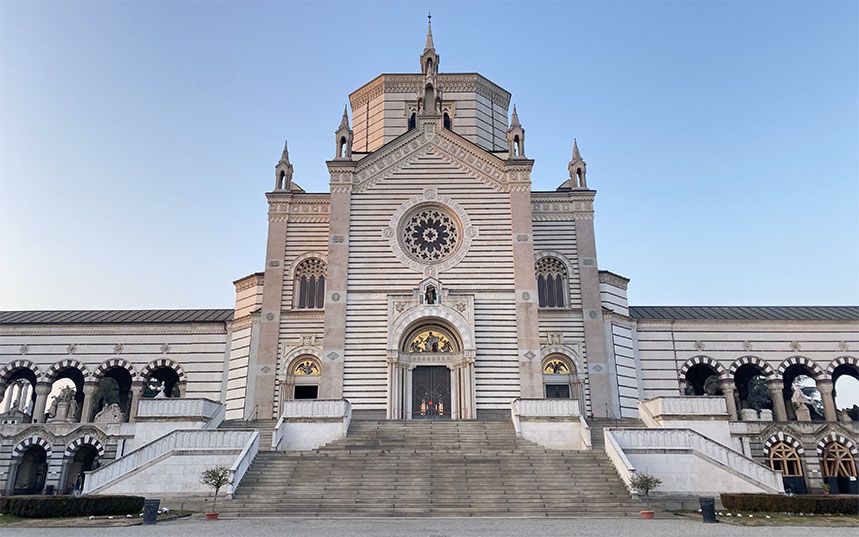
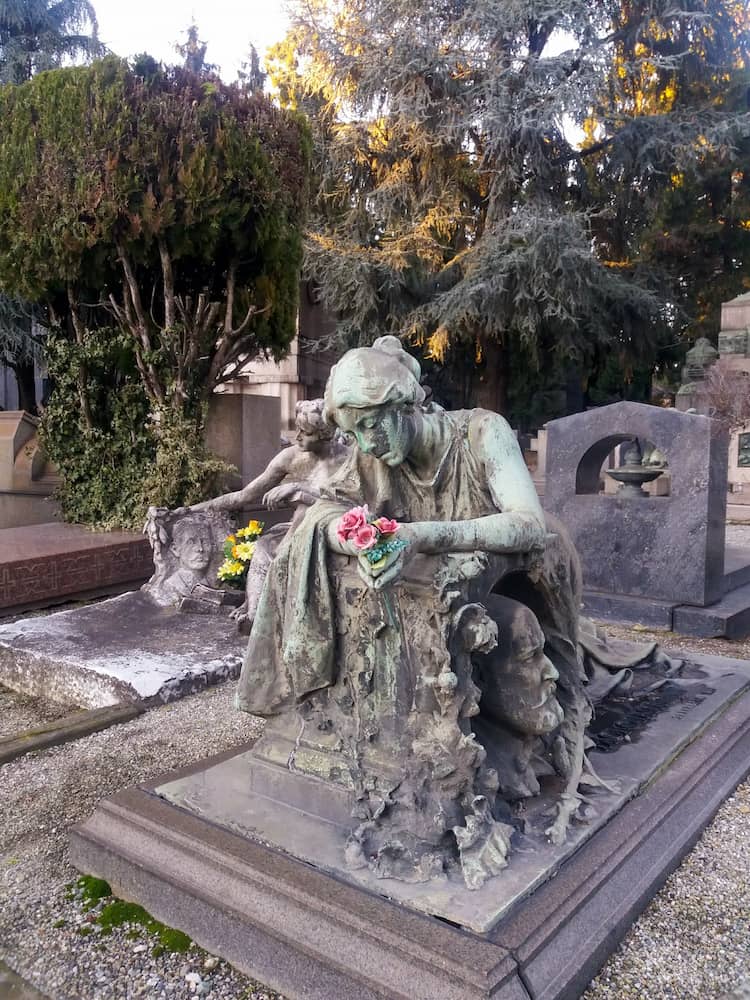
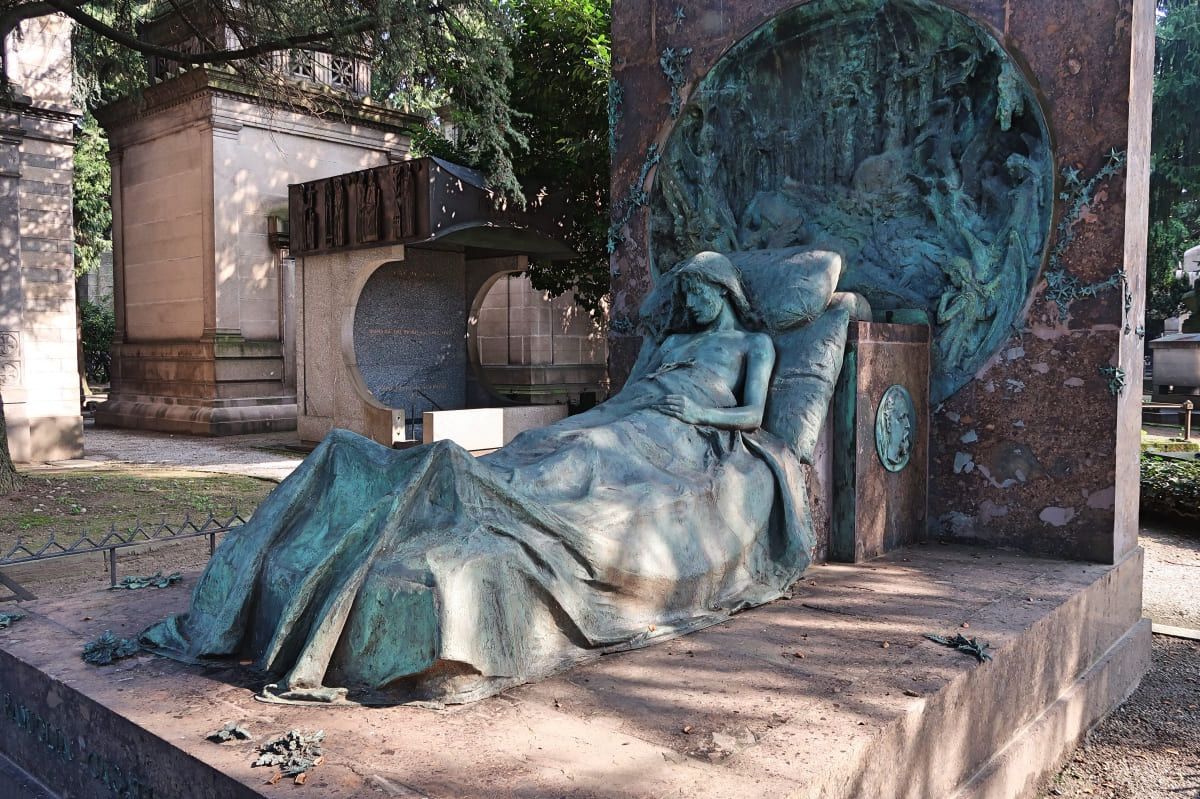
A few steps from Chinatown and Porta Nuova, the Cimitero Monumentale is an open-air museum. Inaugurated in 1866 to a design by Carlo Maciachini, it brings together Gothic, Byzantine and Lombard Romanesque influences. At the entrance, the Famedio welcomes the city's illustrious figures, from Alessandro Manzoni to Salvatore Quasimodo, while along the avenues stands the Toscanini aedicule, sculpted by Leonardo Bistolfi for the conductor's son, who died as a child. Here the industrial bourgeoisie had itself carved for eternity, in family tombs as large as chapels, among bronze angels and allegories of labour.
Cimitero di San Michele, Venice
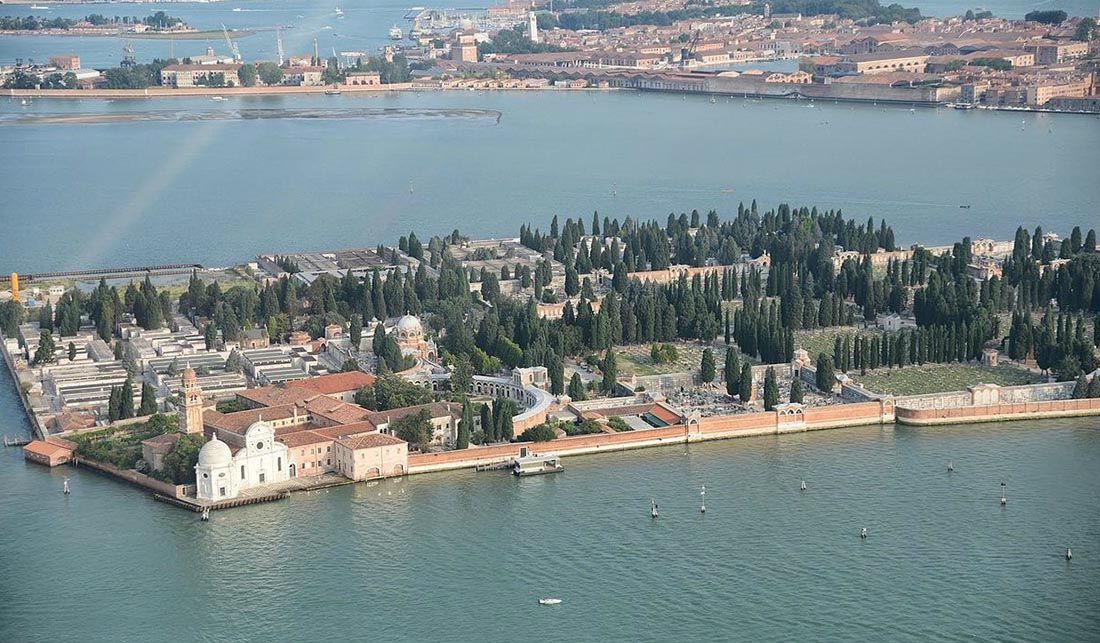
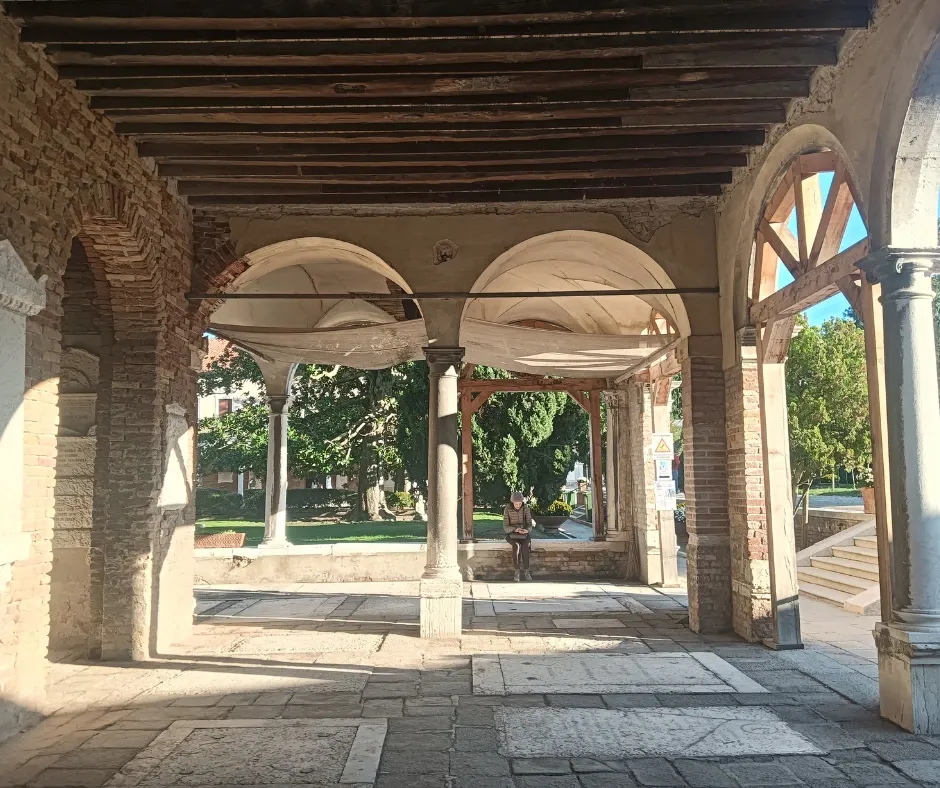
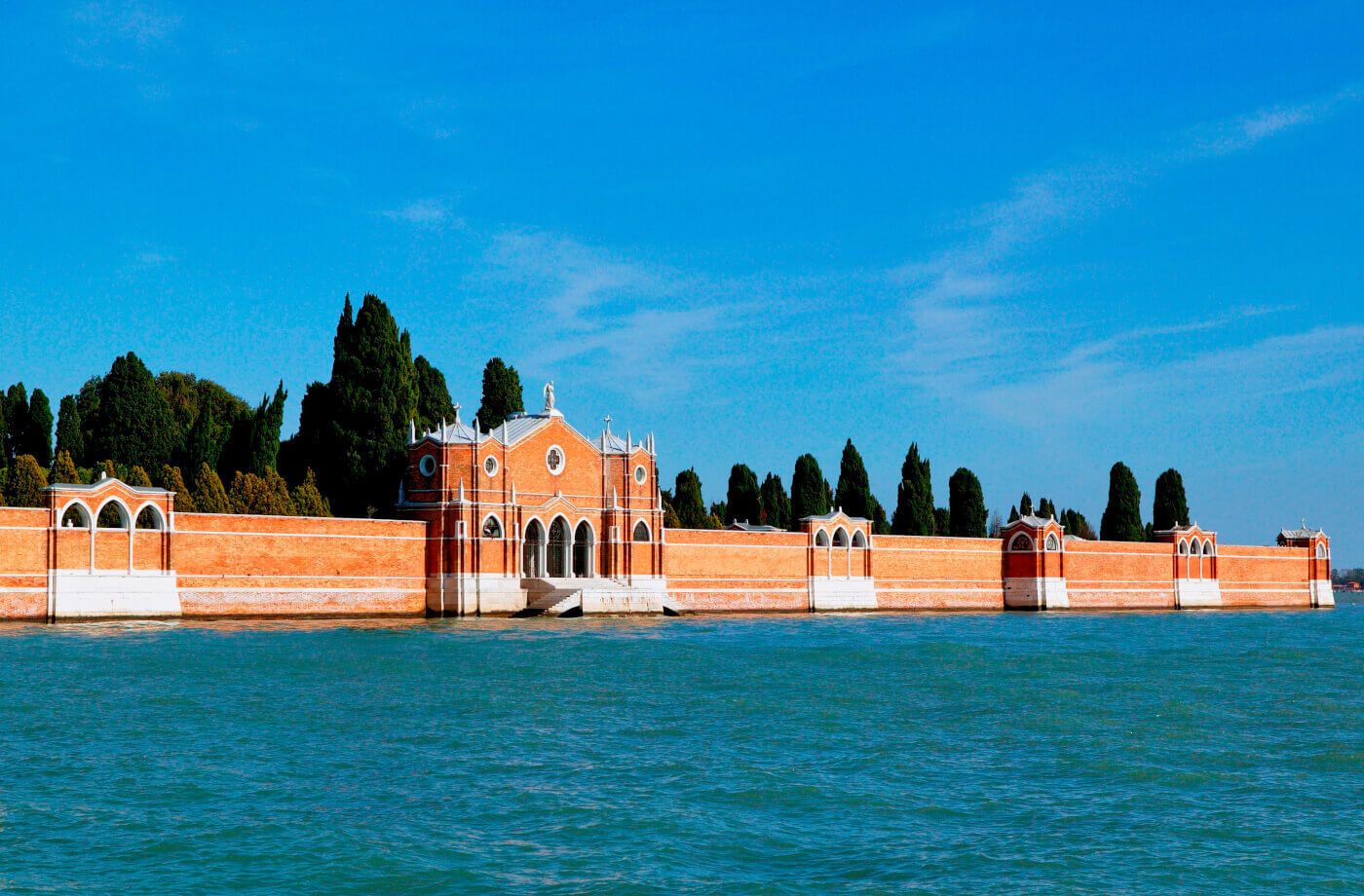
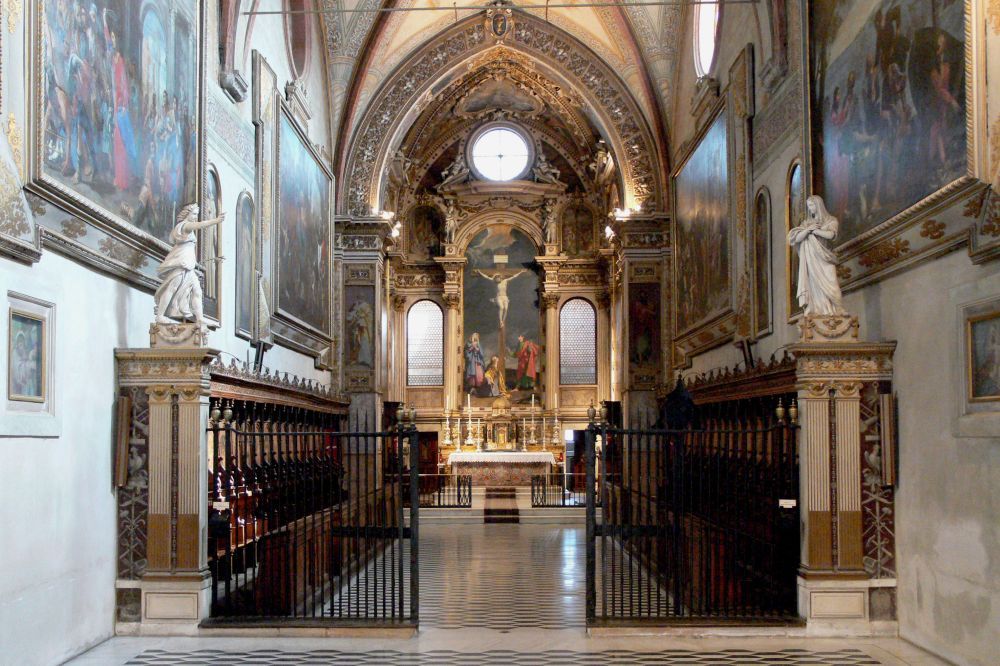
The Cimitero di San Michele in Venice is a suspended, almost mystical place. It occupies an entire island between the city and Murano, and it was a Napoleonic edict, in the early nineteenth century, that turned the island into the city's official burial ground, first established on the neighbouring island of San Cristoforo. Mauro Codussi's church of San Michele in Isola welcomes visitors, and inside, the cemetery reflects the cosmopolitan nature of the Serenissima. In the Orthodox section rest Igor Stravinsky and Sergei Diaghilev, while the Protestant one holds Ezra Pound and Joseph Brodsky, who in life dedicated some of his finest writing to the city. On Diaghilev's tomb, passing dancers still leave their ballet shoes.
Cimitero delle Porte Sante, Florence
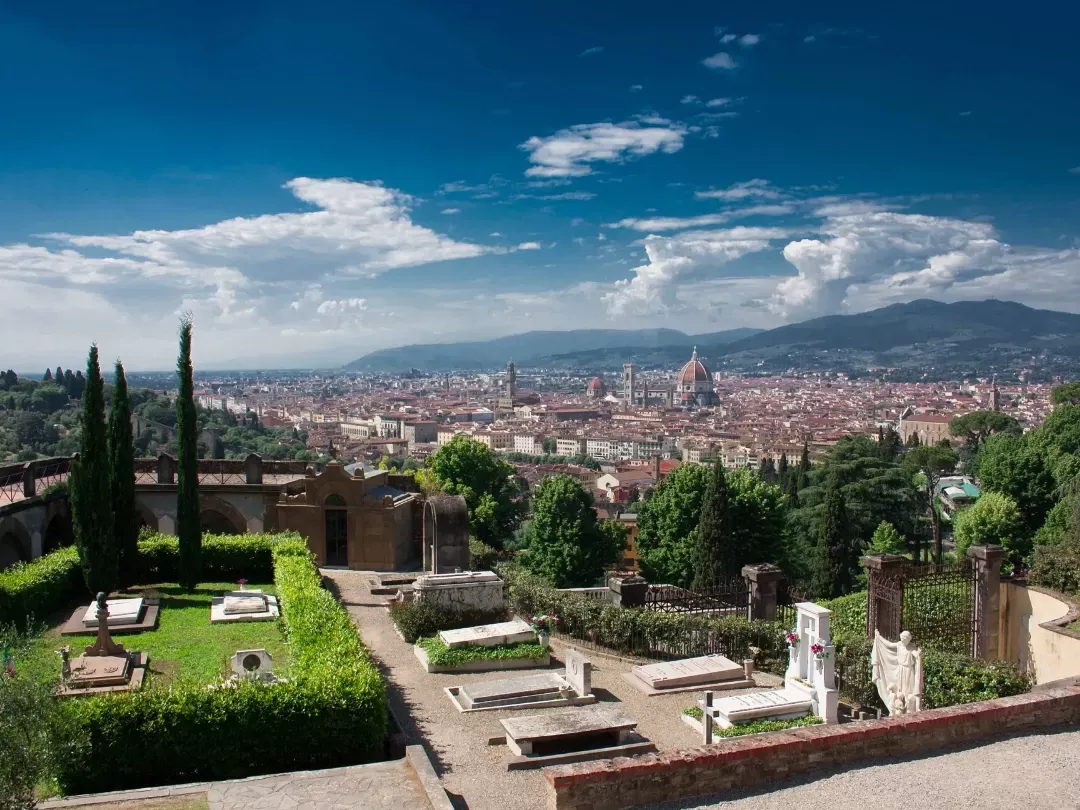
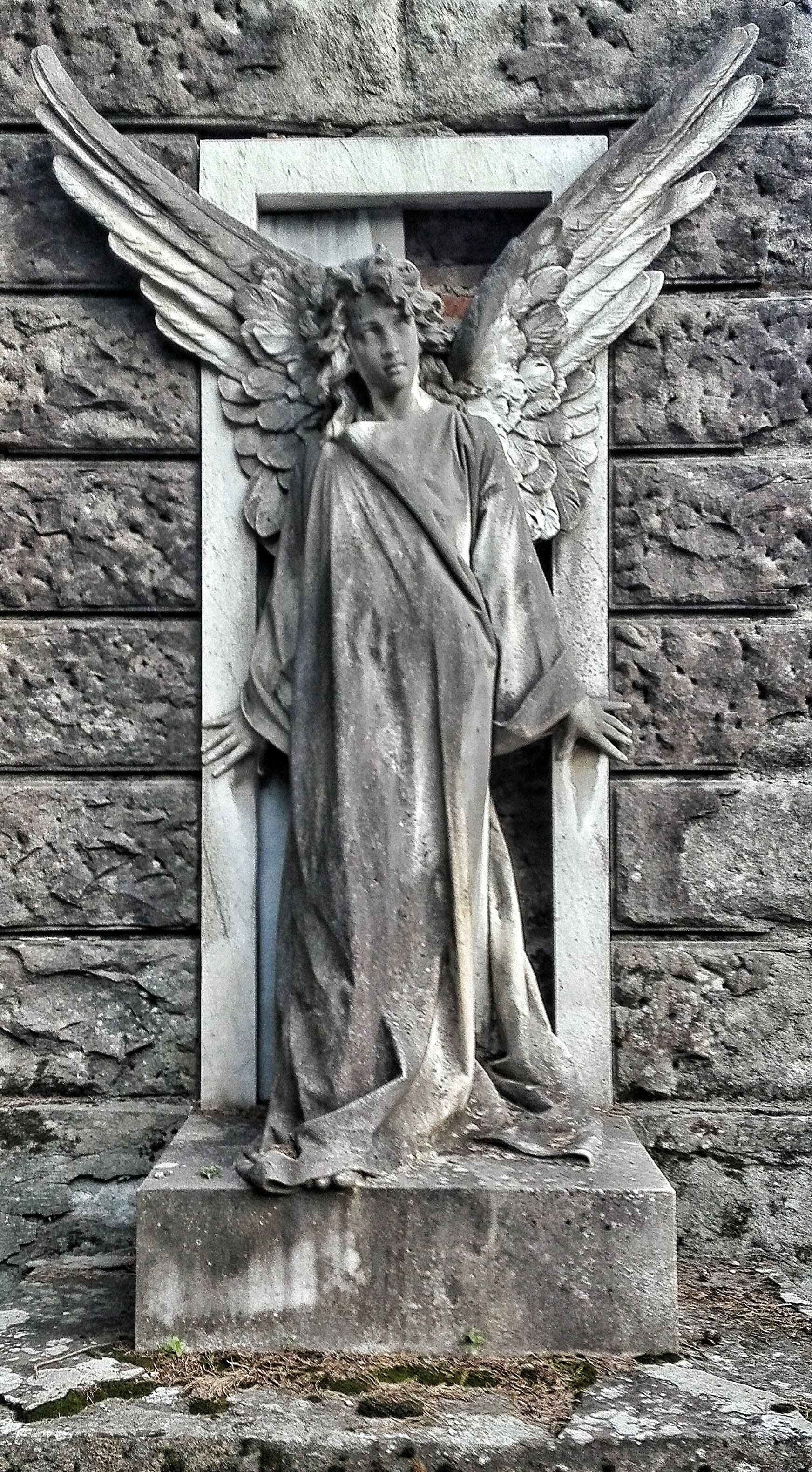
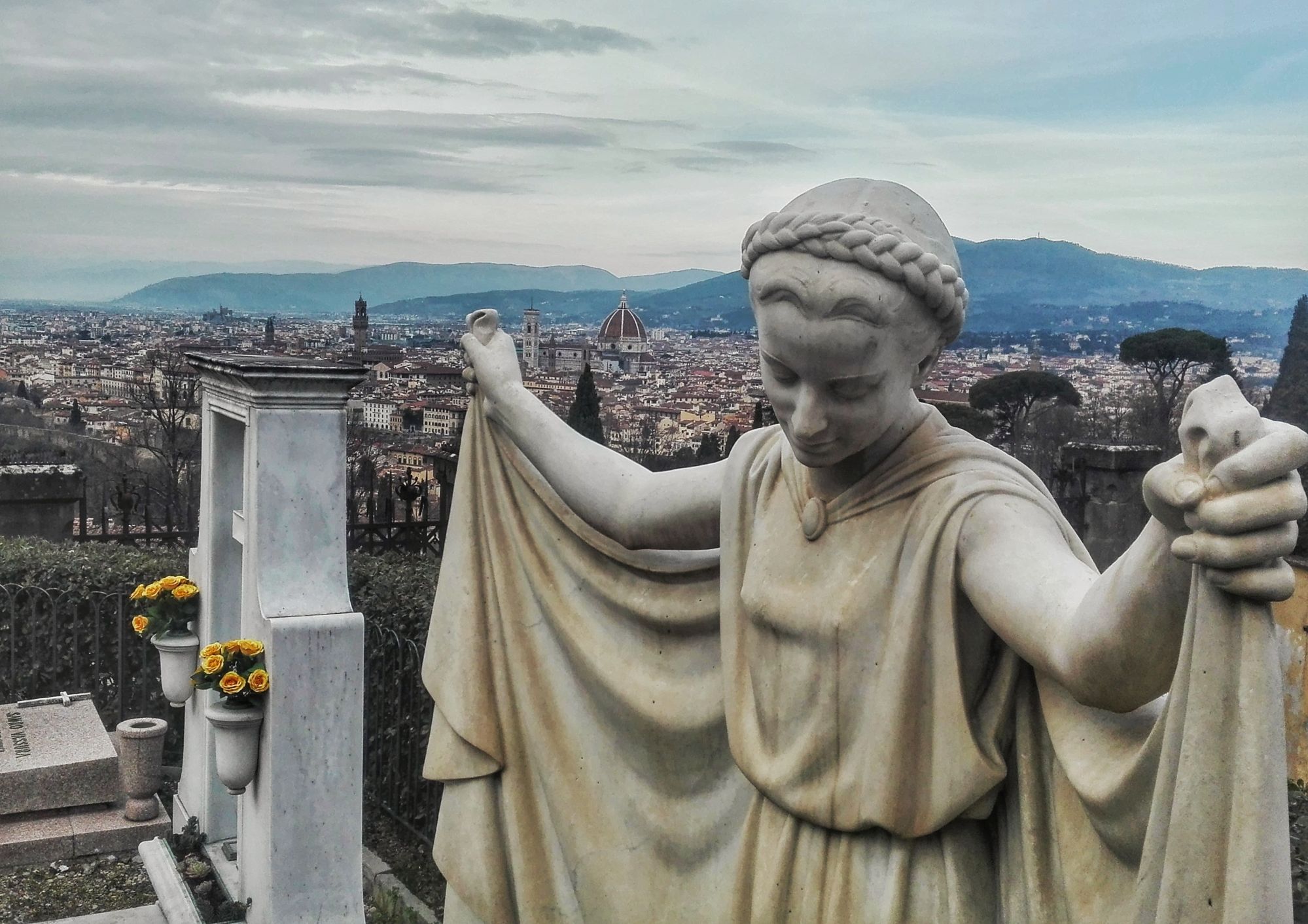
To see Florence from above, almost everyone is convinced they should stop at Piazzale Michelangelo. Few know, however, that the climb continues up to the basilica of San Miniato al Monte. Fewer still enter the Cimitero delle Porte Sante, inaugurated in the mid-nineteenth century to a design by Niccolò Matas and later enlarged in 1864 by Mariano Falcini. The cemetery stretches in front of and behind the church with neo-Gothic chapels, statues, avenues and terraces overlooking the Florentine rooftops. It holds the tombs of Carlo Collodi, Franco Zeffirelli, Ottone Rosai and Giovanni Spadolini. Here you can also enjoy, in a calmer and quieter setting, the view the city has to offer.
Cimitero Monumentale di Staglieno, Genoa
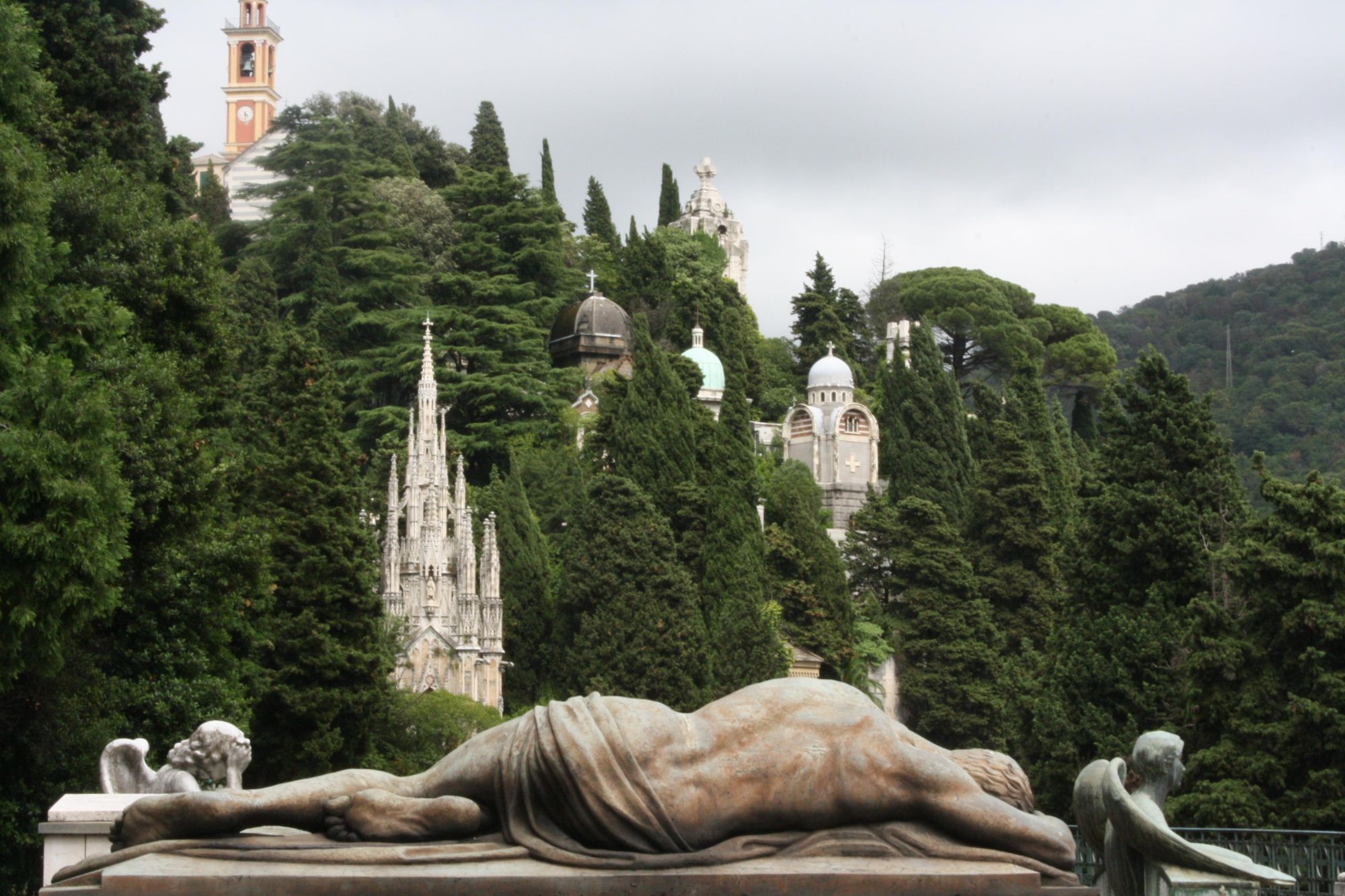
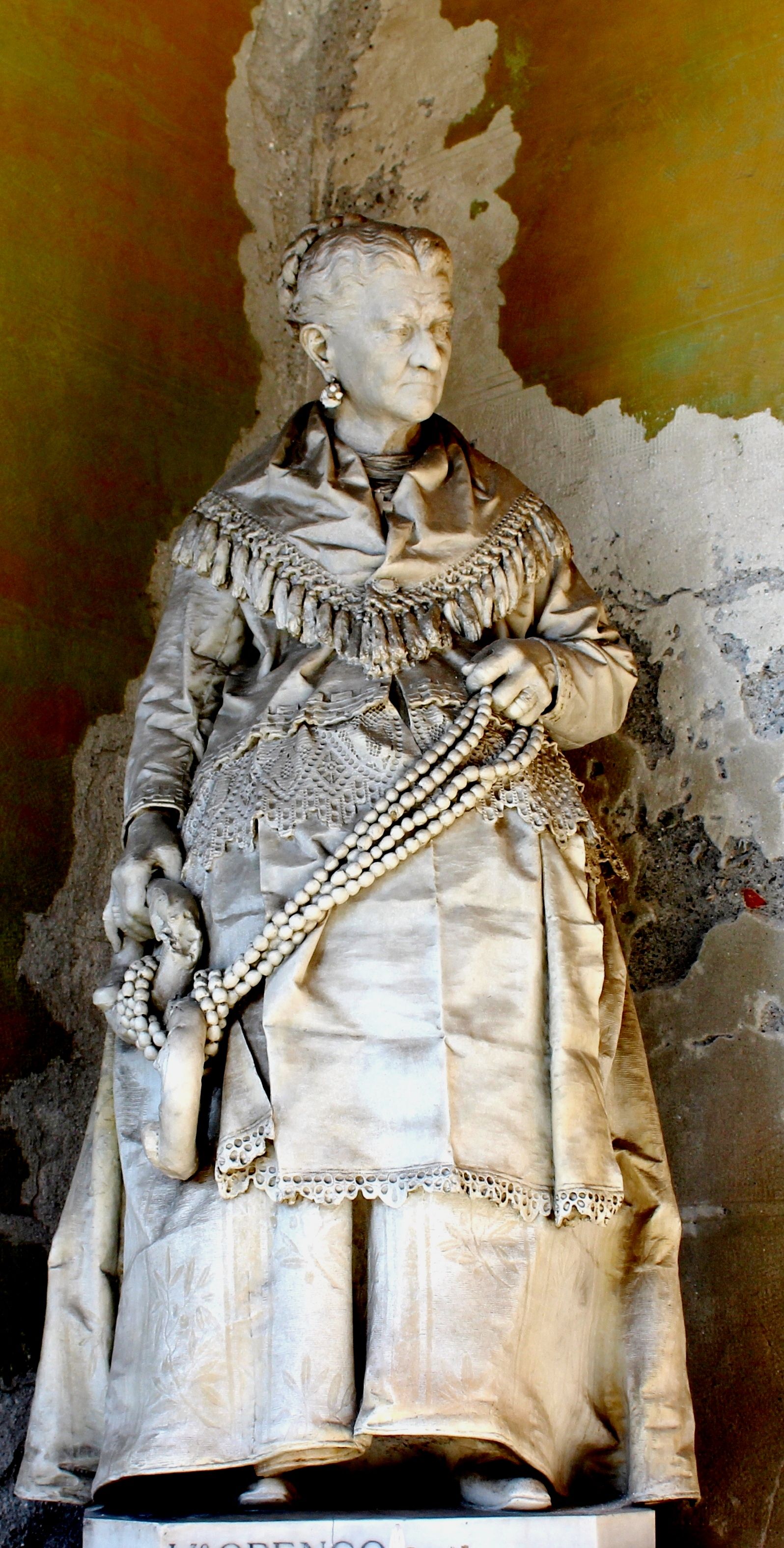
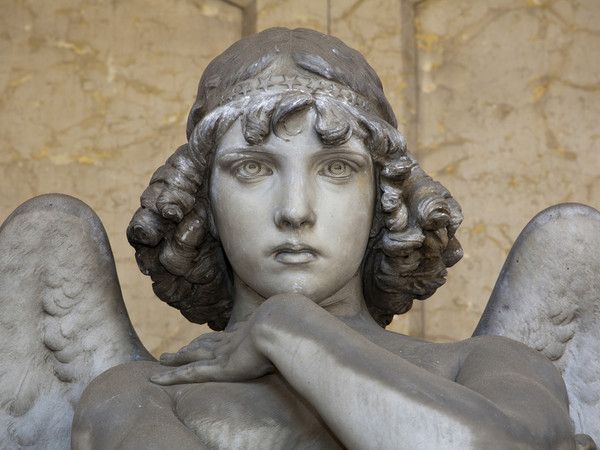
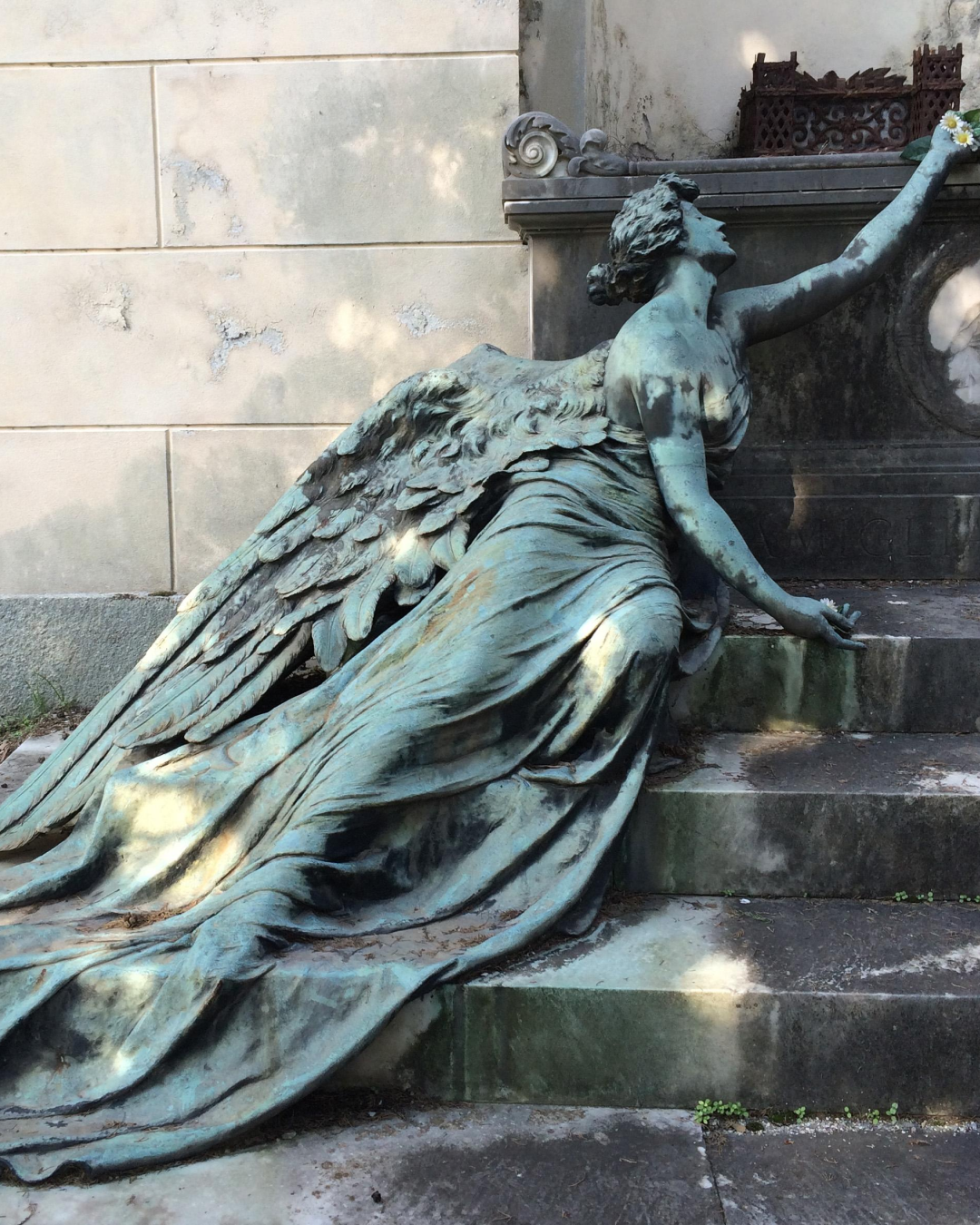
Even without ever having visited, Staglieno may look familiar to many. The Appiani tomb is on the cover of Closer by Joy Division, the angel of the Ribaudo tomb on that of the single Love Will Tear Us Apart. The cemetery grew out of an 1835 project by Carlo Barabino, completed by his pupil Giovanni Battista Resasco, and opened to the public on 2 January 1851. Here Genoese families had themselves portrayed in statues of minute realism, with richly detailed clothing and theatrical gestures.
Along the avenues stand the mausoleum of Giuseppe Mazzini, the grave of Fabrizio De André and, in the English section, that of Constance Lloyd, Oscar Wilde's wife. The most beloved statue, however, remains that of Caterina Campodonico, the "peanut seller": a woman of the people who, by selling dried fruit and canestrelli biscuits, saved enough to commission a marble portrait of herself, while still alive, in 1881.