August 27th, 2026
Why are AI-generated food photos so unsettling? Someone called them “Lovecraftian horrors”
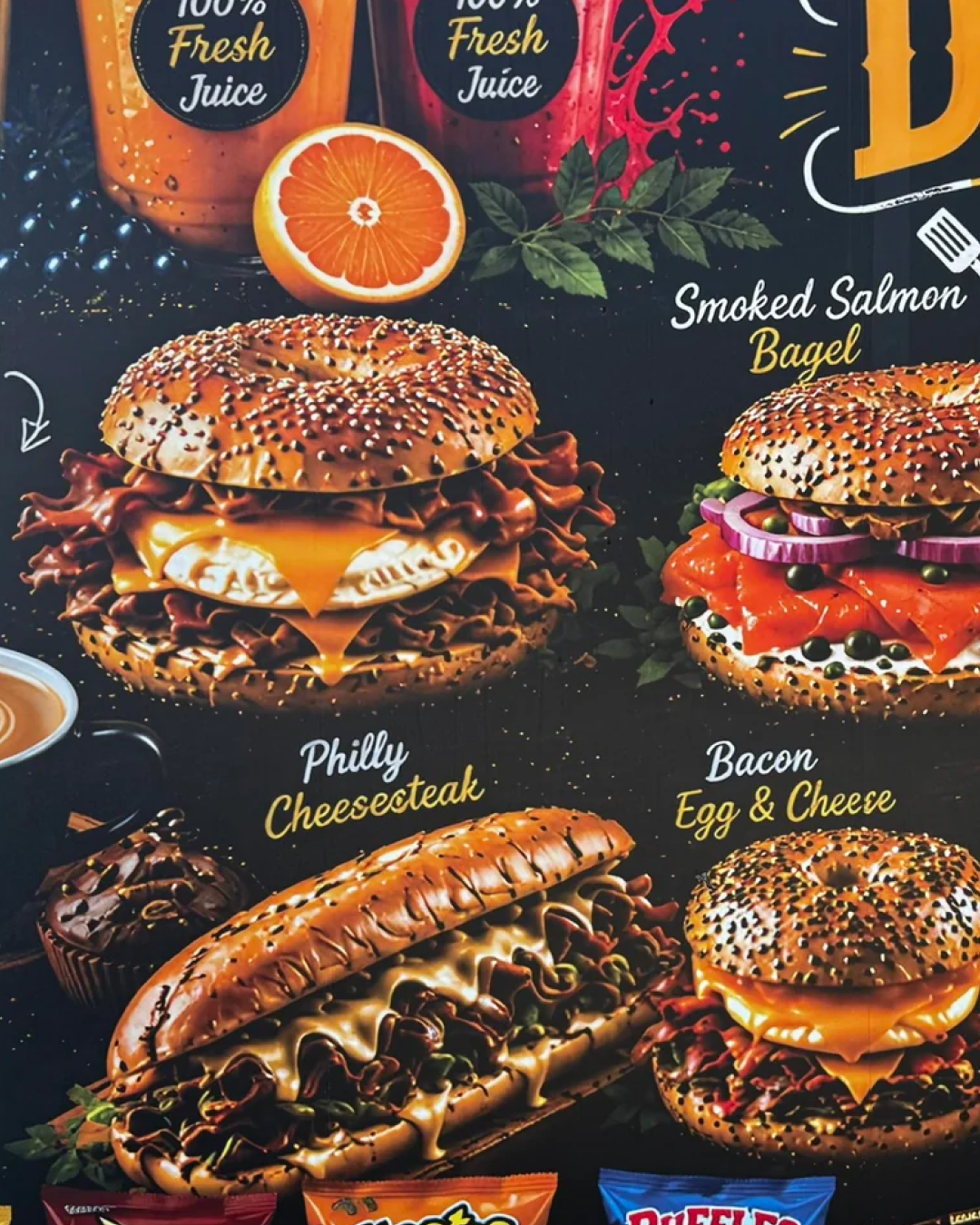
After the invasion of AI-generated flyers that look practically identical in every corner of the world and have already attracted their fair share of detractors, the new technology has given us a new horror: photos of food in restaurants. Until last year, popular restaurants and trattorias displaying pictures of their food made do with old, slightly faded and outdated shots, and while it is true that much of food marketing relies on more or less familiar forms of deception, AI-generated food images have far more serious problems: they are disturbing.
Bread crumbs riddled with holes like wood infested with termites, photos of pad thai and burgers that look more like wasp nests, steaks with things that seem to be crawling all over them. More and more social media users have started complaining about food photos that simply look inhuman, alien. Posting an image of shrimp transformed by AI into rings of pink flesh with neither heads nor tails, yet still covered in shells, X user Sam Biddle (whose tweet received 3.1 million views) described them as «Lovecraftian food horrors». But why do these images unsettle us so much?
AI food and the uncanny valley
The death of folk graphic design in favor of AI slop across our country's delis is leading to some incredibly Lovecraftian food horrors pic.twitter.com/snDyC675Ei
— Sam Biddle (@samfbiddle) August 23, 2026
The sense of disgust and unease we feel when looking at these images can be traced back to the idea of the «uncanny valley», a concept formulated by roboticist Masahiro Mori in 1970 to describe the disturbing psychological effect humans experience when confronted with an android or figure that reproduces the human form and is recognised as such by our brains up to a certain point. Beyond that point, however, discrepancies with real human beings, such as the texture of the skin, the shine of the eyes or the natural appearance of hair, transform familiarity into repulsion.
AI-generated images of food trigger precisely this mechanism of uncanny familiarity. The part of our brain that uses visual patterns to interpret reality recognises the parameters that define, for example, a shrimp. But then the absence of a head or legs, combined with the fact that it looks organic yet cannot be attributed to any recognisable animal, immediately generates discomfort. The same happens with photos of burritos that resemble wasp nests or bread whose crumb is punctured with holes in an unnatural and therefore unsettling way. Technically, the phenomenon is known as «categorical ambiguity distress». But these images trigger other impulses as well.
Who's afraid of biology?
@swaggyreian The amount of pasar malam food vendors using ai generated menu also… like bro… now i have no appetite cuz y does it look like that… #fyp #pov #goosebumps #trigger #trypophobia Oh im not hungry.. - arianka
Another phenomenon often brought up when discussing AI's food horrors is trypophobia, meaning an aversion (not officially recognised as a clinical phobia in the DSM) to patterns of closely spaced, repeated concave shapes such as holes, bubbles and honeycombs. A 2013 study showed that trypophobic images share visual characteristics with those of venomous animals such as frogs, octopuses and certain snakes. According to this hypothesis, the brain does not react to the meaning of the image but to its mathematical structure, which our brains associate at a subcortical level with signals of biological danger.
The discomfort caused by these images operates on several levels: that of pure perception, the cognitive level and the epistemic level, meaning our ability to recognise what is real. Added to this is a cultural element: an imperfect visual artefact that is nevertheless recognisable as “real” is replaced by an inhuman perfection devoid of intentionality. Paradoxically, it is precisely the absence of imperfection that makes these images feel completely alien. The brain does not fear imperfection, but perfection without an author.