June 11th, 2026
Beach umbrellas have been banned on Sardinia Following last year’s fire in Villasimius, the municipality has tightened access restrictions
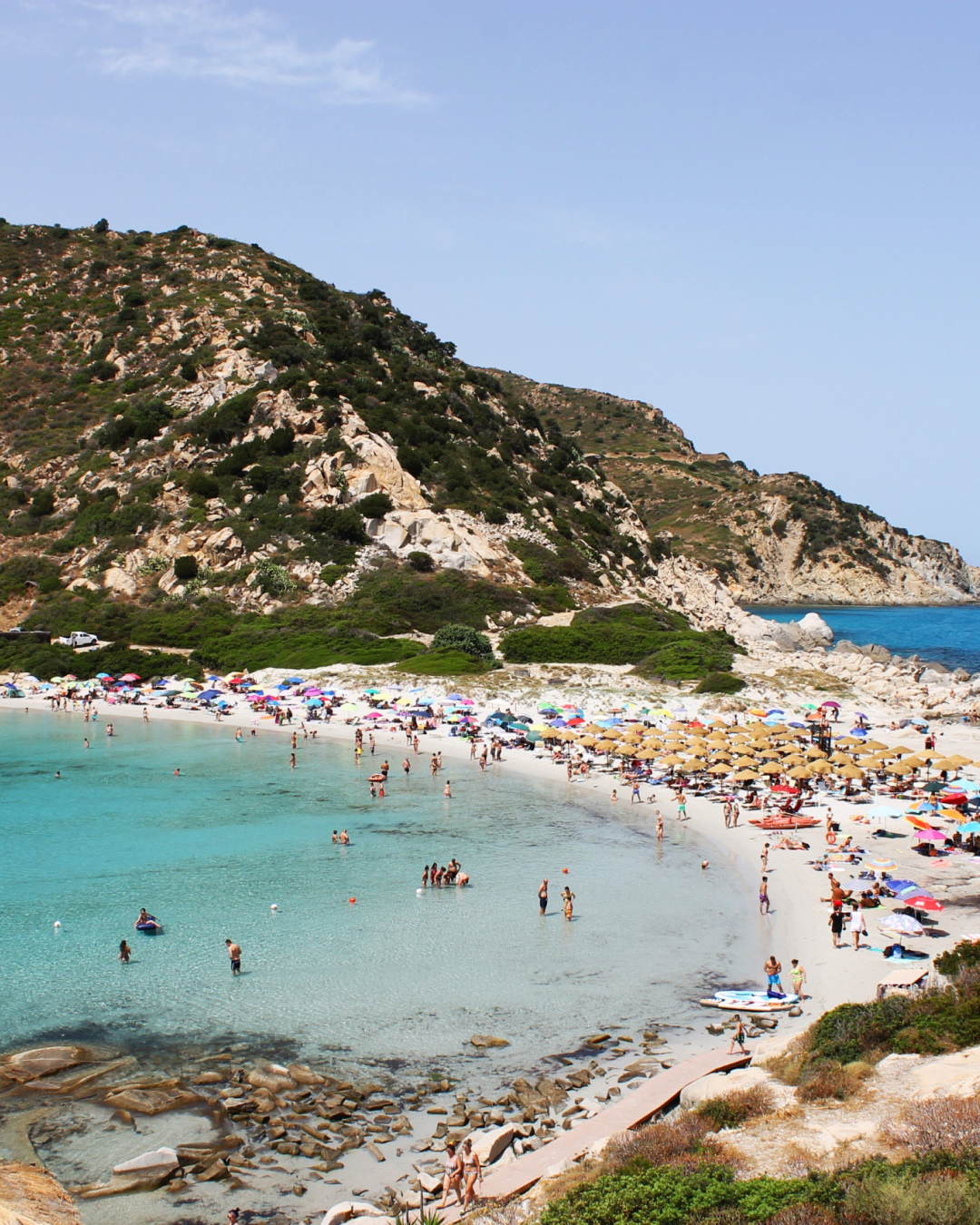
The issue of public beaches is a particularly sensitive one in Italy. According to Legambiente estimates for 2025, 70% of the country's coastline is occupied by private beach clubs, a figure that rises to 81% according to Coste360, a startup dedicated to protecting and monitoring Italy's coastlines. Yet Italy is home to some of the most beautiful beaches in the world. Cala dei Gabbiani was once again ranked the third-best beach in Europe and the eighteenth-best globally in The World's 50 Best Beaches ranking. And it is in Sardinia that, for this beach season, one of the island's most beloved destinations has decided to rewrite the rules. At Punta Molentis, in Villasimius, a beach that until now was freely accessible, entry by land will require a €10 ticket from June onwards, and beach umbrellas will be banned.
Why have umbrellas been banned at Punta Molentis?
The decision by the Villasimius municipality did not come out of nowhere. Last summer, Punta Molentis was hit by one of the most dramatic events of Sardinia's tourist season, when an arson attack devastated more than 100 hectares of vegetation, destroyed dozens of cars in the parking area and forced hundreds of people to flee the beach, with many evacuated by sea. According to the local authorities, the situation was made even worse by winter storms, which reduced the usable area of the beach and made extraordinary measures necessary to protect an area already subject to environmental restrictions and part of the Capo Carbonara Marine Protected Area, as reported by ANSA.
Hence the new rules, which will remain in place until October 31. Land access will be limited to 70 vehicles and a maximum of 150 visitors per day, with a €10 admission fee. Visitors arriving by sea may only be transported by authorised operators within the protected area, with a maximum of 100 people at any one time and a maximum stay of one hour. Beach umbrellas, gazebos and any other form of shade structure are prohibited, with the exception of families with children under the age of 10 and people aged 65 and over, who may use one umbrella per household. Large backpacks and cool bags are also banned, while access is permitted from 8am to 8.30pm. Unsurprisingly, the decision has sparked heated debate online. The Guardian reported that some users joked about having to "borrow a child" in order to bring an umbrella, while others argued that the restrictions are a necessary sacrifice to preserve one of Sardinia's most iconic beaches.
Italy's beach concession problem
@matteohallissey A Catania ancora una volta troviamo spiagge inaccessibili perché qualche balneare si ostina a considerare un bene pubblico di sua proprietà. La prepotenza non può nulla contro la forza delle regole e del diritto, infatti dopo la nostra segnalazione i tornelli sono stati immediatamente rimossi. @Ismaele La Vardera suono originale - Matteo Hallissey
The Punta Molentis case comes at a particularly delicate moment in Italians' relationship with their beaches. On the one hand, some coastal towns are trying to limit human impact for environmental reasons. On the other, Italy's beach concession system has spent years at the centre of political controversy and legal battles. According to Altroconsumo, over the past five years – effectively since the pandemic – the average cost of renting two sun loungers and an umbrella has risen by 24%, while the number of public beaches continues to shrink and those that remain become increasingly crowded.
The issue has returned to the spotlight in recent days following a ruling by the Campania Regional Administrative Court concerning Capri. As reported by Corriere del Mezzogiorno, judges declared the extension of the municipality's beach and mooring concessions until 2027 to be unlawful, ordering new tenders to begin within three months. But the issue goes far beyond the island itself. For years, Italy has struggled to strike a balance between European competition rules and a concession system that, in many cases, has survived through repeated extensions, often challenged by public authorities and the country's Antitrust regulator. The result is a distinctly Italian paradox: while some local administrations are restricting access to protect fragile ecosystems, others continue to manage public assets through expired concessions or concessions awaiting reassignment. How much space is really left in Italy for a public beach?