November 4th, 2026
Meet the young names redefining contemporary Italian art Five emerging Italian artists who are making a name for themselves beyond Italy
Art Basel Paris has just come to a close — one of the key events of the Parisian art week, which every year brings together galleries from around the world alongside both established and emerging artists. It is also one of those moments when trends and names that may gain greater prominence in the art market over the following months begin to take shape. The week after, attention shifted to Turin for Artissima, another unmissable fixture on the Italian contemporary art calendar. In Paris, among the most highly valued works at the fair was a nude by Livorno-born Amedeo Modigliani, estimated at over 100 million euros. But beyond the big names, a number of younger Italian artists also found space in international fairs and galleries — here are some of them.
Benni Bosetto
Born in Merate in 1987 and now based in Milan, Benni Bosetto is a multimedia artist who, through drawing, sculpture, installation and performance, explores identity, desire, sexuality and vulnerability within an imaginative world where human beings, organisms and animal species become entangled and cross-contaminate one another. The body, rather than a subject to be represented, becomes a space to be traversed and reinvented. Bosetto draws freely from literature, cinema, anthropology, popular culture, psychoanalysis and art history, accumulating images, texts, memories and references until they are transformed into new narratives.
Spaces, too, become part of this process. Bosetto transforms them into mutable, immersive environments, closer to living organisms than to mere stage sets. This dimension is particularly evident in Rebecca, her first major institutional solo exhibition, staged in 2026 at Pirelli HangarBicocca. Inspired by Daphne du Maurier's 1938 novel of the same name, the exhibition transformed the Shed into a kind of domestic body — an environment to be inhabited rather than simply observed. Bosetto continues to consolidate her presence on the international scene after being presented at Art Basel by Galleria Emanuela Campoli.
Lorenza Longhi
Born in Lecco in 1991 and now based in Zurich, Lorenza Longhi works across painting, sculpture and installation, taking familiar objects and images — such as furniture, advertising elements and communication strategies — as her starting point to investigate the mechanisms of consumption, production and power concealed behind them. Through artisanal techniques and unconventional materials, the artist reproduces and reassembles these elements, transforming them into works that oscillate between design, visual culture and critique of the economic system. Her practice proceeds through accumulation and appropriation: references to luxury, popular culture, high culture and kitsch are layered and manipulated until they lose, at least in part, their original function.
This investigation is at the heart of her presentation at Art Basel Paris, where Galerie Oskar Weiss presents two new silkscreen paintings, a Grab Bag and a large site-specific floor work. The piece draws on an ancient Roman mosaic depicting the remains of a banquet: Longhi replaces the meal's leftovers with the offcuts from her own studio, turning the residues of production into a kind of contemporary archaeology. Her first institutional solo exhibition in Italy, Villa Delizia, is currently on view at the Centro Pecci in Prato until January 2027.
RM Marco Pezzotta
Born in 2015 as a collaborative project under the name Real Madrid, later continued as RM, the project has evolved into an individual practice that now investigates the contradictions of contemporary society — consumption, solitude and decay. Represented by the Milan-based gallery Martina Simeti, Pezzotta was presented at the most recent edition of Paris Internationale.
Through sculptures, installations and textile works, RM Marco Pezzotta explores the transformation of identities and the relationship between body, language and illness, progressively shifting his research towards themes such as the value of things, class differences, comfort and deterioration. His visual world blends everyday objects, references to popular culture and grotesque imagery, alternating between irony and unease. From Ravioli Walls and Tortilla Carpets to works made from materials such as wool and cotton, Pezzotta reworks familiar elements through varying techniques and processes, transforming them into something ambiguous. What appears ordinary thus becomes a tool for questioning the mechanisms by which we assign value to objects and construct our own identity.
Leonardo Devito
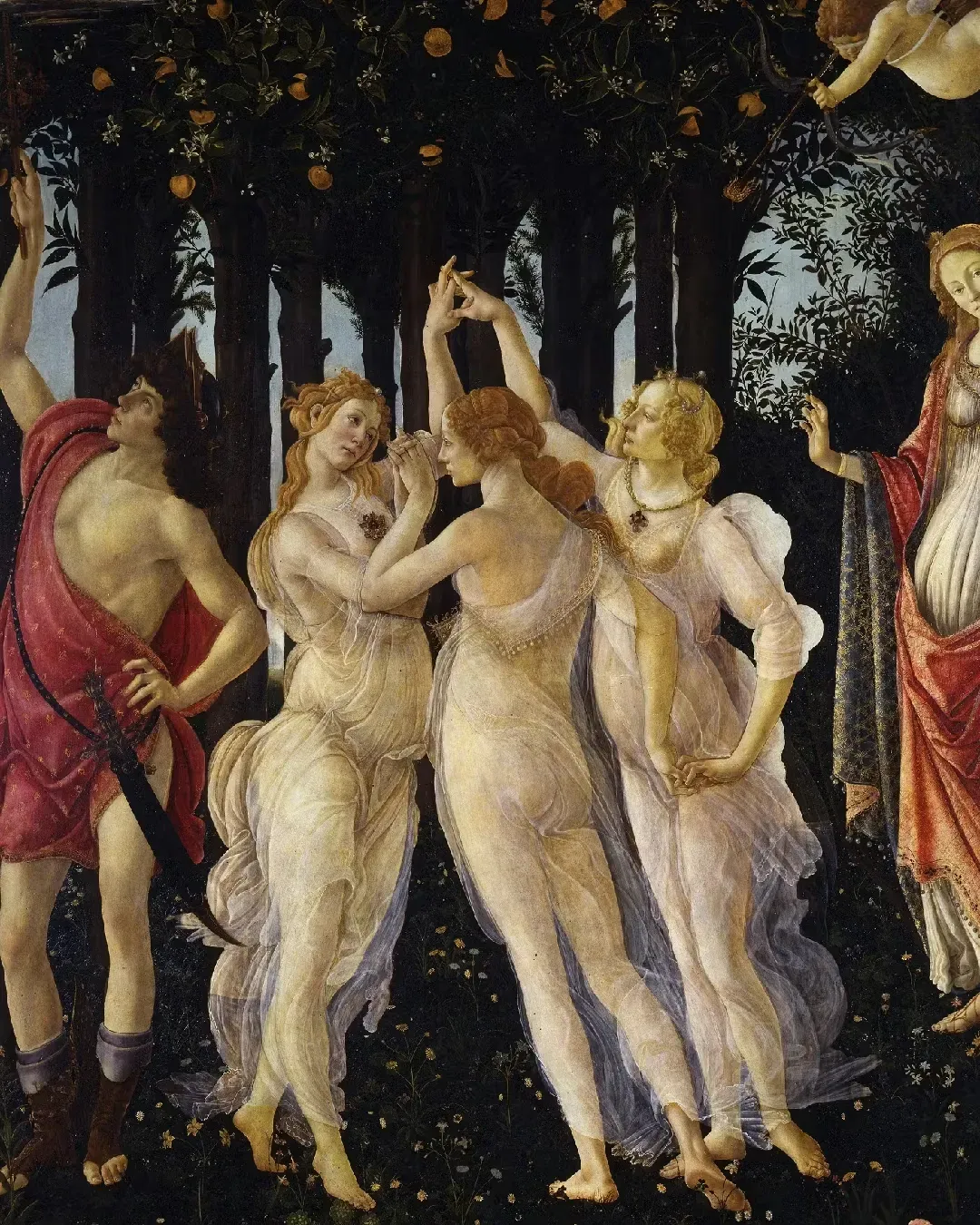
Leonardo Devito, a Florentine artist born in 1997 who lives and works in Turin, takes the imagery of the Italian Renaissance as his starting point and transforms it into a contemporary investigation. Trained between Florence, Vienna and Turin, Devito creates paintings and high reliefs populated by figures suspended between mythology, theatre and dream. His high reliefs resemble small miniature theatres: three-dimensional, semi-enclosed structures that turn each work into a scene to be observed from the outside. As in his paintings, the figures seem caught in a moment of pause — a gesture, a glance, a whisper. They are figures that call to mind the protagonists of great mythologies, yet have shed their heroism to become dreamers in fairy-tale settings.
Devito thus constructs images that seem to belong simultaneously to painting, theatre and cinema. Presented by Galleria Ciaccia Levi at the most recent editions of Paris Internationale and Artissima, his work is currently on view at Fondazione ICA Milano, where four pieces are exhibited until 19 December 2026.
Valentina Artone
Spanning archaeology, ancient literature and artificial intelligence, Valentina Artone constructs an imaginative world suspended between past and future. Born in Giulianova in 1999, the artist works primarily with oil paint on unconventional supports, often salvaged wooden objects and fragments. Artificial intelligence enters her process as a kind of machine for generating images that appear to come from an archaeology that never truly existed: hybrid figures, fantastical animals and anatomical fragments are isolated and reassembled like relics of an imaginary civilisation. The series Sortilegi, begun in 2023 and inspired by Apuleius's Metamorphoses, and Animali degli specchi, developed from the fantastic zoology of Jorge Luis Borges, both emerge from this fascination with magical formulas and bodies in constant mutation.
Artone begins with images, words and references gathered through archaeological and literary research, then subjects them to generative processes capable of producing unpredictable alterations and combinations. It is precisely the error that interests her, transforming familiar images into something unsettling and at times grotesque. Presented by the Naples-based gallery Acappella at Liste Art Fair Basel 2026, Artone offers her universe of impossible relics, where painting and object, archaeology and technology converge to construct a memory that never existed.