
October 6th, 2026
Italian theatres that are architectural gems From the San Carlo to La Fenice, venues that preserve art, history and architecture
If there is one place where all the magic in the world happens, it is the theatre. One of the oldest institutions in the world for one of the oldest practices in the world: at the theatre we are moved, we laugh, we get furious. What can truly be called spectacular, in most of these places, is not only what happens behind the curtain. While waiting to see a ballet, an opera or a piece of contemporary theatre, we look around and see gold, people just as excited as we are, boxes, a frescoed ceiling. An uncommon warmth in the chest.
Then the lights slowly dim, the murmur fades like a wave pulling back, someone coughs one last time and for a second hundreds of strangers stop existing each on their own. Centuries of premieres and boos have passed through those halls, clandestine love affairs behind the curtains of the boxes, real faintings and rehearsed faintings, and all of it has stayed stuck to the velvet. In Italy we have five halls in which all of this can be felt even more strongly than anywhere else.
The Teatro Olimpico closes the sky inside a room
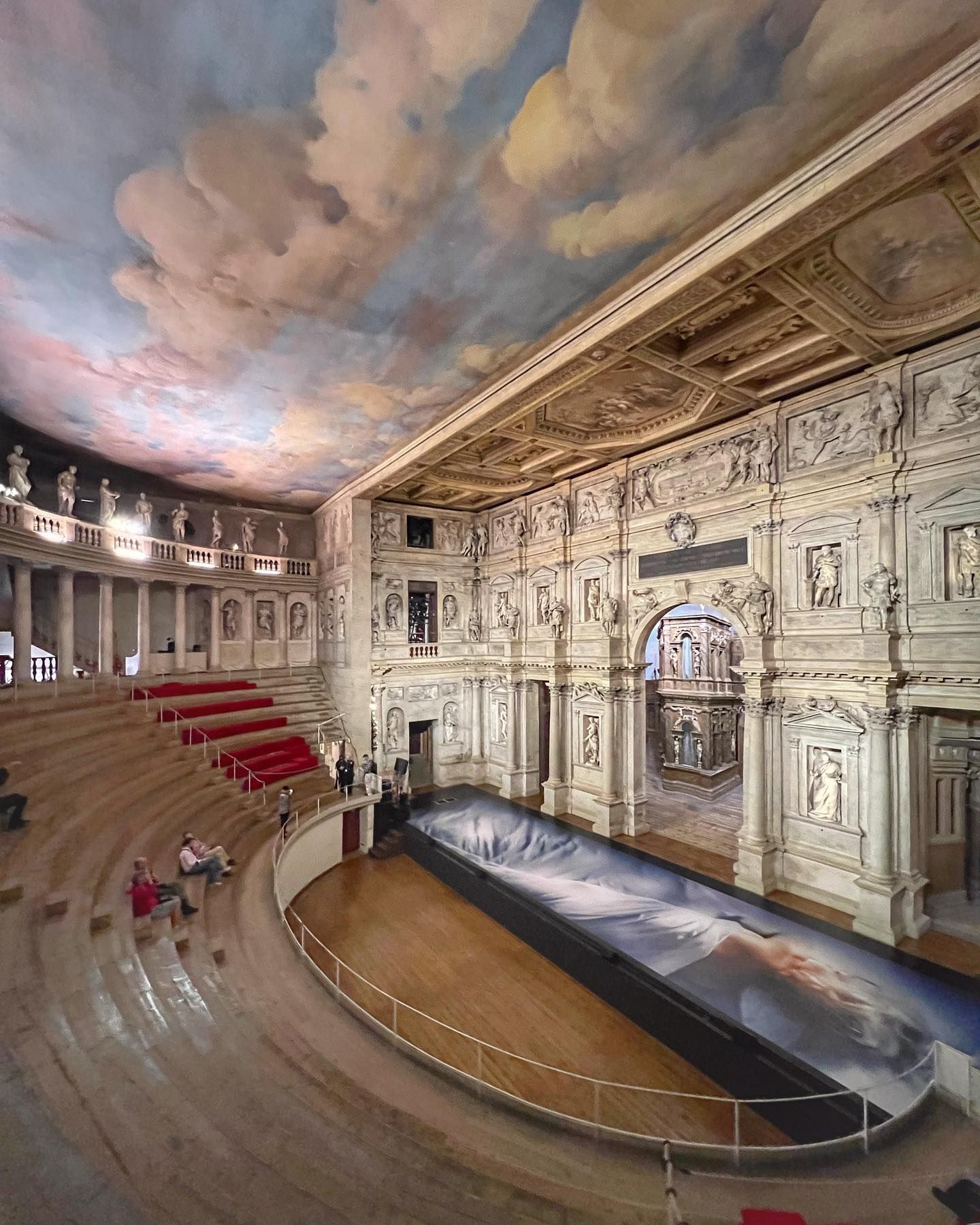
It all begins in 1580, in Vicenza. Here Andrea Palladio is seventy-one years old and has one wish: to bring back to life the theatres of the ancients, the ones he measured stone by stone in Rome. The Accademia Olimpica, a circle of cultured and perhaps slightly vain noblemen of which he too is actually a member, finally gives him the opportunity and commissions from him the first indoor theatre of modern Europe. Palladio therefore designs everything and then, in August of that same year, dies a few weeks after the opening of the building site, without managing to see even the first tier. It is Silla who finishes the work left behind in his papers, almost the way one would finish an unfinished letter from someone who, sadly, is no longer there.
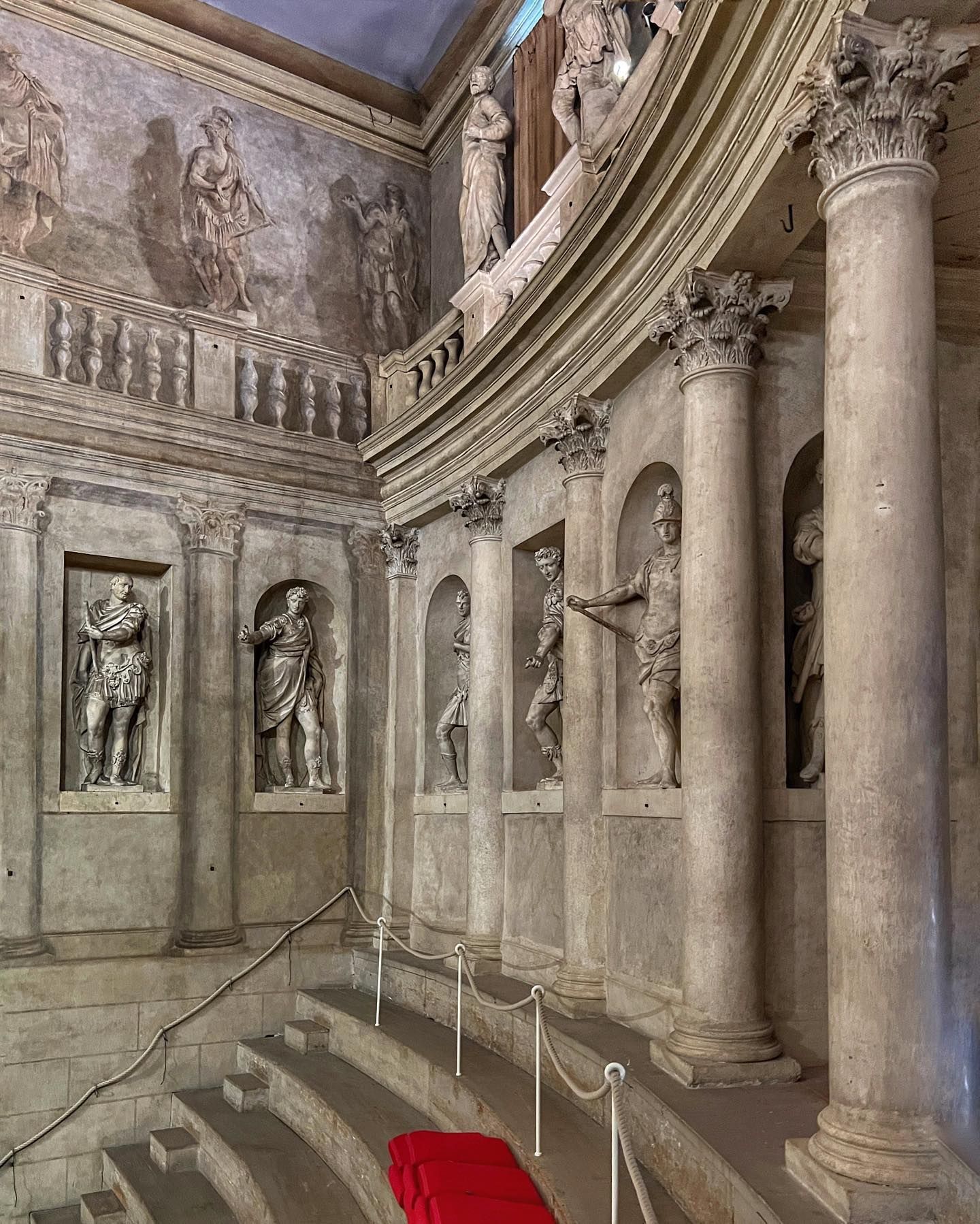
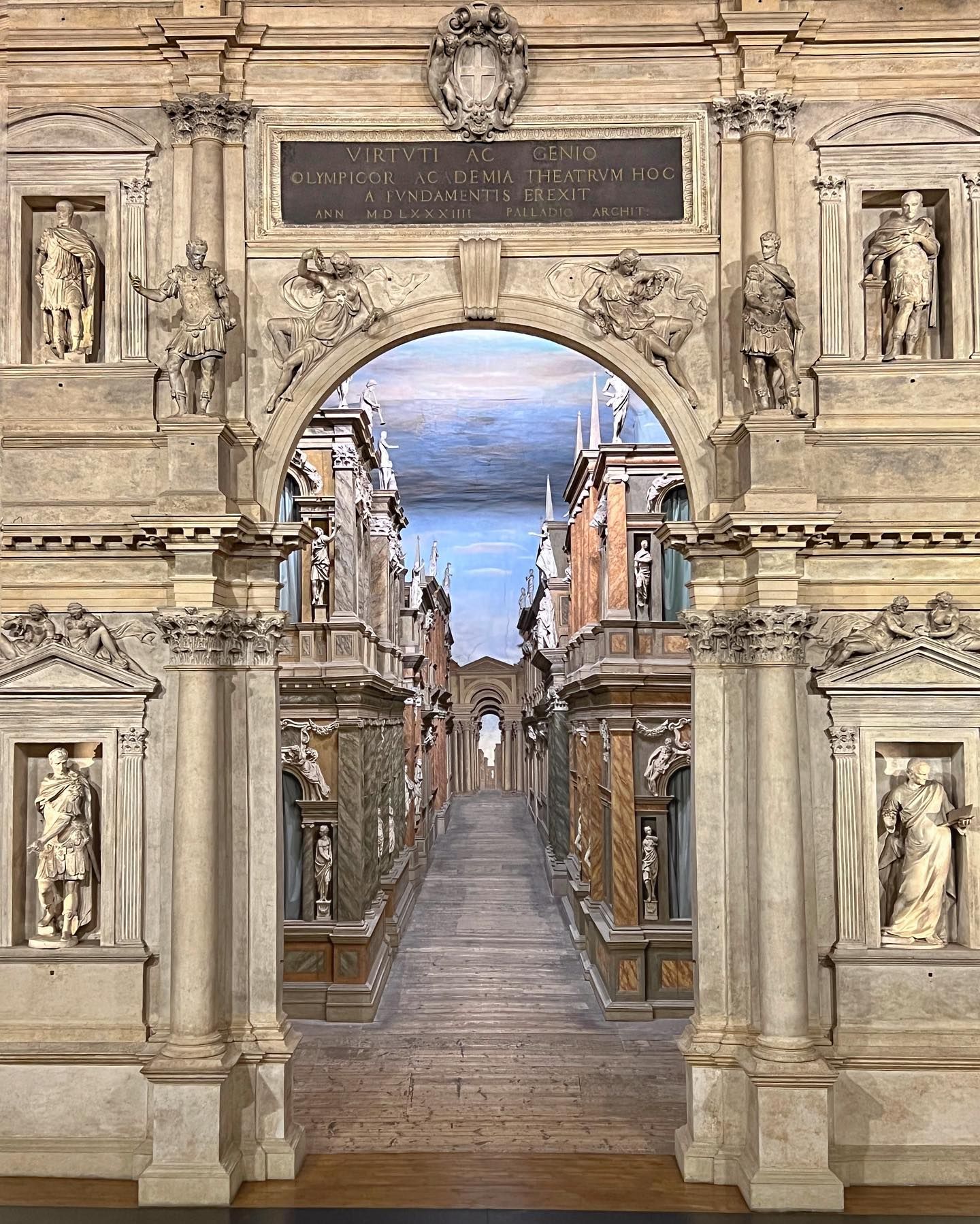
The result is a small indoor arena, from which it is still possible to see the sky: above the wooden tiers the ceiling is painted blue, smudged only by a few clouds. From the balustrade above, meanwhile, dozens of stucco statues look down, and they are the academicians themselves, portrayed as ancient heroes. Behind the three openings of the great façade, however, lies the most surprising part of the whole theatre: here Scamozzi built seven streets of Thebes in wood and stucco which, thanks to an optical illusion, seem to stretch out to infinity from any point in the hall, with palaces, windows and shadows. In reality they are only a few metres deep.
Here, on the evening of 3 March 1585, before a hall packed beyond all imagination, Sophocles' immortal Oedipus Rex is performed. The Olimpico in Vicenza is the oldest covered theatre of the modern world, and yet its sets have been standing since the Renaissance. To protect it, heating has never been installed and the seats have been reduced to 470.
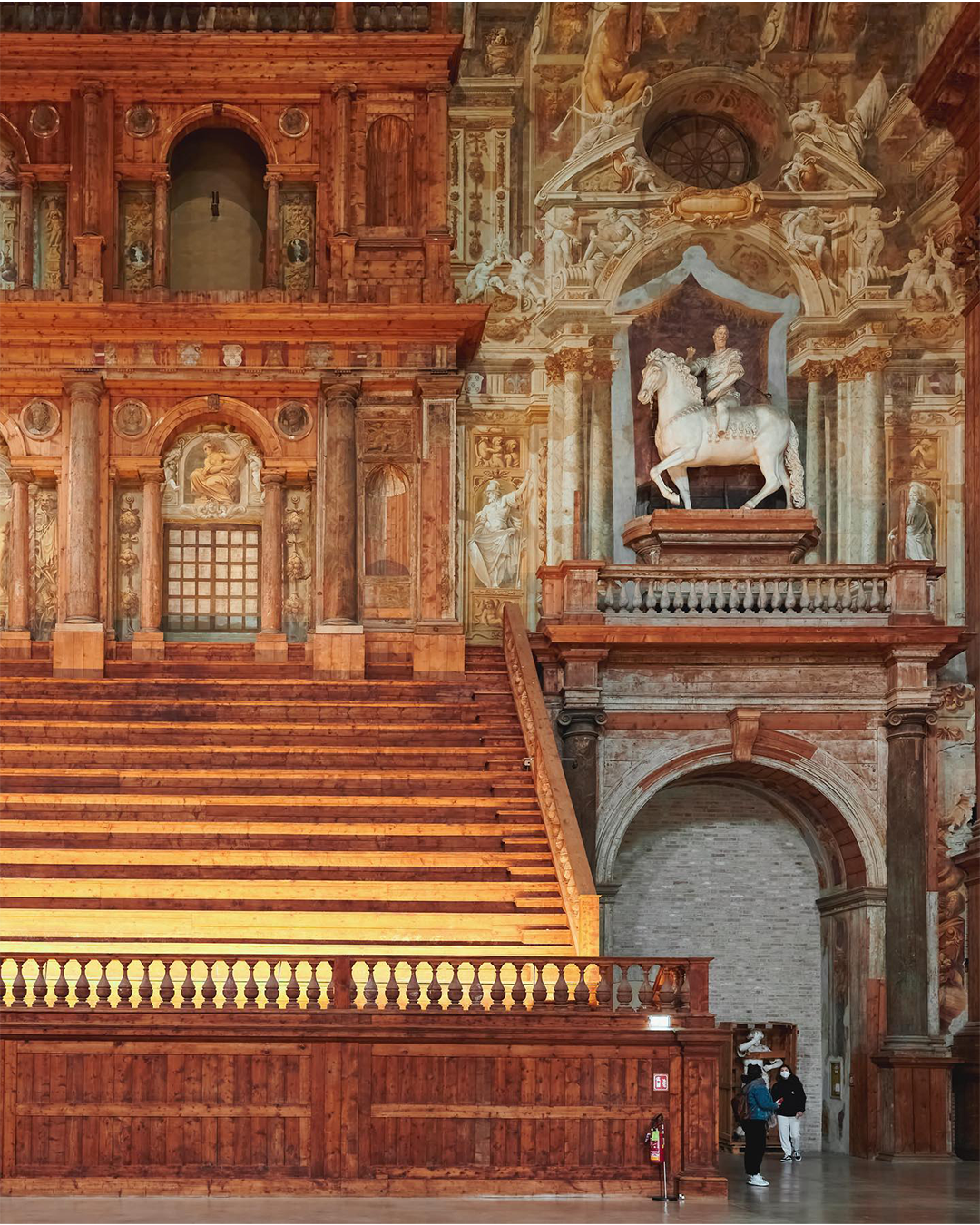
The long sleep of the Teatro Farnese
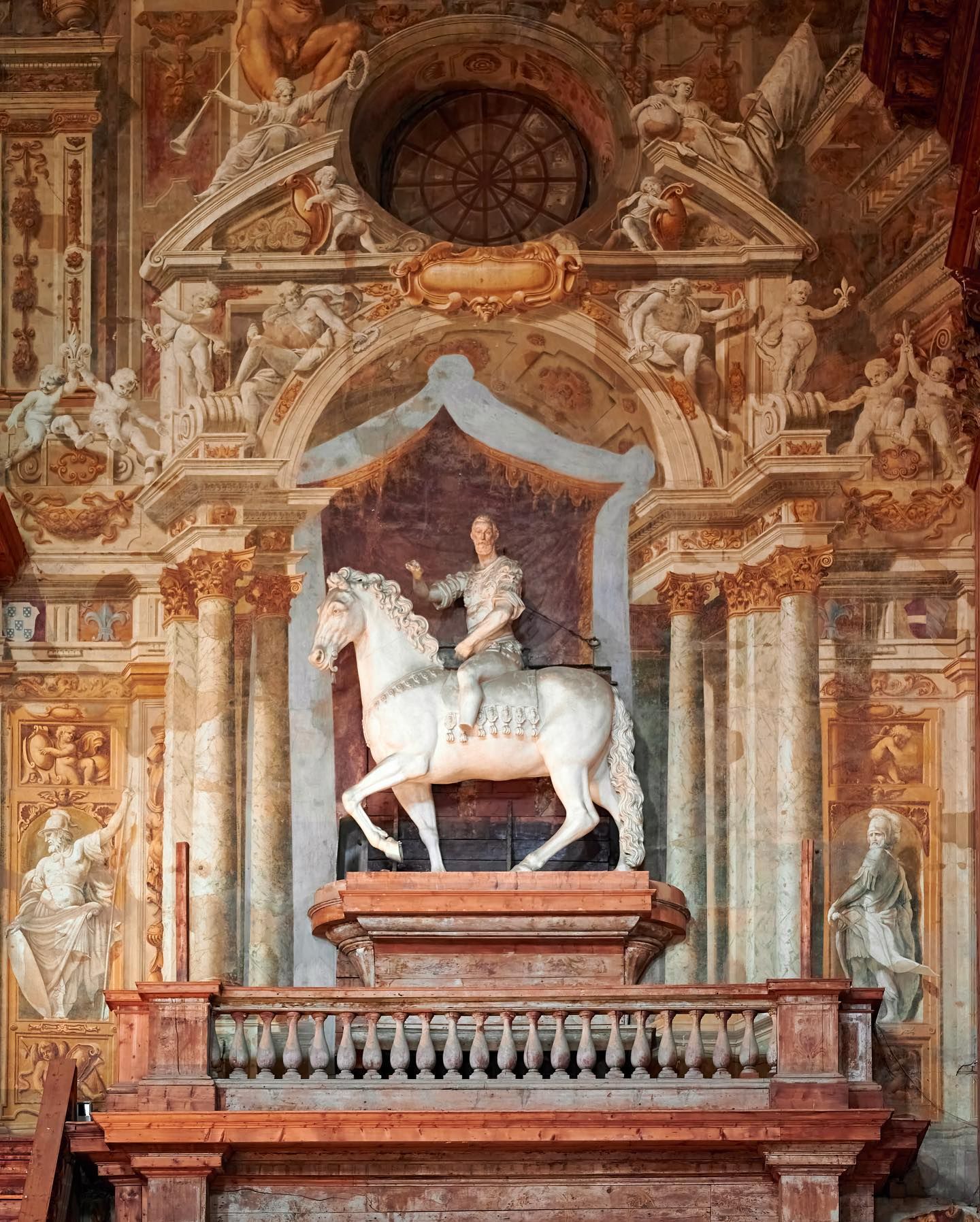
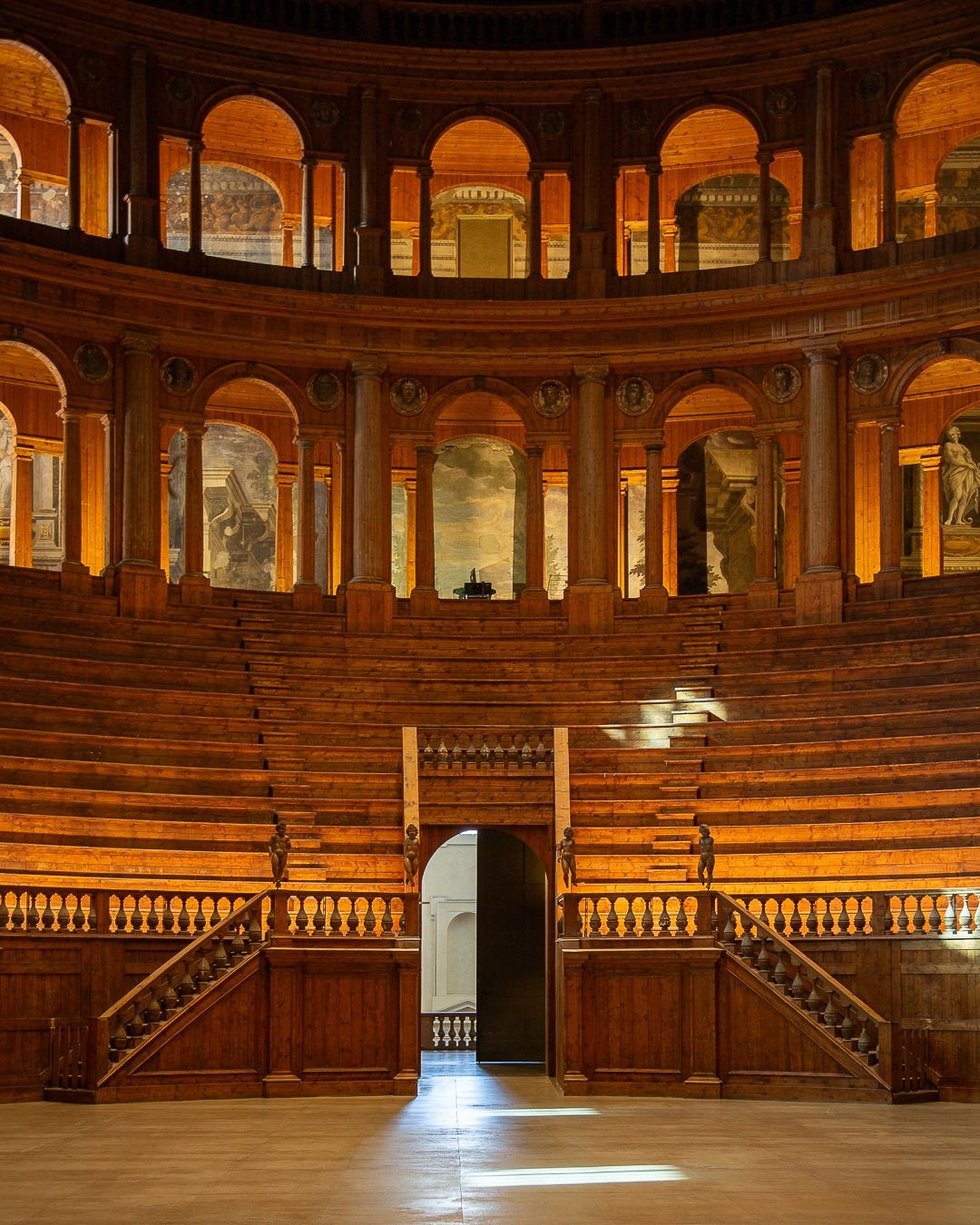
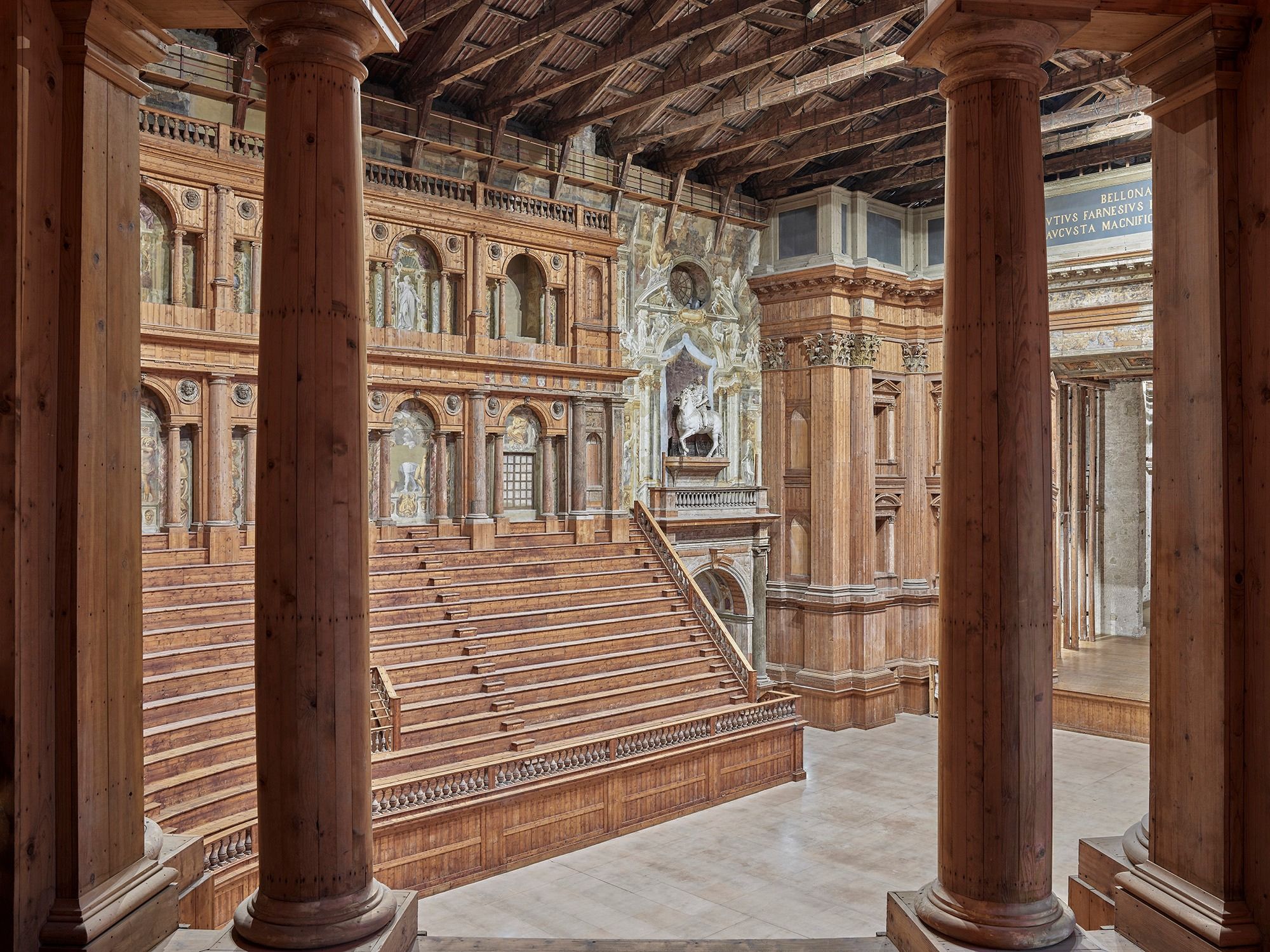
In 1618 Duke Ranuccio I Farnese has a long hall of 87 metres built in Parma, inside the Palazzo della Pilotta, for a single evening: the occasion is the passage through the city of the Grand Duke of Tuscany, the celebrated Cosimo II de' Medici, whom he wants to make understand that the Farnese are second to no one. The architect Giovan Battista Aleotti sets to work with this purpose firmly in mind: the Teatro Farnese thus takes the shape of a great U of tiers laid out for three thousand people, closed at the top by two storeys of loggias and arches, which almost give the impression of a Renaissance square brought indoors. From two niches on either side of the stage, meanwhile, two family ancestors watch over the hall. Everything that looks like marble here is in fact painted wood. Cosimo de' Medici however falls ill, the journey is called off and the theatre stays closed for a full ten years.
The curtain truly rises only on 21 December 1628, for the wedding of Odoardo Farnese and Margherita de' Medici. The work performed is Mercurio e Marte, with verses by Claudio Achillini and music by Claudio Monteverdi, which no one will ever hear again because it has been lost.After that evening the Farnese hosts eight more performances in all, and then nothing but a long sleep, until 13 May 1944, when a bomb destroys it almost entirely.
It is rebuilt between 1956 and 1960 from the original drawings, but without redoing the lost gilding and paintings. The wood has been left bare, honey-coloured, and the hall today is a little melancholy. Even so, many find it more moving than it was, and today one walks through it to enter the Galleria Nazionale
The Teatro San Carlo "enraptured" Stendhal
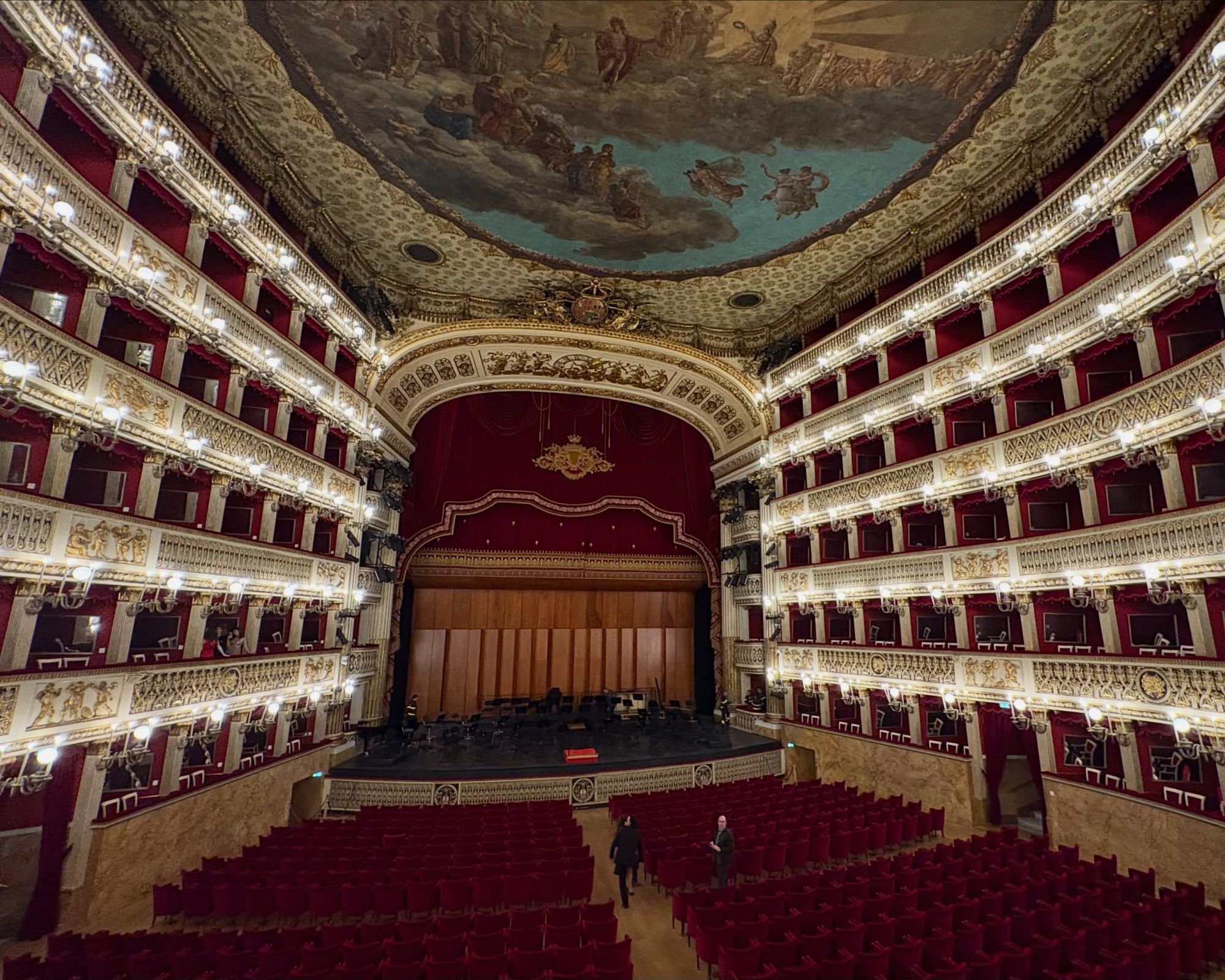
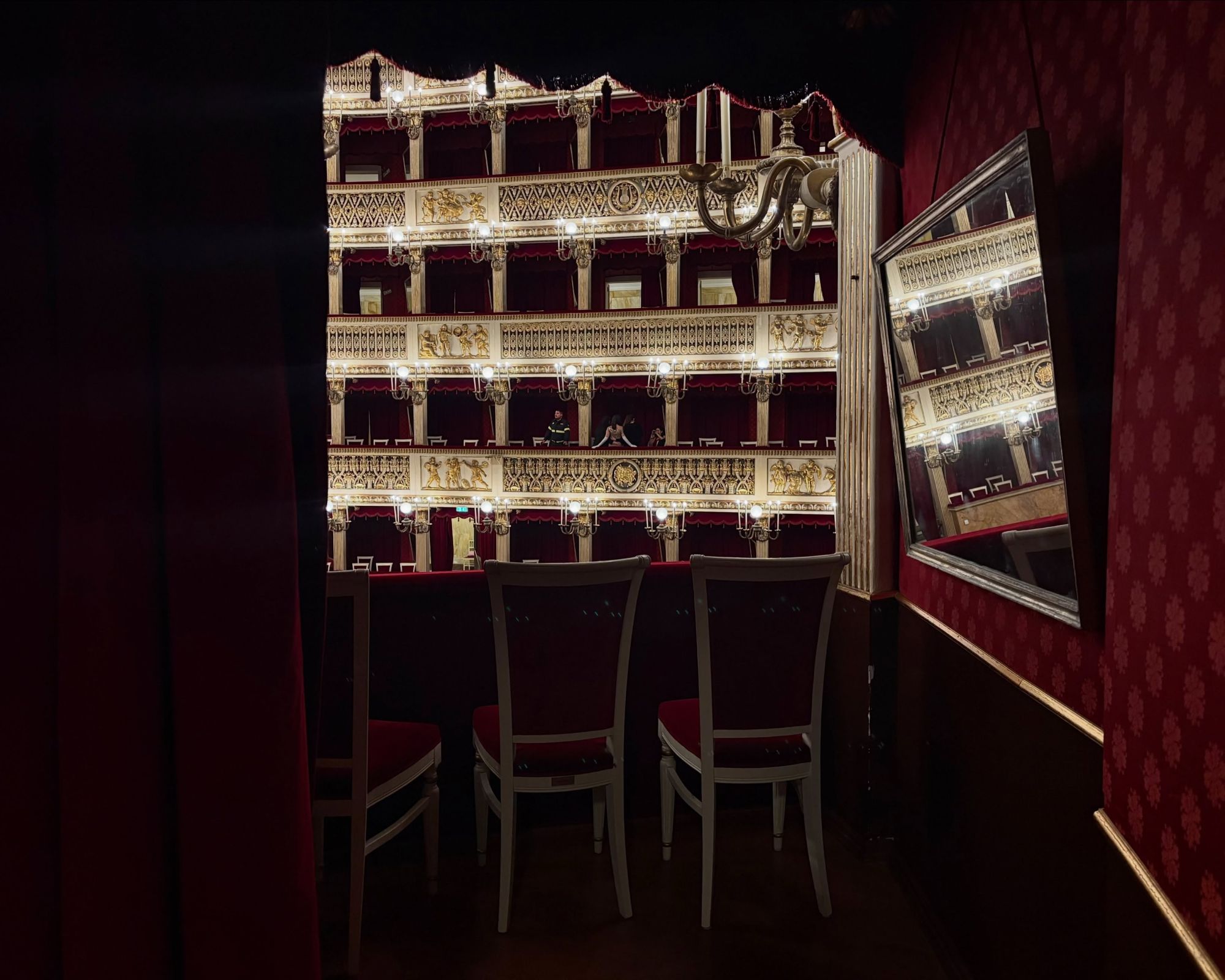
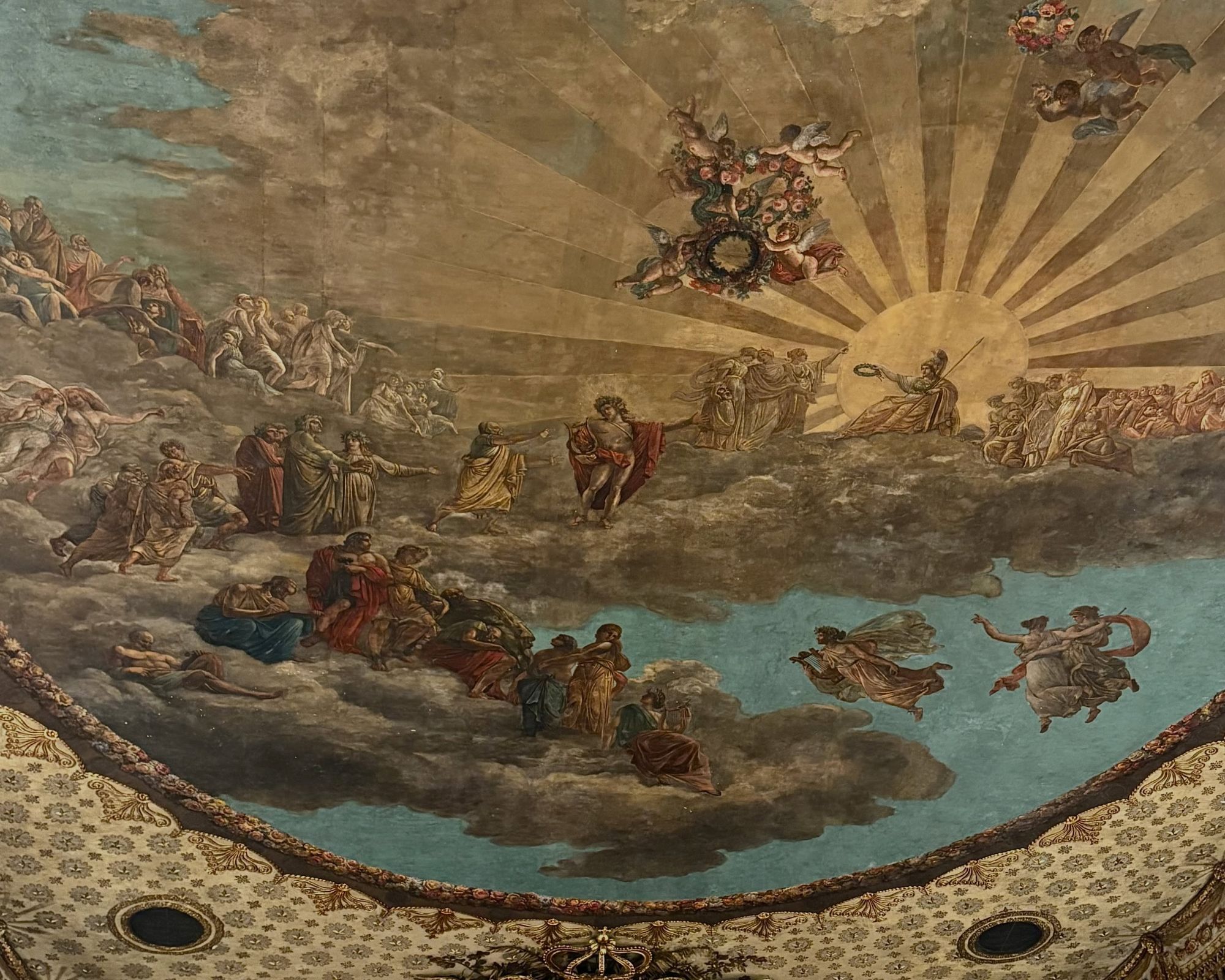
The San Carlo is the theatre that left Stendhal enraptured. And who wouldn't have been? He wrote, in 1817, that "there is nothing in all of Europe that, I won't say comes close to this theatre, but even gives the faintest idea of it. The eyes are dazzled, the soul enraptured". In truth the Teatro di San Carlo in Naples arrives in the eighteenth century, strongly wanted by Charles of Bourbon. He wanted it attached to the Palazzo Reale, with a passage behind the royal box so he could enter without ever setting foot in the street, and built in the shortest time possible. Giovanni Antonio Medrano and Angelo Carasale put it up in eight months and on 4 November 1737, the feast of Saint Charles and therefore the king's name day, Achille in Sciro by Domenico Sarro is staged. La Scala would arrive forty-one years later, La Fenice fifty-five. In Naples this detail is recalled with a certain regularity.
On the night between 12 and 13 February 1816 a fire devours the entire hall, and Antonio Niccolini rebuilds it in nine months. It is the hall we still enter today and that takes our breath away at the very first step. The San Carlo is a horseshoe embrace of six tiers of boxes, all of it at first silver, gold and blue velvet and then turned red and gold, so high that from the gallery the stalls seem impossibly far away. At the centre is the royal box, crowned by a gilded crown as big as a room, and overhead a painted sky in which Apollo presents the great poets of the world to Minerva, from Homer to Dante.
The Teatro alla Scala hides all its beauty inside
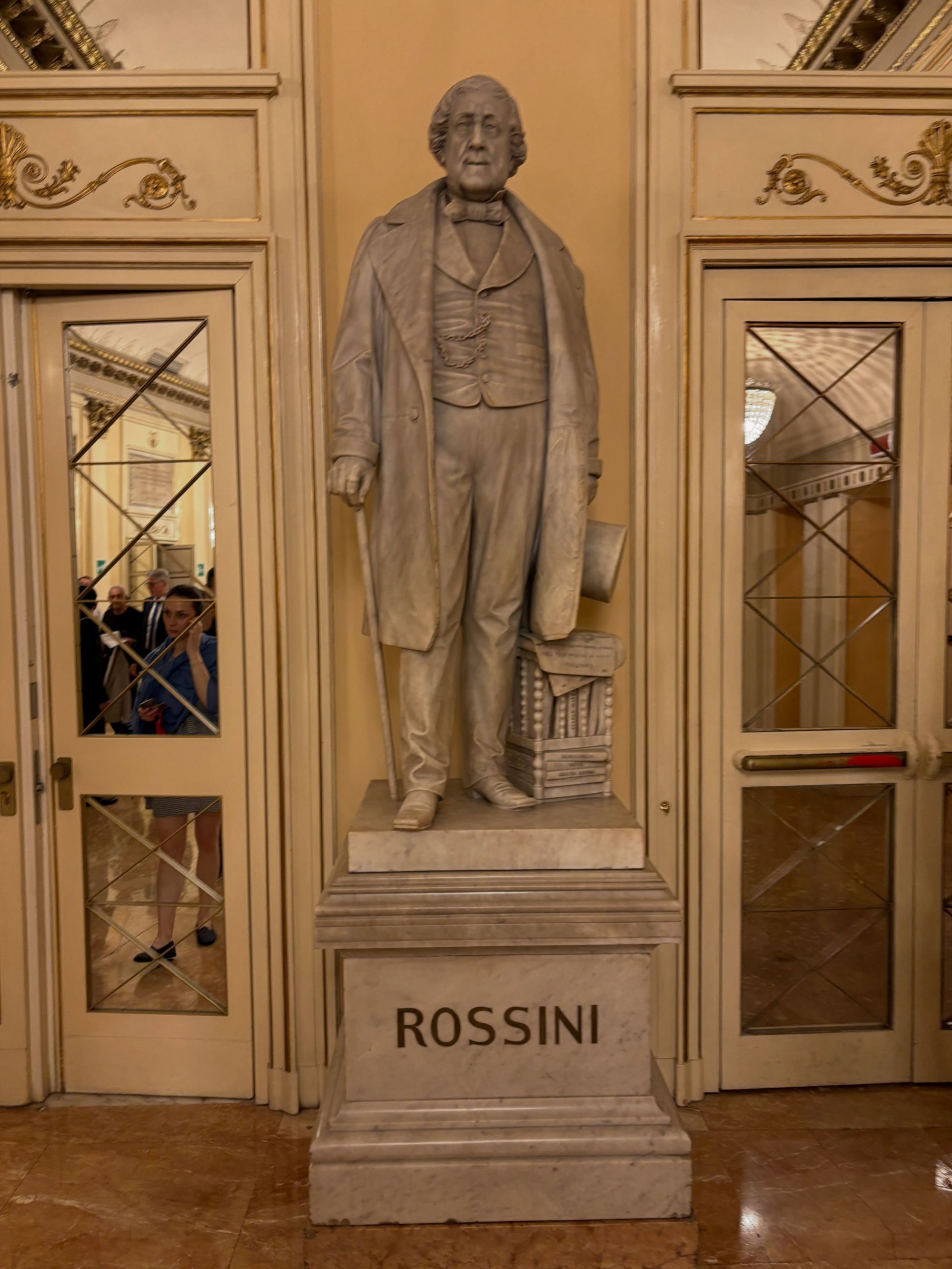
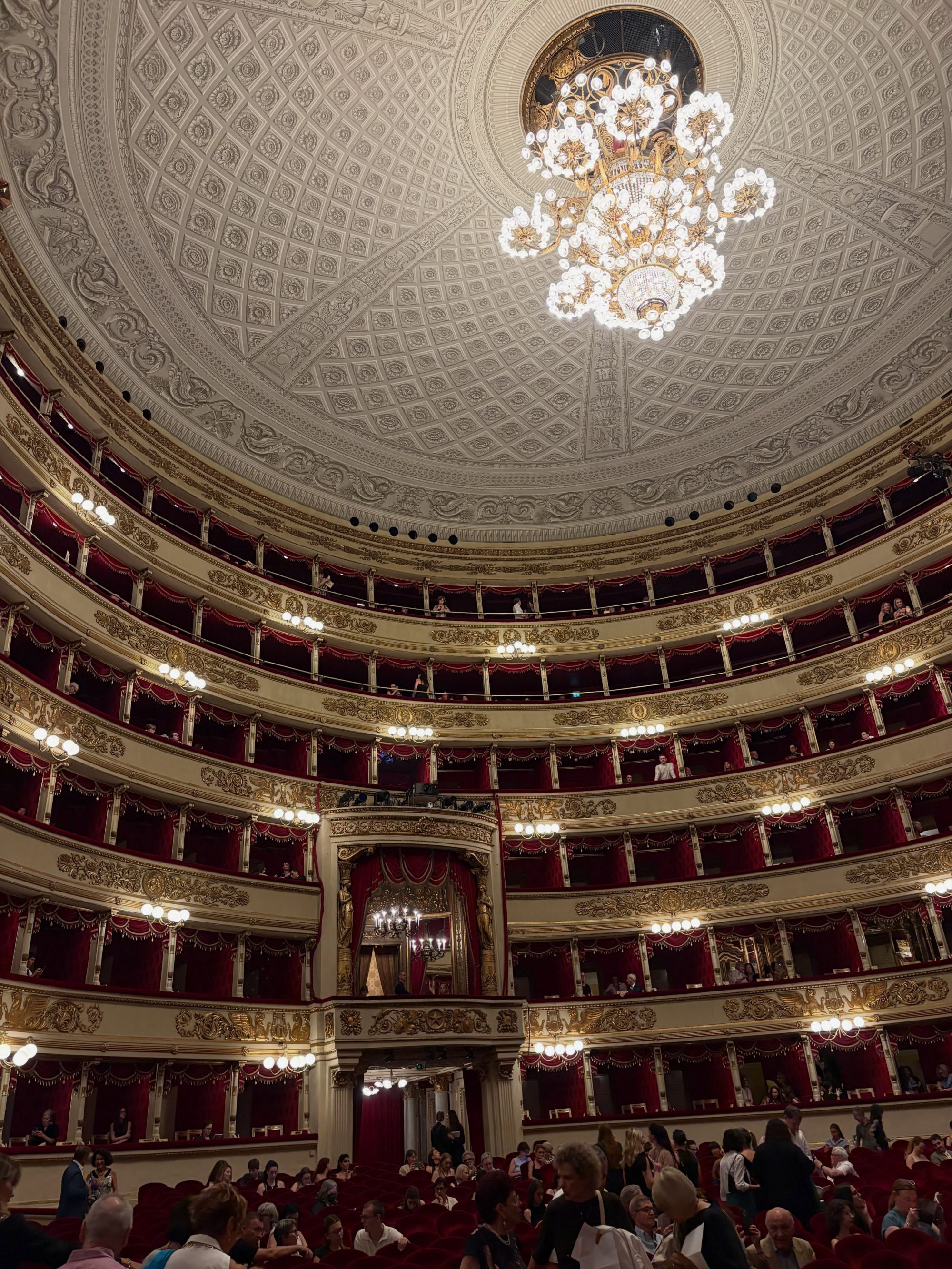
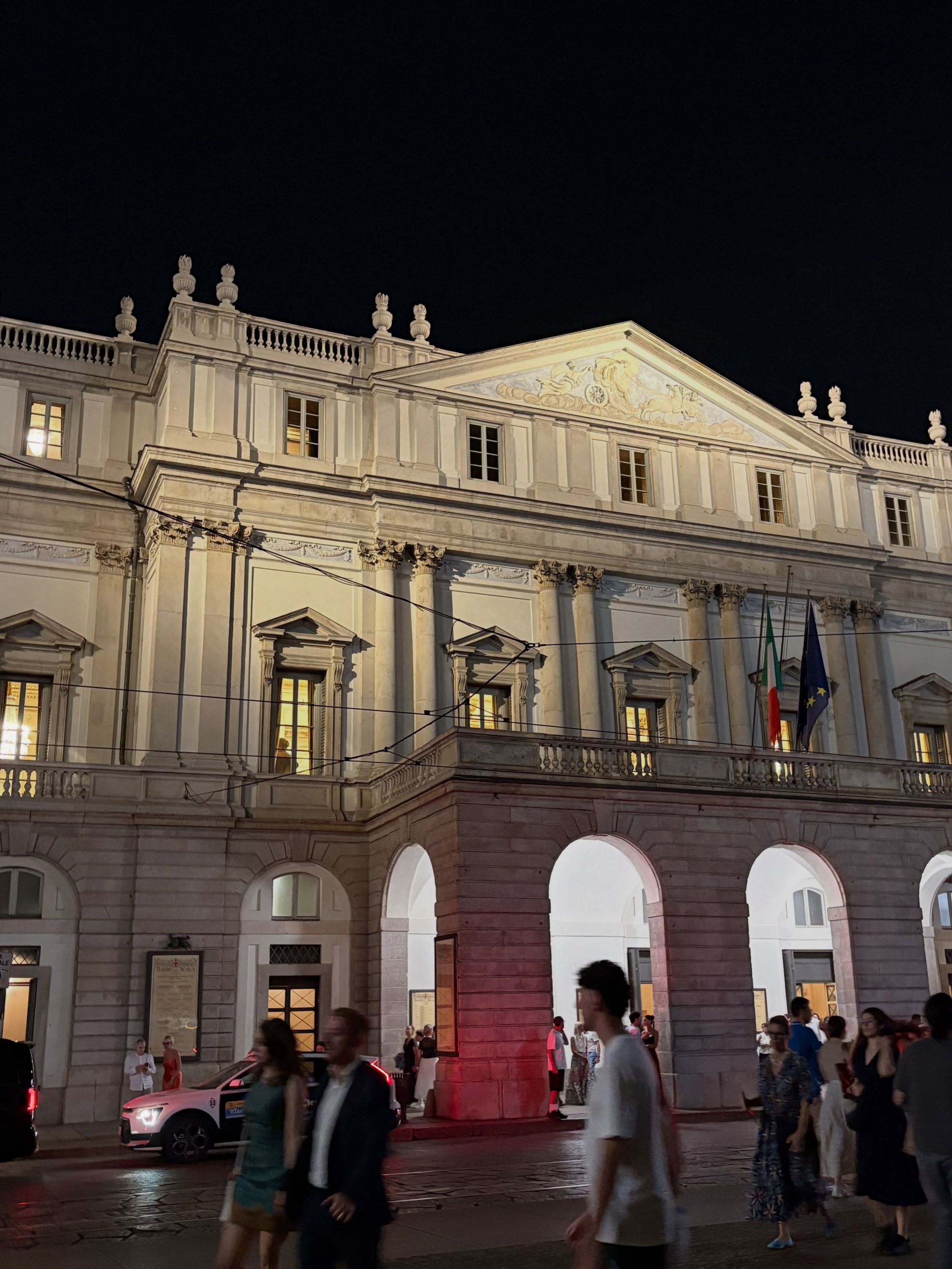
On 26 February 1776 the Teatro Regio Ducale in Milan burns down, and the noblemen who owned its boxes write to Empress Maria Theresa of Austria offering to pay for a new theatre themselves, in exchange for perpetual ownership of the boxes. The empress accepts, Giuseppe Piermarini draws up the project and the site chosen is that of the church of Santa Maria alla Scala, which is demolished and leaves behind nothing but its name. On 3 August 1778 the theatre opens with L'Europa riconosciuta, written for the occasion by Antonio Salieri, in a hall of three thousand seats where the stalls can be raised to stage level and turned into a ballroom.
From the outside, La Scala appears as nothing more than a grey, composed façade that could easily be a ministry. Piermarini wanted it that way, to save all the wonder for the moment you step inside. And inside, indeed, there is everything: a horseshoe of red and gold boxes rising six levels up to the gallery and a crystal chandelier so large that every spectator in the stalls, at least once, has worked out where it would fall.
In the beginning every family furnished its own box like a private drawing room, with the colours and upholstery it preferred, and there people dined, did business and gambled; the uniform red and gold only arrives in 1830, thanks to the set designer Alessandro Sanquirico. Then, on the night between 15 and 16 August 1943, incendiary bombs break through the ceiling and take entire tiers of boxes with them. Milan is on its knees, but La Scala is rebuilt in twelve months and on 11 May 1946 Arturo Toscanini returns to the podium before the same orchestra he had left, including the musicians driven out by fascism. Outside, the square and the Galleria are full of people listening through loudspeakers, standing, among the rubble of a city that on that evening feels like itself again. Renata Tebaldi, who sings that night, would remember the silence at her entrance as something "sacred and tremendous". The last great restoration closes on 7 December 2004, the feast of Saint Ambrose, with the very same Europa riconosciuta of 1778.
The Teatro La Fenice has a prophetic name
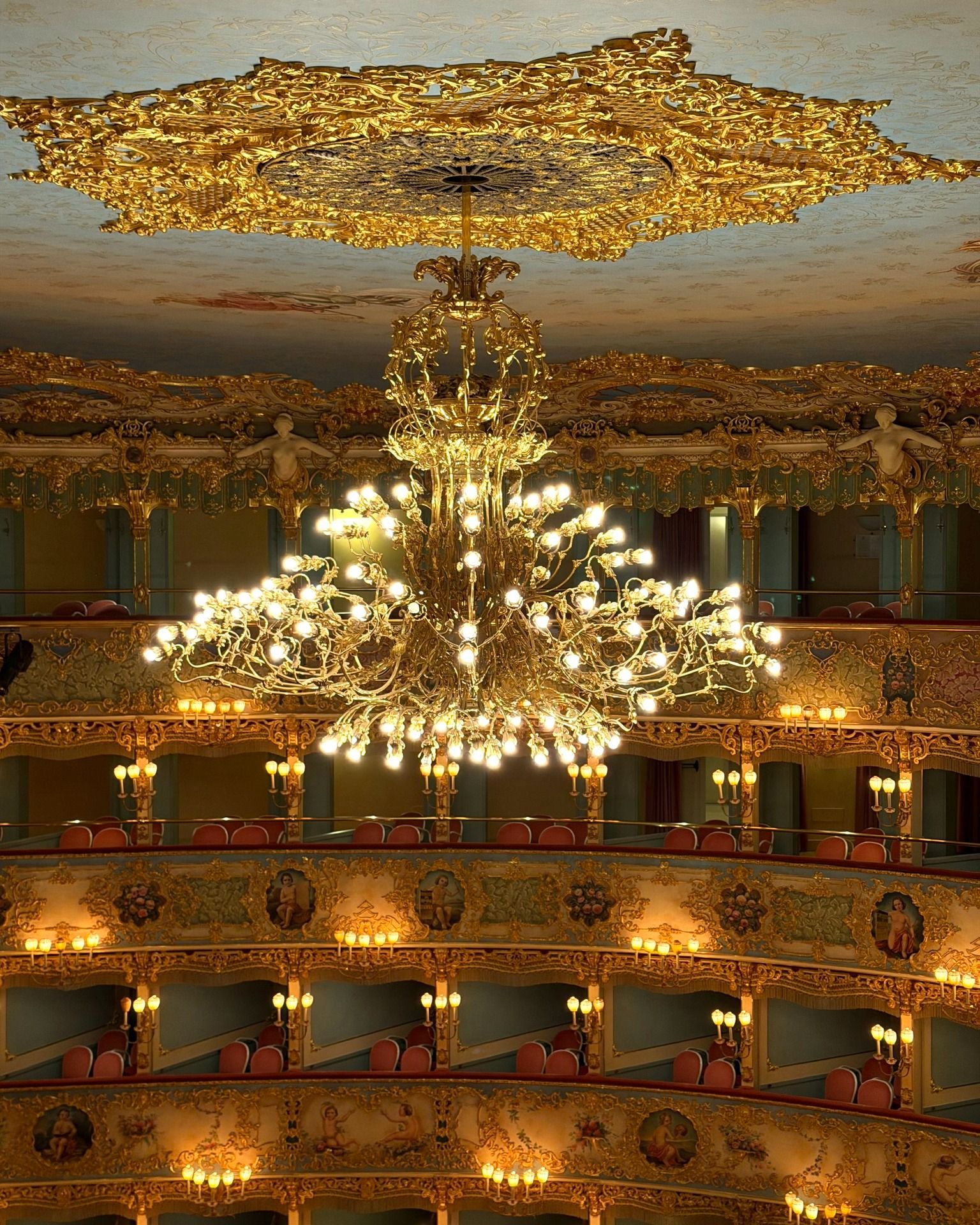
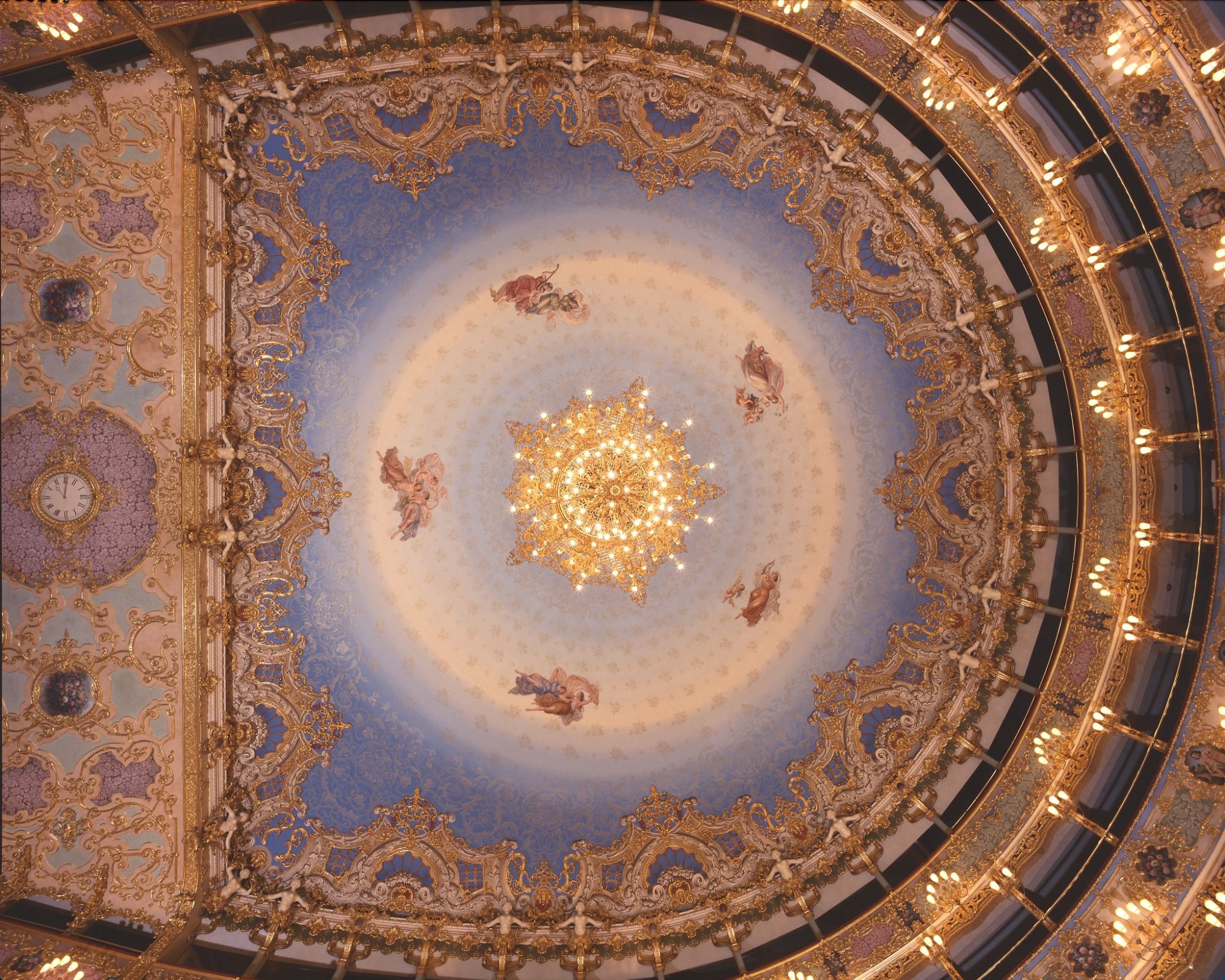
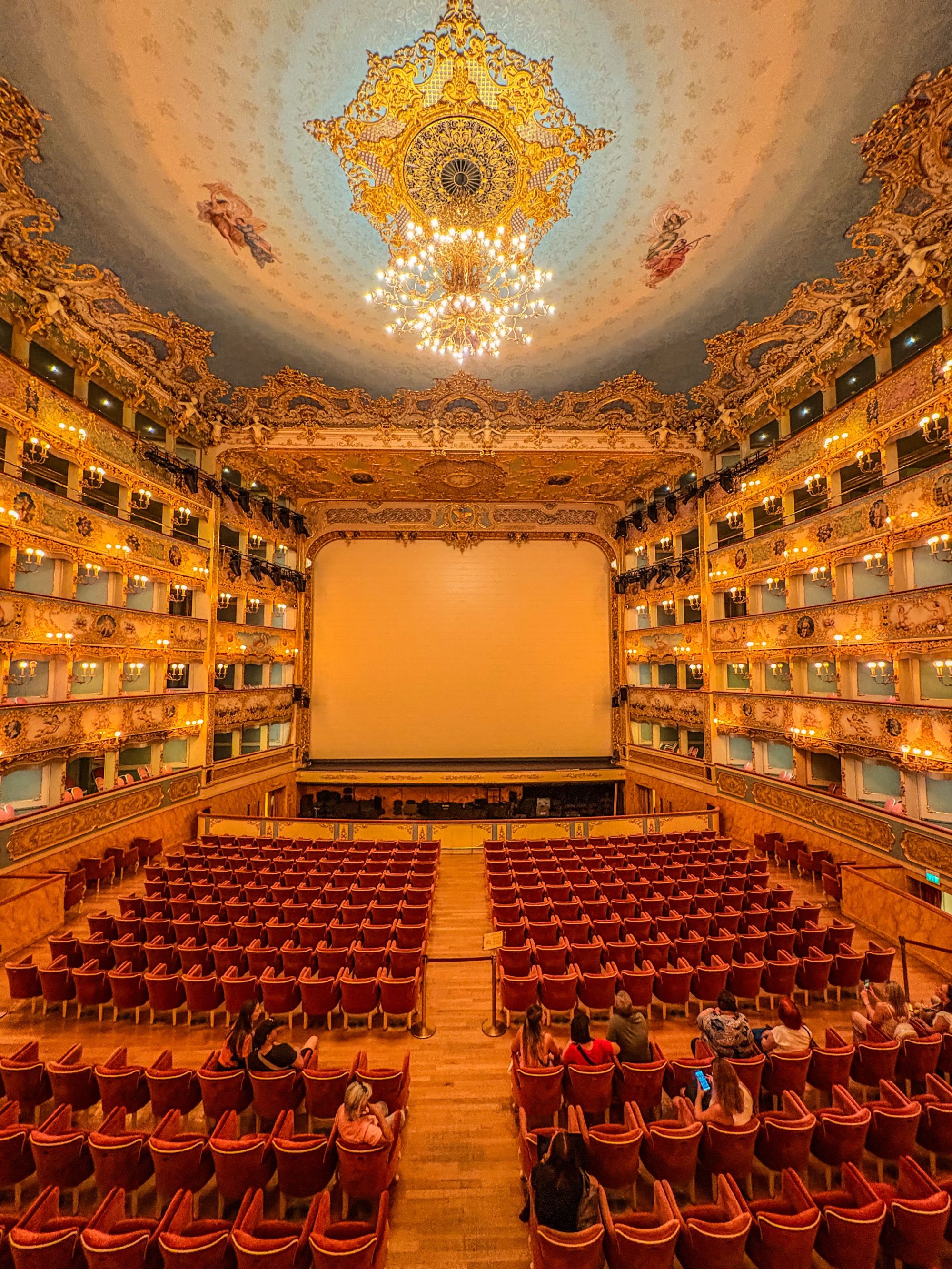
In 1787 the Nobile Società dei palchettisti of Venice loses a lawsuit and with it control of the Teatro San Benedetto, and decides to build a bigger and more beautiful one, to be called La Fenice, after the creature that rises again from its own ashes. No one could have imagined how prophetic the name would turn out to be. The 1789 competition is won by Giannantonio Selva, who designs a white, composed façade and an entrance from the water so you can arrive at the theatre directly by gondola: on 16 May 1792 the hall opens with I giuochi d'Agrigento by Giovanni Paisiello.
The hall we know is born from the first fire, the one of 1836, caused by a stove: the Meduna brothers rebuild it in a year and fill it with everything that can be gilded. The hall of La Fenice is an open jewel box: five tiers of boxes in gold, blue and pale green, putti everywhere, garlands chasing one another from one parapet to the next and, at the centre, a chandelier that is a jewel hung from the sky.
Here Verdi premieres Rigoletto in 1851 and La traviata in 1853, received so badly that the composer writes to a friend speaking openly of a fiasco. Then, sadly, comes the night of 29 January 1996. Shortly before nine a nearby hotel raises the alarm, but the canals around the theatre have been drained for works and the firefighters find themselves without water in the middle of Venice, forced to fight the blaze from the rooftops of the neighbouring houses. The city stands on the fondamenta, in silence, watching its theatre burn against the winter sky.
The reconstruction follows the motto as it was, where it was, to a design by Aldo Rossi, and for years the craftsmen remake every stucco, every gilding and every painted figure working from photographs and fragments recovered from the rubble. On 14 December 2003 La Fenice reopens for the third time. At this point, more than a name, it is a beautiful promise kept.
