
October 2nd, 2026
Where do our superstitions come from? From black cats to broken mirrors, the stories we have forgotten behind our superstitious gestures
Admitting that we are superstitious is, frankly, always a little embarrassing. Nobody wants to declare that they firmly believe the universe might turn against them if they unfortunately walk under a ladder. Or that a cat has the mystical power to ruin someone's day simply by crossing the road. And yet, whether we believe in it or not, why do we do it?
The truth is that superstitions outlast the reasons they were born from. The ritual survives even when the story that was supposed to justify it has long vanished from collective memory. Behind these small gestures, however, lie countless reasons, carried down from distant and different eras, even if we no longer remember them.
The evil eye is the source of all misfortune
The evil eye is the queen of superstitions, the one that can perhaps help us understand all the others. It does not refer to bad luck in a general sense: it is the power attributed to the gaze of certain individuals to cause harm — physical or moral — even unintentionally. Over the centuries, we have found various ways to protect ourselves and detect its presence: amulets, spells, exorcisms or rituals, even "eye water" prepared with grains of wheat, drops of oil, or a blessed medal.
Behind it all lies the irrational fear of envy: showing something beautiful also means exposing it to the gaze of those who might covet it, and that gaze could become a threat. In Naples, the matter has always been taken very seriously, to the point of making its way into the writings of intellectuals. In 1787, the jurist Nicola Valletta published the Cicalata sul fascino volgarmente detto jettatura, helping to turn the evil eye into a topic of discussion in drawing rooms, to be warded off with the famous horn amulets. Which, for the record, we still wear around our necks today.
Walking under a ladder is a gamble that dates back to the ancient Egyptians
I tried to show my dog how to go around my ladder but she doesn’t listen. Now she’s gonna have bad luck for going under the ladder, ah well.
— JSlower (@CooleyJscooley) February 23, 2020
Walking under a ladder brings bad luck, even if the most immediate risk remains that of having something fall on your head. For centuries, however, this explanation evidently did not seem convincing enough: a ladder leaning against a wall forms a triangle, a figure already sacred in Ancient Egypt and later adopted in Christianity as a symbol of the Holy Trinity.
Passing through it therefore meant breaking that symbolic space and bringing upon oneself consequences wildly disproportionate to the benefit of saving a couple of steps. Over time, more macabre interpretations emerged as well, from the resemblance to gallows structures to the ladders used during medieval sieges. Either way, it is better to take the long way around than to walk under one.
You must make a toast, and you must look each other in the eyes
@lucamornet IN THE EYES!!!! @Shannon Zhao original sound - anacreatess
Raise your glass, meet the eyes of the others, and only then drink. Failing to toast or to make eye contact is absolutely forbidden. This might seem like a matter of etiquette, but here too it is superstition, with medieval origins: sharing a table could call for a little extra caution, and eye contact served precisely to ensure that the other person had no ill intentions, sealing a pact of trust.
According to tradition, glasses were clinked with enough force to send a few drops of wine splashing from one into the other. A would-be poisoner would thus risk tasting their own medicine. The clinking sound was also said to serve a purpose, as the ringing of glasses was believed to have the power to keep demons and evil spirits away from the wine.
Breaking a mirror carries a penalty decreed by the Romans
i think the mirror i broke when i was a kid actually gave me 7 years of bad luck because how else can i explain this bullshit
— angel (@speakingathing) September 24, 2026
Break a mirror, and you will bring upon yourself a full seven years of dreadful misfortune. A sentence that originates in Ancient Rome, when a reflection was believed to be connected to the very essence of the person it showed. Breaking the mirror therefore meant symbolically harming whoever had just looked into it, and the seven years are thought to derive from the Roman belief that life moved through renewal cycles of the same length. In later centuries, mirrors became precious objects, difficult to produce and very expensive, so the deterrent of bad luck was an excellent way to persuade everyone to handle them with care.
Black cats did not have an easy time of it in the Middle Ages
@pinkponygurl18 I literally love black catsThey’re so unique and adorable. It makes me so sad that they get such a bad rep and that some ppl won’t adopt them simply bc they’re seen as “bad luck” #blackcats #blackcatsaregoodluck #cats #blackcatsmatter #kitty som original - andromeda
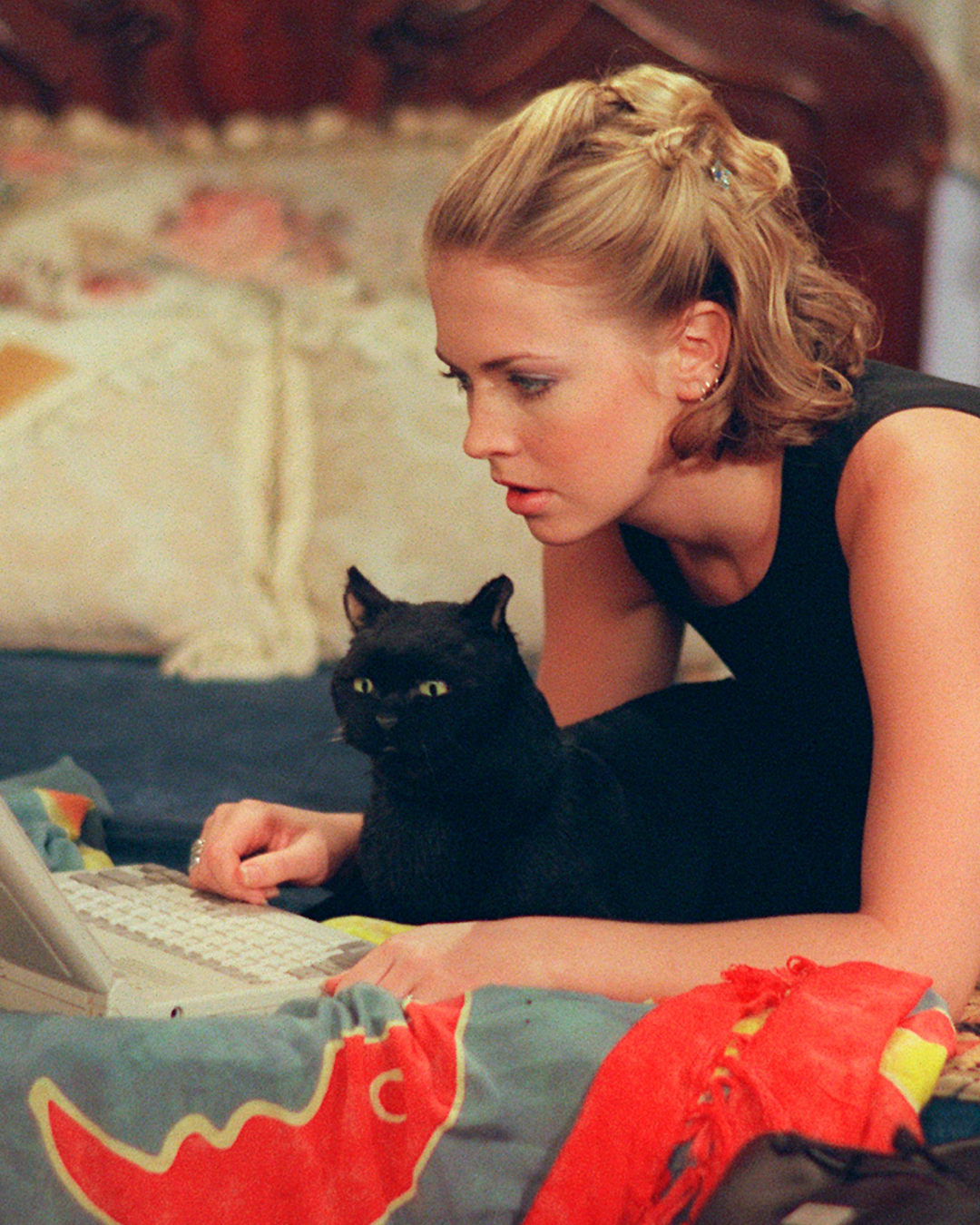
It is only fair to make this clear from the outset: the poor black cat has never done anything to deserve its reputation. True, it sees well in the dark, moves without making much noise, and is particularly good at appearing when no one expects it. Excellent qualities for a feline, but far less compatible with a medieval Europe obsessed with the devil, where the trio of cat, witchcraft, and demon formed an association that was hard to shake.
This made it a diabolical creature, a faithful companion of "witches," who in some traditions could even take on its form. Another explanation is slightly more down-to-earth: in antiquity it was claimed that at night, cats' eyes frightened the horses pulling carts and carriages, causing accidents and making their crossing a genuine hazard. It should also be said that the very same animal that makes some people change their route here is considered a sign of good luck elsewhere. The cat itself is not particularly bothered — it simply carries on strolling, undisturbed.
The magic formula for good luck
odio quando mi dicono “in bocca al lupo” perché ogni volta risponderò con grazie e puntualmente mi verrà detto che porta sfortuna uffa non capirò mai il senso di dire crepi perché dovrebbe crepare il lupo poverino …
— Kiki (@kikyo707) July 19, 2025
After all this bad luck, it is only right to talk a little about good fortune. Before an exam, a job interview, or any other high-stakes situation, we still prefer to say "in bocca al lupo" — literally "into the wolf's mouth" — even though ending up in the jaws of a predator does not sound like a great idea. For centuries the wolf was one of the most tangible dangers in the European imagination, especially for shepherds and travellers, so much so that as far back as the Middle Ages, falling into the wolf's mouth meant falling into the hands of the enemy or landing in a very risky situation.
The expression as a good-luck wish is said to have originated in hunters' slang, inverting that meaning: the worst thing that could happen was named aloud in the hope of warding it off. A small form of magic entrusted to words. Hence the traditional reply "crepi" — "may it die" — with the wolf naturally implied. It works like all the superstitions we have just looked at: better not to tempt fate by openly saying what we hope for.
